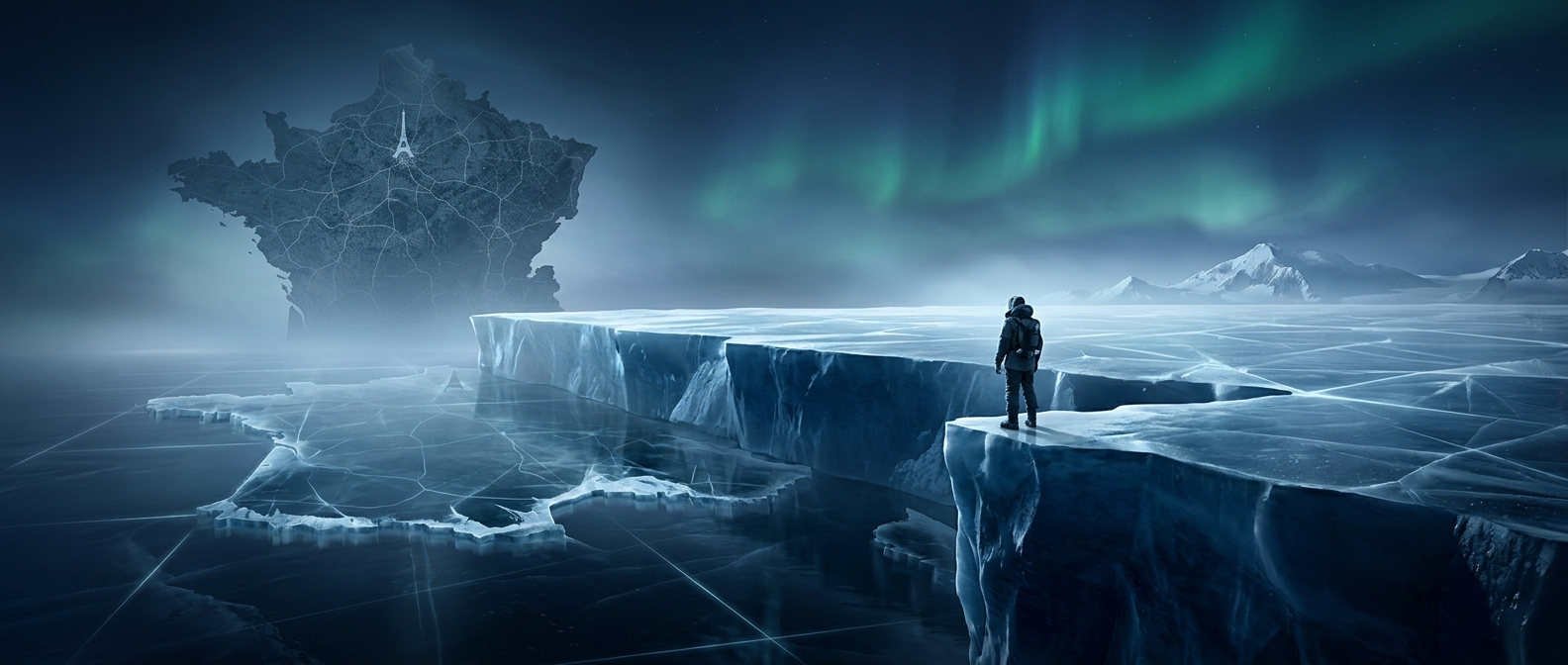
A continent-sized store of frozen water
Antarctica’s ice is not simply a deep layer of snow. Over long periods, snowfall has been compressed into a vast ice sheet, thickest in the continent’s interior. The ice flows outward under its own weight, like an extremely slow-moving river, toward the coast. Much of it rests on bedrock, so if that land-based ice reaches the ocean as meltwater or icebergs, it adds water to the sea.
That distinction matters: floating sea ice already displaces ocean water, so its melting has little direct effect on sea level. The main concern is the grounded ice sheet and the glaciers that carry it seaward.
How change at the edge reaches distant shores
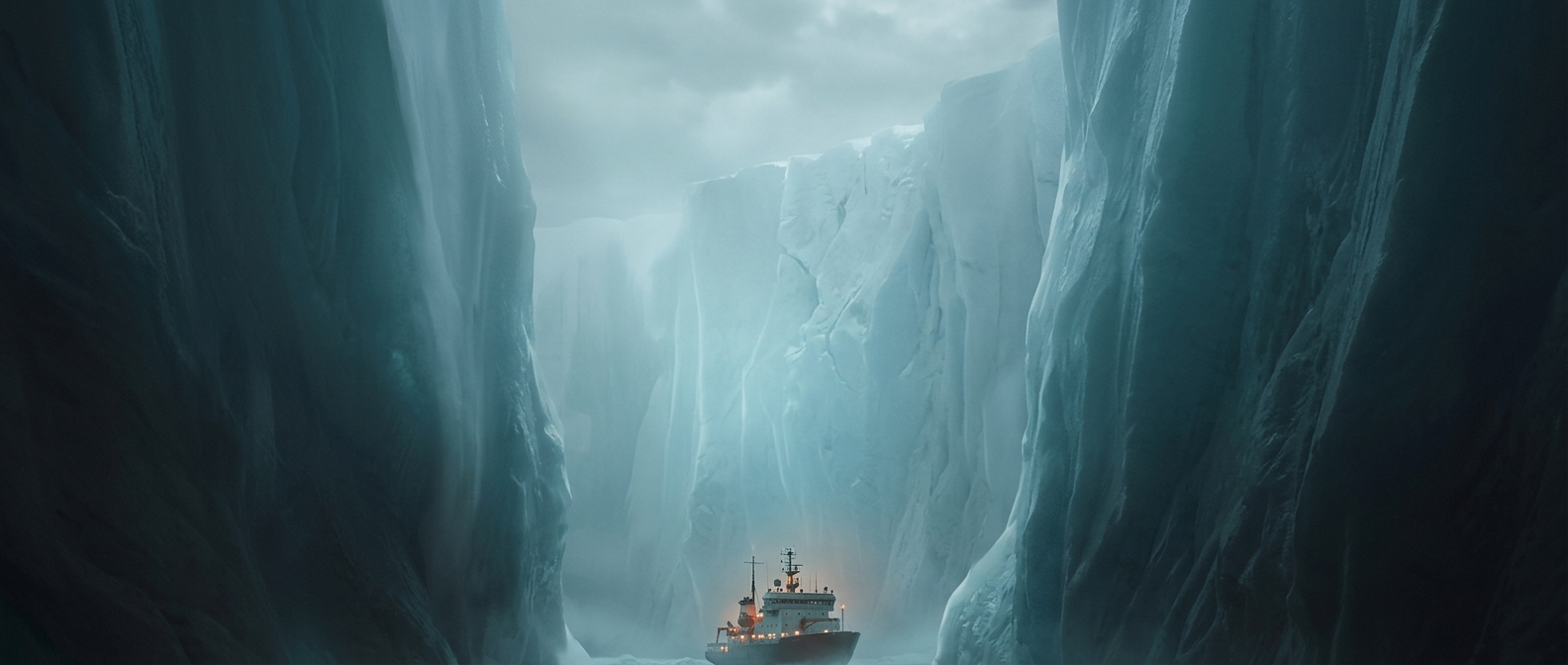
At the coast, broad floating platforms called ice shelves extend from glaciers over the ocean. They act as a partial brake on the ice behind them. In some places, warmer ocean water can flow beneath a shelf and melt it from below. If the shelf thins or breaks apart, the inland glacier may flow faster into the sea. Where a glacier rests on a bed that deepens inland, retreat can become harder to stop: as its edge moves into deeper water, thicker ice can be exposed to melting and loss.
The consequences are global, even though the changes begin in a remote polar landscape. Added ocean water raises sea level, increasing the reach of high tides and storm surges along coastlines. The full ice sheet represents enough water for a rise of many tens of meters, but that is not a forecast of a sudden melt. Ice responds over long timescales, and the amount and pace of future loss depend on how conditions evolve. What happens at Antarctica’s margins can therefore shape coastal risks far beyond the continent.