Why a small fire can become a major emergency
Antarctica’s snow and ice can make the continent look wet, but much of it is a polar desert: very little precipitation falls, and the air is often extremely dry. That matters once a fire starts indoors. Heated buildings contain combustible materials such as furnishings, wiring insulation, fuel, and supplies; in dry air, materials can lose moisture and ignite more readily. Strong winds can also carry embers or feed flames if a fire reaches the outside.
Remoteness changes the stakes
A research station cannot count on a nearby town’s fire department arriving in minutes. Stations are separated by vast distances, and weather can make travel difficult or impossible. A fire that might be contained quickly in a city could therefore threaten a station’s living quarters, laboratories, communications, or stored supplies before outside help could reach it.
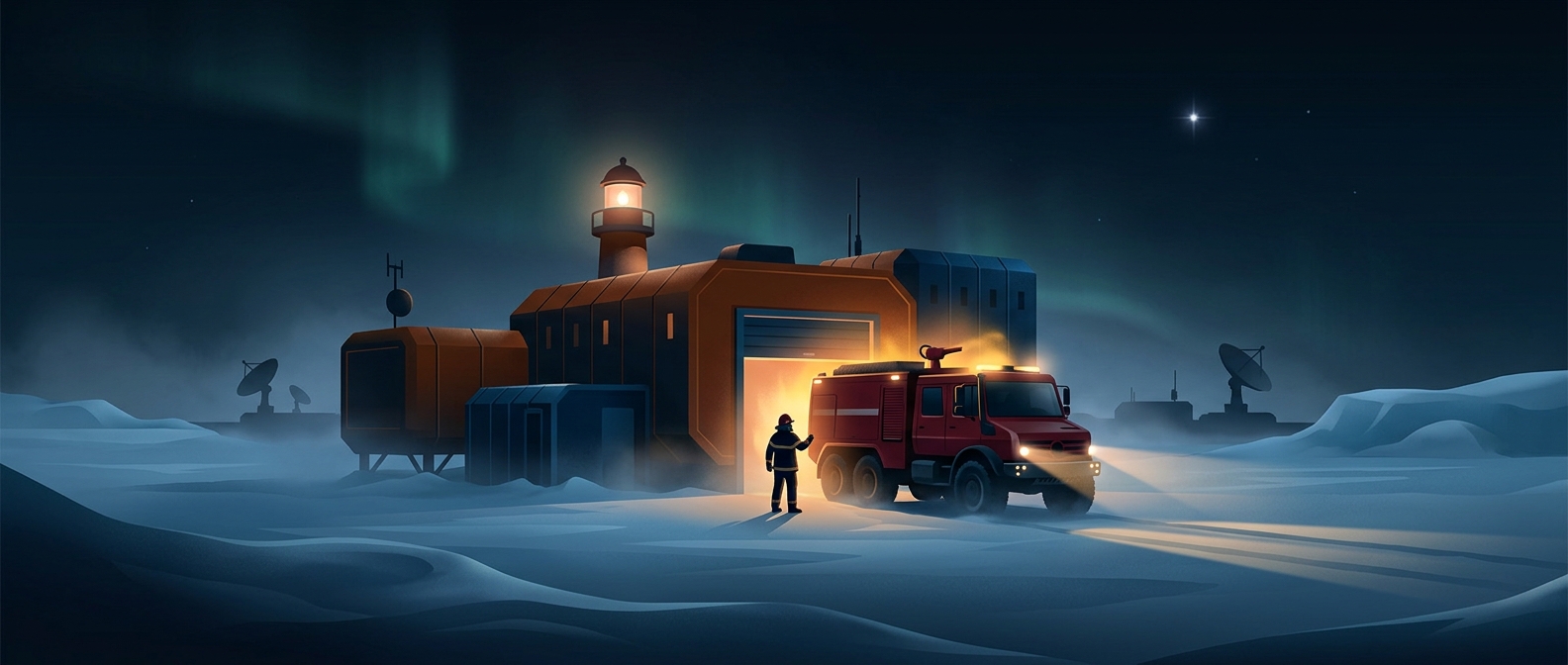
Firefighters and fire trucks are part of the stations’ own emergency capability. Their job is not only to put out flames, but to protect the people and essential facilities that allow a station to keep operating. In Antarctica, a fire engine is a reminder that the most dangerous feature of a fire may be how far away help is—not how close the nearest ice is.