Why an iceberg floats so low
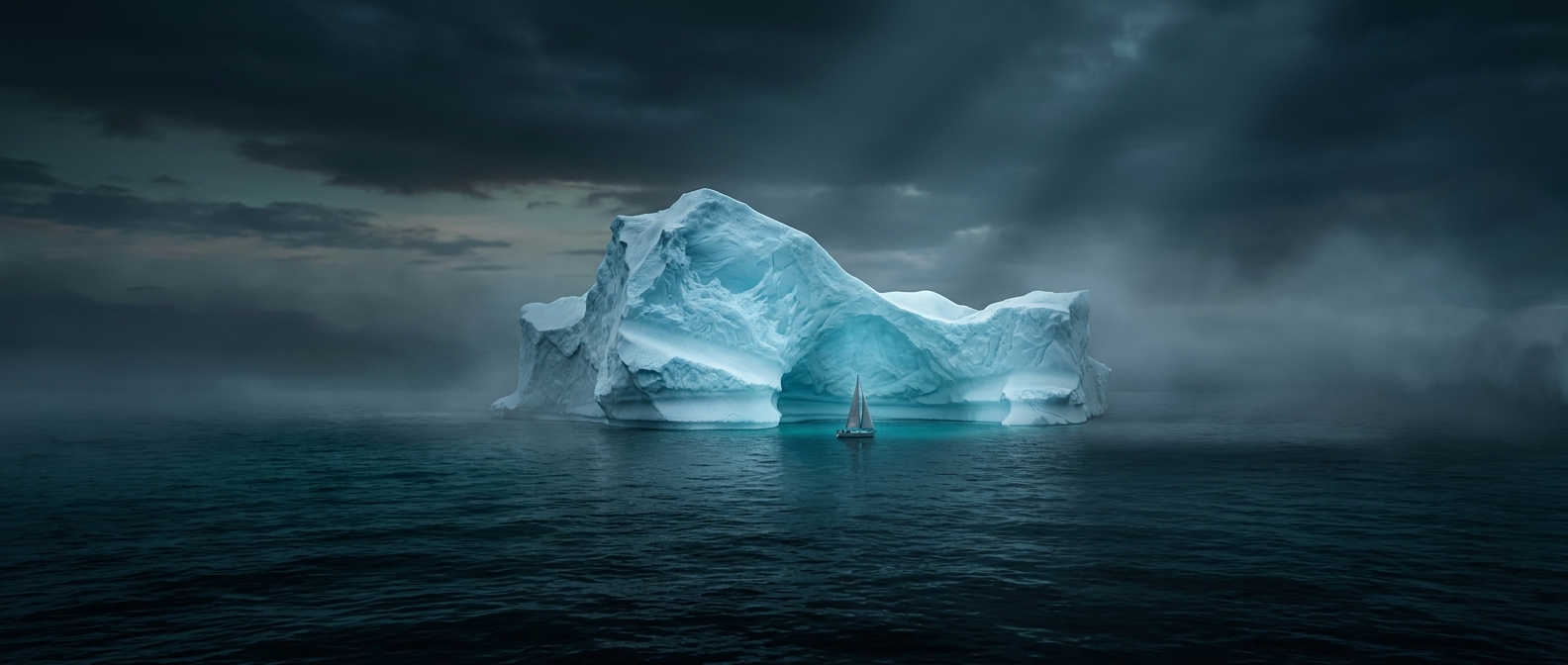
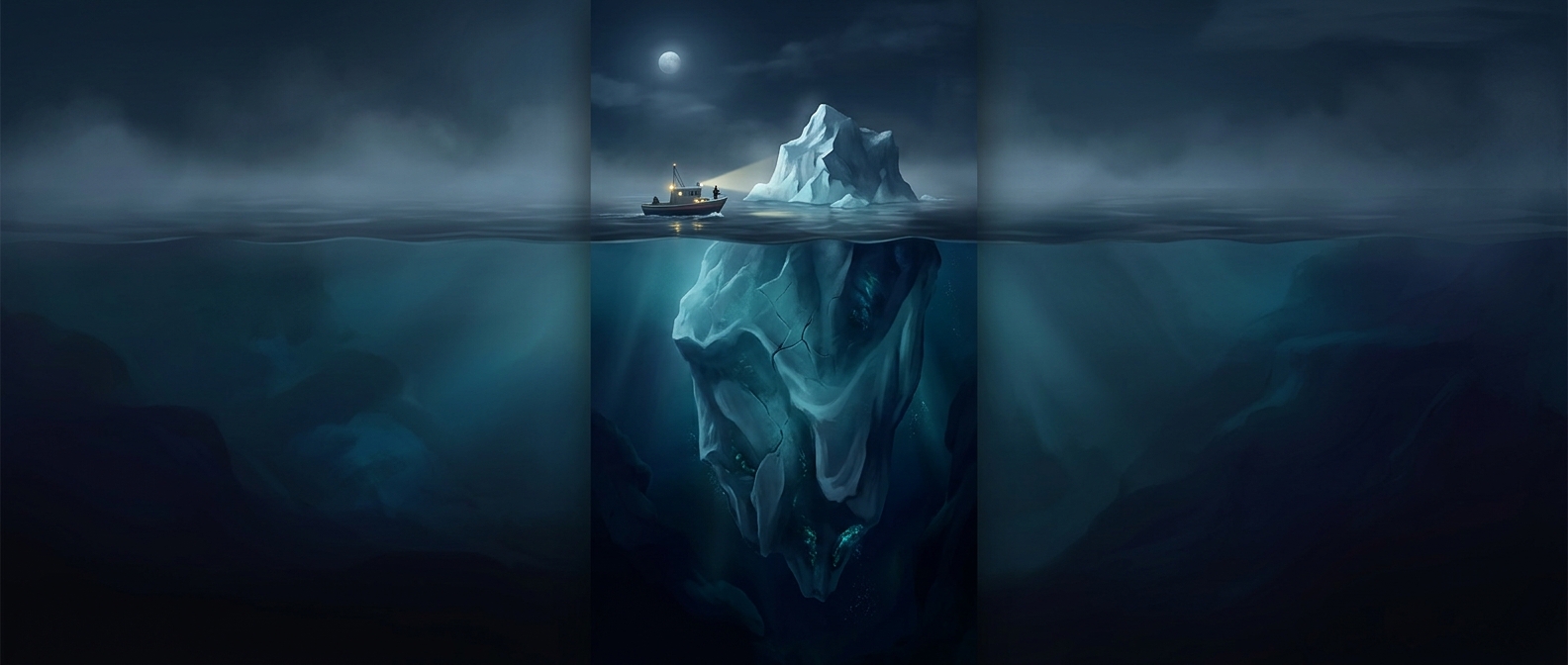
An iceberg is made mostly of freshwater ice, which is less dense than seawater. When it floats, it settles until it has displaced enough seawater to support its weight. Because ice is only slightly less dense than seawater, that balance requires most of the iceberg’s volume to sit underwater—roughly nine-tenths in typical conditions.
This is a buoyancy balance, not a fixed rule about every iceberg’s height. The exact fraction changes with water density and the iceberg’s shape. A broad, low berg and a narrow, steep-sided one can have very different silhouettes even when similar proportions of their volume are submerged.
The hidden shape matters
The part below the waterline is not necessarily a neat continuation of the visible peak. Icebergs can have ledges, deep projections, and uneven sides, shaped as pieces break away and melt. The surface view therefore cannot reliably show how wide or deep the underwater mass extends.
For ships, that makes the visible outline an incomplete guide to clearance. A vessel passing near an iceberg must account for an unseen mass that may extend far beyond the bright, exposed ice; the small peak is only the portion buoyancy leaves above the sea.