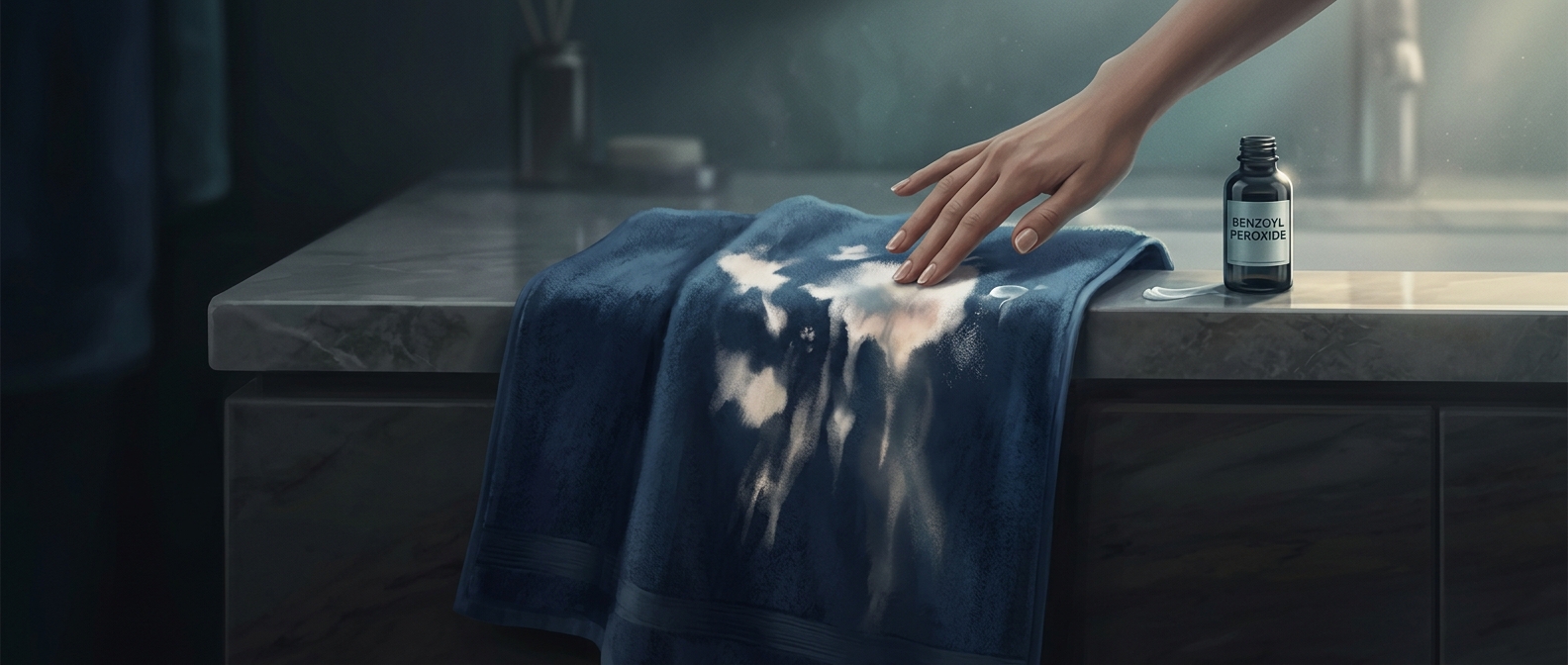
Why benzoyl peroxide leaves pale marks
A common cause is benzoyl peroxide, an acne-fighting ingredient that helps reduce acne-causing bacteria and unclog pores. It is also an oxidizing agent: it can react with colored molecules and break them into forms that no longer look colored.
That chemistry is useful on skin, but it can affect fabric dyes too. If treatment remains on the skin and then rubs onto a towel, pillowcase, or shirt, the reaction can fade the fabric’s color. The pale patch is usually not a removable layer of product; the dye itself has been altered, so ordinary laundering may not restore it.
Drying helps, but contact matters
A product can seem to disappear as it dries while a small amount still transfers through rubbing or close contact. Applying more than directed can also leave extra residue. Letting treatment dry fully before dressing or bedding down can reduce transfer, though it cannot guarantee that fabric will be protected.
For products containing benzoyl peroxide, white towels and pillowcases avoid visible color loss. If bleaching is a concern, check the active-ingredient label: acne treatments do not all work the same way, and not all have this bleaching effect. The practical clue is simple: a pale mark that appears where treated skin repeatedly touches colored fabric may be dye damage, not a stain that needs stronger washing.