Familiar storefronts became game objectives
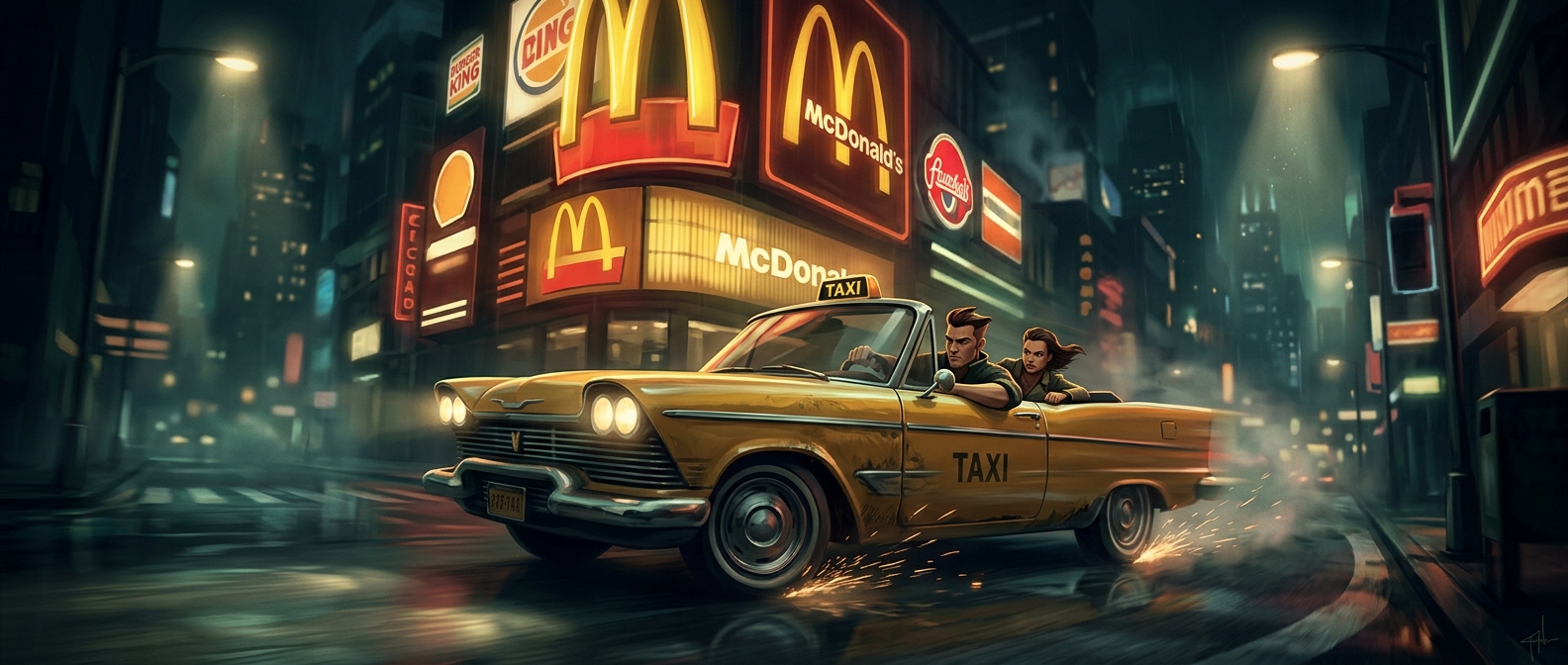
In Crazy Taxi, the destination was more than a marker telling players where to drive. A branded Pizza Hut or KFC gave the goal an instantly recognizable identity: players could read the name, understand the destination, and race toward it without learning a fictional chain or decoding a vague label. The restaurants became part of the city’s visual language, alongside its roads and traffic.
That clarity mattered in a game built around hurried decisions. Players had to steer through busy streets while watching the clock, so a destination that was easy to recognize could make the next move feel immediate: spot the restaurant, choose a route, and try to reach it in time.
A commercial name with a gameplay role
Putting real businesses in a game also creates a direct exchange. The game gains familiar, distinctive landmarks; the companies gain exposure to players. That arrangement is commonly called brand licensing: a company permits its name and identity to appear in another product, often under agreed conditions. The game’s use of restaurant locations made the brands part of the action rather than an advertisement set apart from it.
There is a design tradeoff in that choice. Fictional destinations give creators complete freedom over names and appearance, while real brands carry existing associations and recognition. In Crazy Taxi, that recognition could make a stop feel legible at a glance—but it also tied the game’s imagined city to businesses players already knew. The result was a route where the target was not just “a restaurant.” It was a familiar place, turned into a reason to floor the accelerator.