Why a jet wing bends instead of breaking
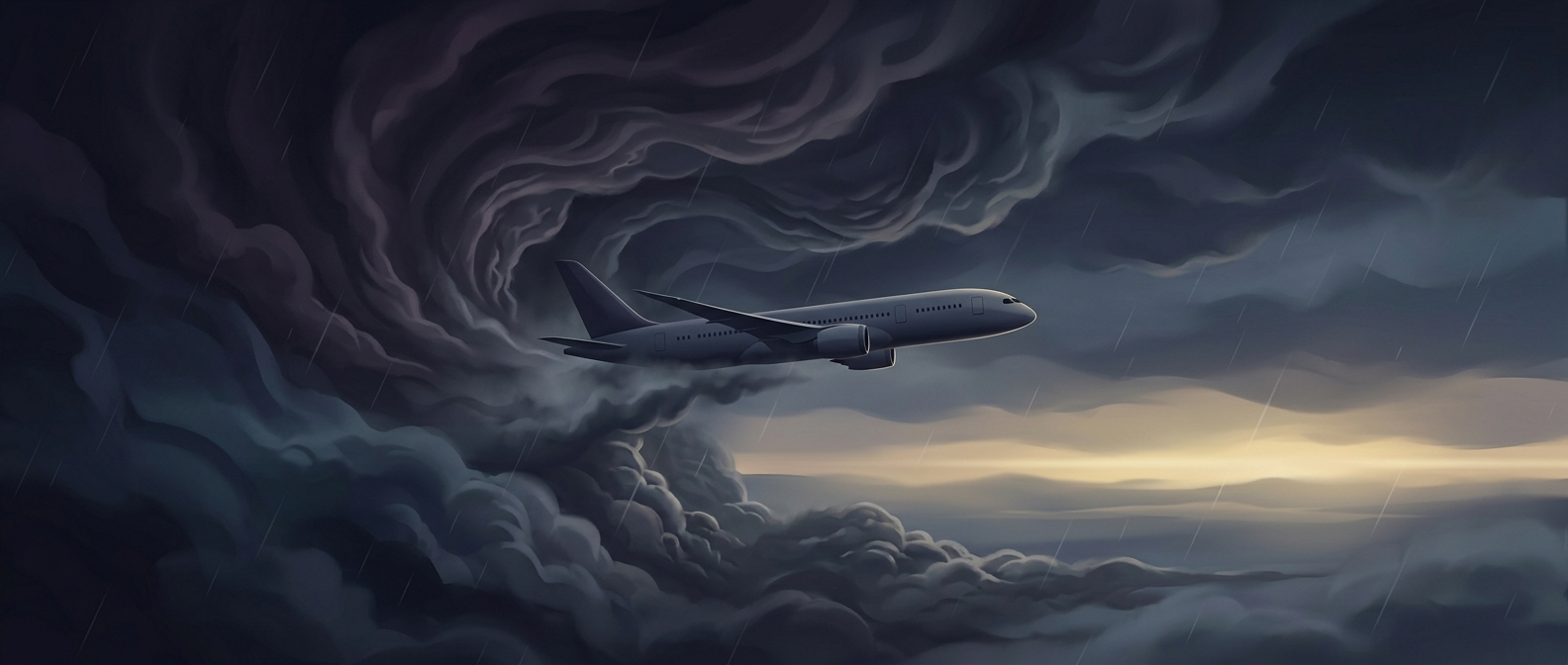
A turbulent gust can push a wing sharply up or down, but a modern airliner’s wing is built to flex under that changing force. Flexing lets the structure move with the gust rather than resisting it as a perfectly rigid object would. The wing is also engineered and tested to handle the loads expected in flight, including substantial bending.
That does not make a wing indestructible. Extraordinary forces or structural damage can exceed what an aircraft is designed to withstand. But the jolts passengers feel in ordinary turbulence are not, by themselves, evidence that the wings are close to snapping.
The cabin can be less forgiving than the aircraft
The plane moves as a whole through disturbed air; people and loose objects do not automatically move with it. When the aircraft suddenly rises or drops, an unbelted passenger can be thrown against the seat, ceiling, or another person. Drinks, bags, and service carts can become hazards for the same reason.
That mismatch explains why turbulence can be frightening and cause injuries without threatening the wing structure. Flight crews may change altitude or route when conditions allow, but bumps can arrive with little warning. Keeping a seat belt fastened while seated is a simple way to stay attached to the aircraft when the air briefly is not smooth.