Similar blonde hair, different genetic routes
Hair gets much of its color from melanin, the pigment made by cells in hair follicles. One type, eumelanin, produces brown and black shades; how much reaches a growing hair helps determine whether it appears dark or light.
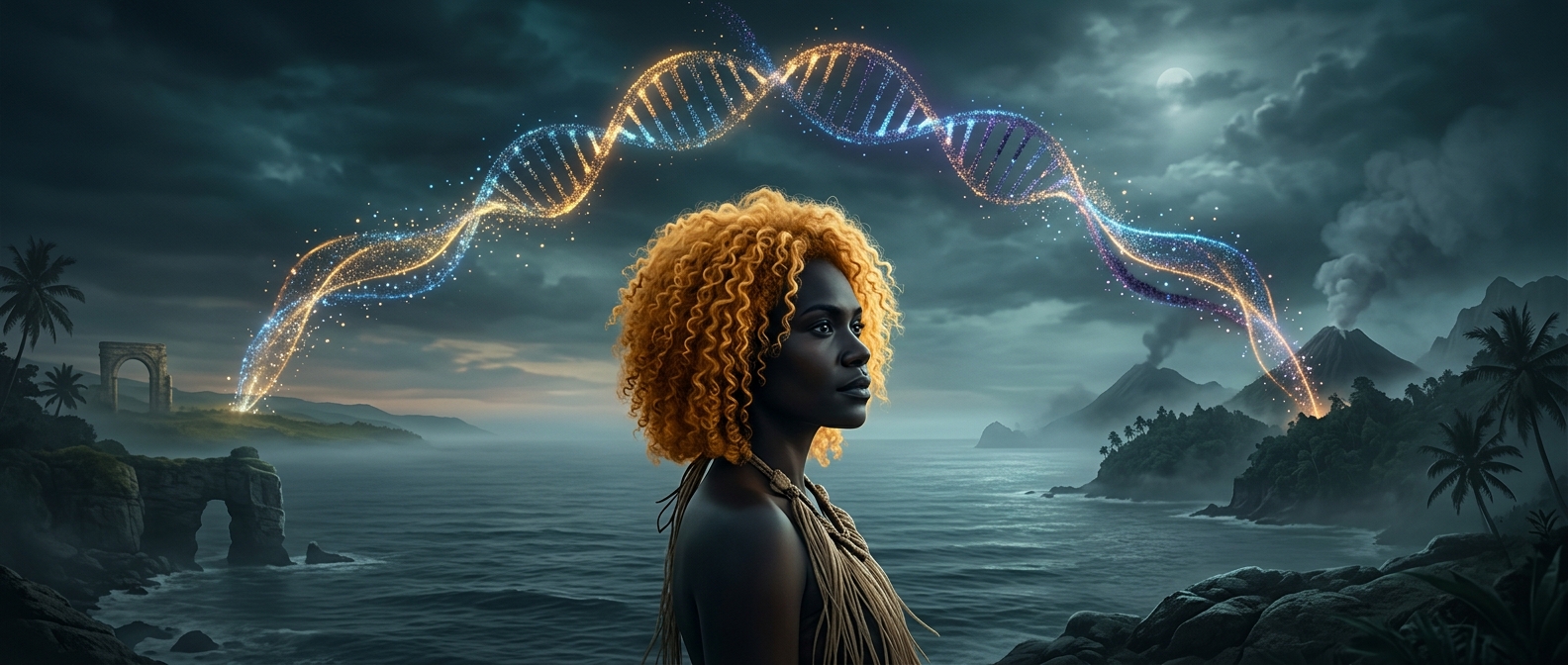
In some people of Melanesian ancestry, especially in the Solomon Islands, naturally blonde hair is linked to a change in TYRP1, a gene involved in melanin production. European blonde hair, by contrast, is associated with other genetic variants. The visible result is similar, but the underlying DNA difference is not the same.
How evolution can repeat an outcome
When a genetic change reduces pigmentation, it can lighten hair. A change in one gene is not a universal “blonde switch,” however: hair color is shaped by combinations of genes, and the relevant combinations can differ among populations. In this case, separate genetic changes affected the same broad biological process—pigment production—and led to a similar appearance.
That pattern is called convergent evolution: similar traits arise independently rather than being inherited from one recent shared origin. Blonde hair in Melanesians is therefore not evidence that it came from European ancestry. It is a striking example of evolution reaching a familiar-looking result by a different molecular route.