How a candle tax made homemade light worth the risk
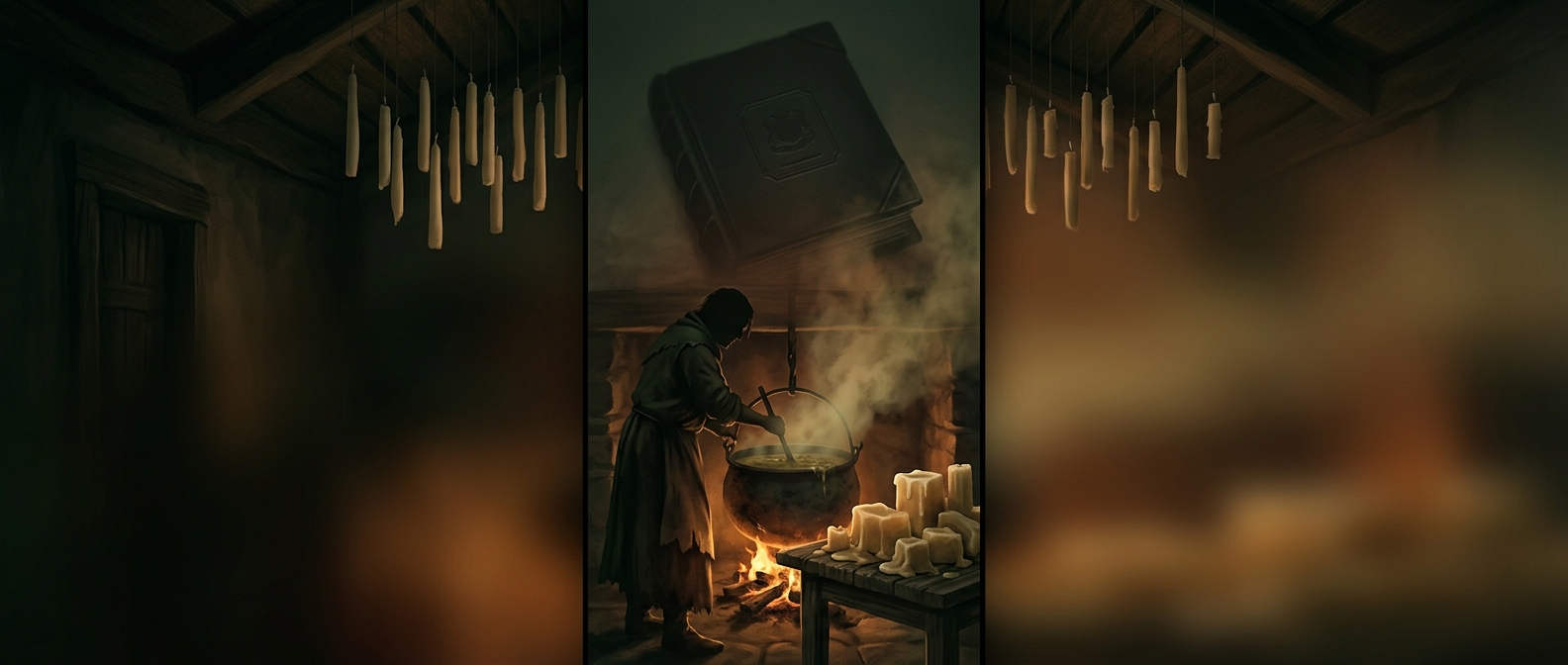
A tax on manufactured candles raised the cost of a dependable source of indoor light. For households with little money to spare, making a rushlight offered a way around the levy: instead of buying a taxed candle, they used a rush—a waterside plant—and animal fat to make a crude lamp.
A rushlight was a wick held in a rush
The maker prepared a rush so its absorbent inner core could take up fat, then dipped it in melted animal fat. When lit, the coated core burned like a wick. The result was cheaper than a manufactured candle, but it was not as sturdy or controlled: a rushlight could burn unevenly, and its flame sat close to the greasy material and whatever held it.
The savings came with a domestic hazard. An open flame near bedding, clothing, or other household materials could start a fire, especially in a crowded home where people worked and slept in the same space. Avoiding the tax therefore shifted the cost from the market to household labor and risk.
The tax changed how people made light
The workaround shows how a levy on an everyday necessity could reshape ordinary routines. Rather than simply going without light, some families substituted a less reliable source they could prepare themselves. After dark, the choice was not just between a taxed candle and no light; it could be between paying for a manufactured candle and tending a homemade flame with care.