How a novel made a building matter
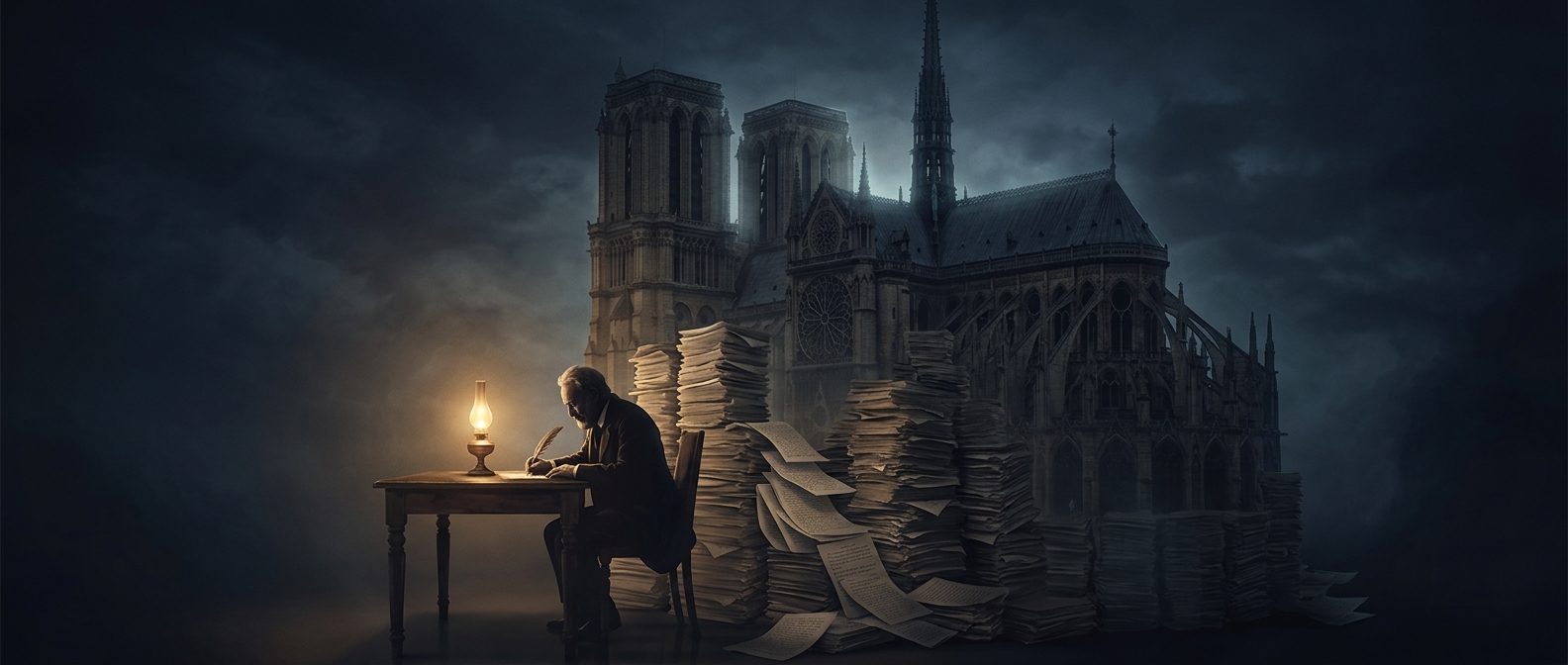
When Victor Hugo published The Hunchback of Notre-Dame in 1831, the cathedral was not simply scenery for a love story. Hugo made the building itself feel like a character: its towers, bells, stonework, and shadowed spaces shape the lives unfolding around it. That shift in perspective invited readers to see Notre-Dame not just as an old church, but as a work of art with a story worth protecting.
The distinction mattered because the building had been altered over centuries and was in poor condition. A famous landmark can be easy to overlook when its damage accumulates gradually; a novel can make that slow loss vivid by tying a place to human memory and emotion.
From attention to restoration
Hugo’s book reached a broad public and helped renew interest in medieval architecture at a time when historic buildings could be neglected or treated as obstacles to change. It did not itself carry out the repairs or pay for them. Rather, it helped build the public concern that made preservation harder to ignore.
In 1844, the French government commissioned architects Jean-Baptiste Lassus and Eugène Viollet-le-Duc to restore Notre-Dame. Their work continued for years, turning concern for the cathedral into a major restoration project. The novel was one influence in that wider change in public feeling—not a single cause or a direct fundraising plan.
A story with consequences
Hugo’s lasting contribution was to change what readers noticed. By giving the cathedral narrative weight, he helped make its deterioration feel like the loss of something shared, rather than a technical problem for builders alone. The book’s unusual legacy is that a fictional story helped strengthen the case for preserving a real building.