Cheap paper changed what magazines could publish
Pulp magazines were made from inexpensive, rough wood-pulp paper rather than the smoother, more durable stock used for books and higher-priced periodicals. The paper yellowed and became brittle, but its low cost helped publishers sell thick issues at prices ordinary readers could manage. That mattered because a magazine could offer several stories at once—and keep bringing readers back for another issue.
A steady market rewarded bold, quick storytelling
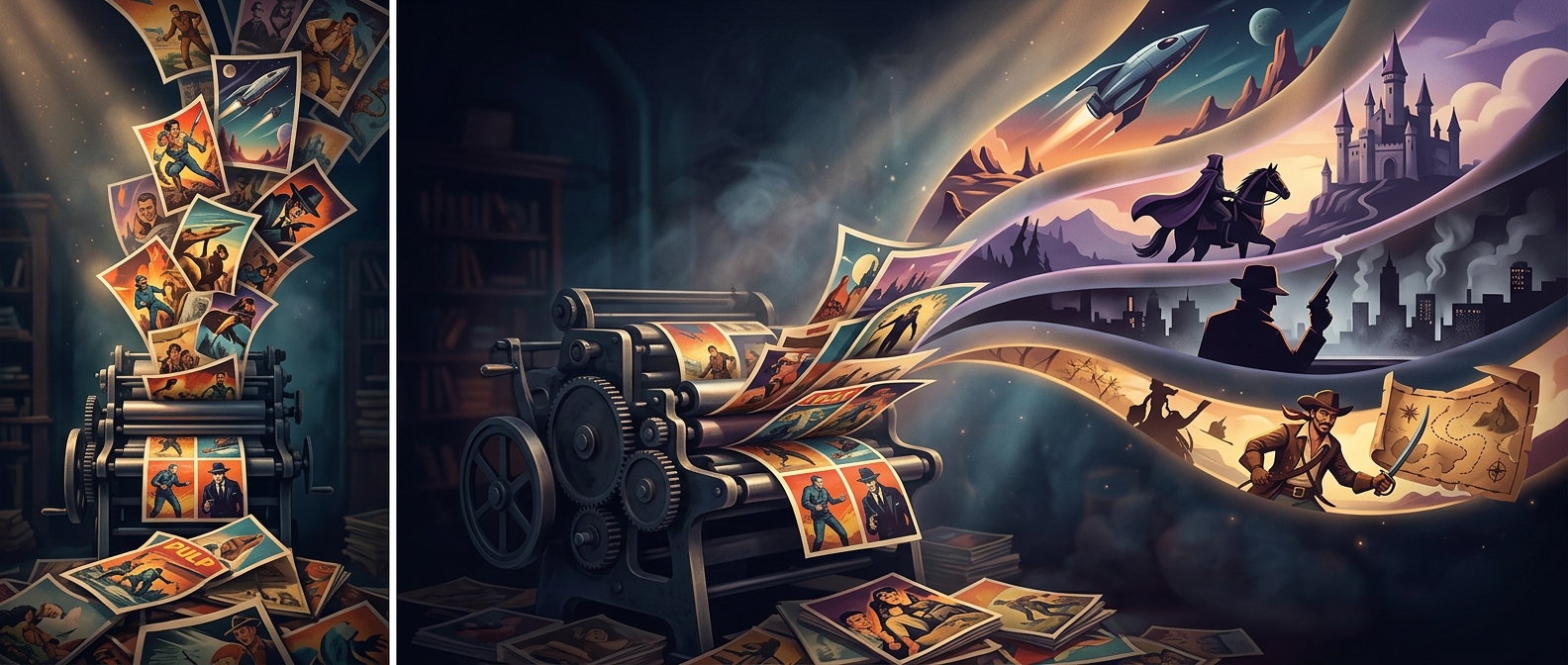
Publishers needed enough new material to fill each issue, so they bought stories from working writers and divided magazines into recognizable genres. A reader who wanted a detective story or an adventure in space could choose a title devoted to that kind of fiction. Within those limits, writers had room to build distinctive voices and settings: hard-boiled detectives moved through corrupt, dangerous cities, while science-fiction stories imagined unfamiliar machines, worlds, and futures.
The format also shaped how stories were told. Short pieces had to establish a situation quickly; longer works could unfold across installments, with each part giving readers a reason to continue. The pressure to hold attention encouraged brisk openings, clear stakes, and memorable scenes—not because every pulp story followed one formula, but because magazines had to compete for a reader’s next purchase.
Disposable magazines, lasting conventions
The magazines themselves often did not last: cheap paper wore out, and many issues were discarded. Their influence lasted through the stories and conventions that readers, writers, and later publishers carried forward. Pulp made genre fiction a regular, affordable part of popular reading—and helped turn recurring heroes, specialized story markets, and serialized suspense into familiar features of modern publishing.