A voyage could be invented—and still feel like news
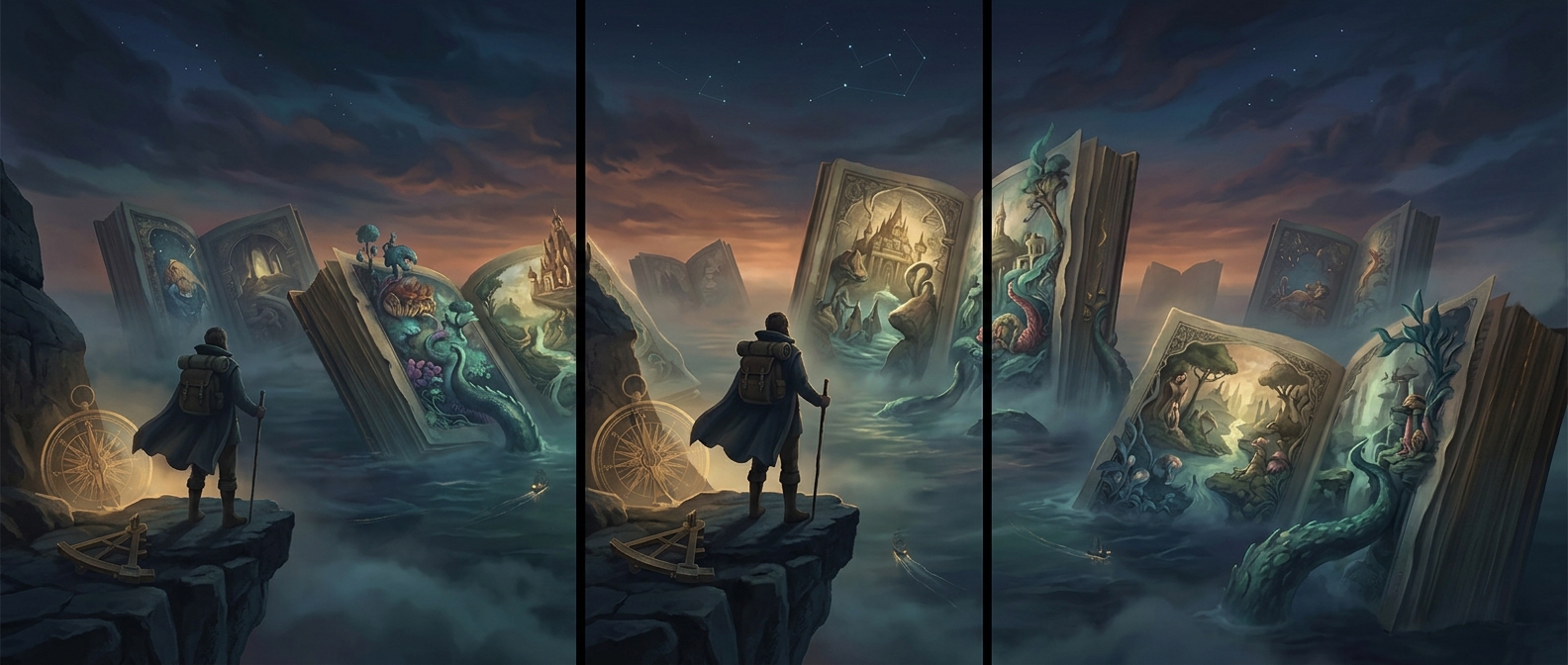
In the 16th century, readers hungry for reports from faraway places encountered travelogues that did not simply record real journeys. Some writers made up islands, peoples, and customs, borrowing the voice and details of travel writing to make an imagined world seem like somewhere a reader might actually reach. That worked especially well in an age when most people could not check a distant traveler’s claims for themselves and reports from abroad could be difficult to verify.
Distance gave writers room to criticize home
An invented society offered more than exotic scenery. By placing unfamiliar laws or customs on a remote island, a writer could invite readers to compare them with life in Europe—and question whether familiar arrangements were truly natural or just customary. The fictional setting created a little distance from political and social criticism, while the travelogue’s tone gave that criticism the feel of a discovery.
Thomas More’s Utopia, published in 1516, shows the approach. It presents an imagined island society through the account of a fictional traveler, allowing More to explore how society might be organized differently. The island is not a factual destination; its importance lies in what its customs make readers reconsider.
These books drew on the same curiosity about distant places that fueled real travel accounts. Their lasting trick was to make invention do the work of exploration: readers could travel somewhere impossible and return with questions about home.