Selling the Journey, Not Just the Destination
A travel brochure had a problem to solve: the trip itself could be a hard sell. Early rail journeys might mean smoke drifting into carriages, jolting rides, cramped seats, and long stretches with little comfort. Yet rail companies needed passengers to imagine more than the inconvenience. Their pamphlets presented travel as an appealing experience—an escape into scenic landscapes, elegant leisure, and discovery.
How Glamour Worked on Paper
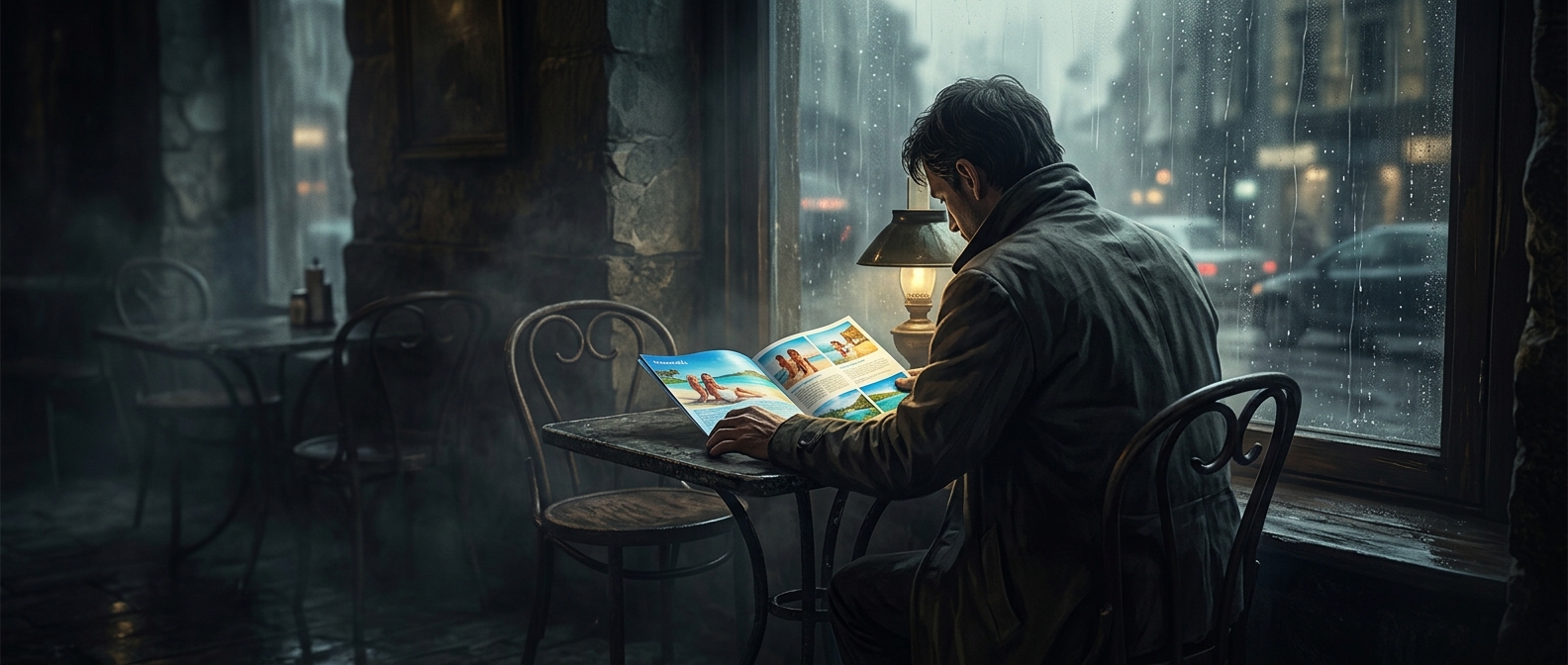
Illustrations could do what the carriage could not. Dramatic views of mountains, coastlines, and historic towns made the route feel like part of the reward, while polished scenes of comfortable travel encouraged readers to picture themselves as relaxed tourists rather than weary passengers. Selective framing mattered: a brochure could spotlight a striking panorama and leave the smoke, noise, and discomfort outside the frame.
This was promotion, not a neutral report of conditions. The promise of enrichment also gave travel a social meaning: taking a trip could seem cultured and fashionable, not merely a way to get from one place to another. The brochure sold an imagined version of the journey before the traveler had bought a ticket.
The Gap Between Image and Experience
That contrast was part of the medium’s power. A printed image stayed clean, calm, and inviting even when the real ride did not. By making the destination vivid and the journey seem glamorous, promoters could persuade people to accept the less glamorous parts in between. The brochure’s trick was simple: turn the view from the train into the reason to take the train.