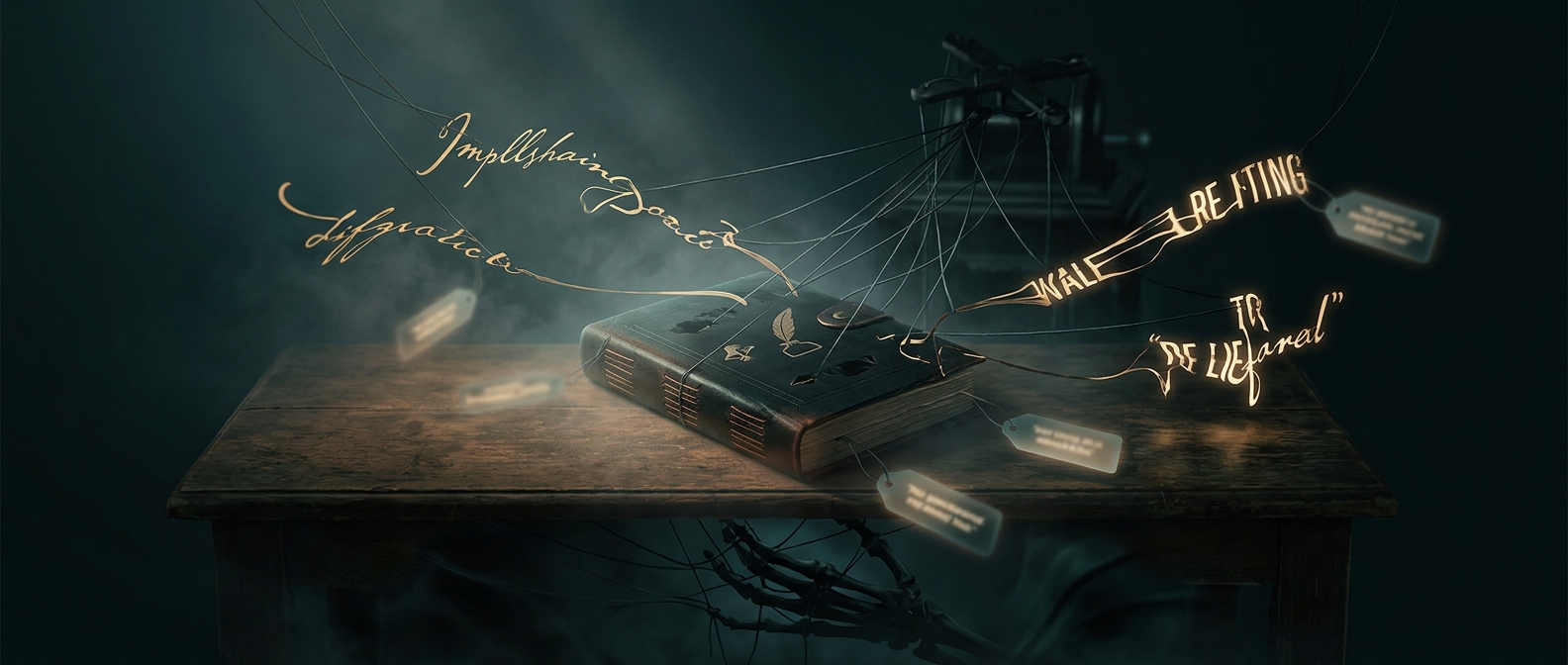
The trick is to quote the praise, not the verdict
A review can contain both a sharply negative judgment and a few positive-sounding words. A publisher looking for cover copy can lift a vivid adjective or short phrase while leaving behind the sentence that explains what the reviewer meant. “Profoundly,” for example, sounds like an endorsement on its own—even if the original sentence used it to intensify a complaint.
That transformation depends on context. Readers encounter the excerpt in a new setting: isolated on a book cover, where promotional language is expected. Without the surrounding sentence, they may assume the word captures the reviewer’s overall view.
How a fragment becomes a blurb
The process is simple: find language that sounds favorable, shorten it, and present it prominently. A fragment may be technically drawn from a real review, but its new placement can reverse the impression the full review created. The cover does not need to reproduce the reviewer’s conclusion; it needs a few memorable words that catch a shopper’s eye.
This is why a striking adjective can be more useful than a balanced sentence. It is brief enough to fit on a cover and easy to read at a glance. The tradeoff is that compression can strip away the very qualification that made the original wording clear.
The cover changes what the words seem to say
A glowing-looking quote is therefore not necessarily evidence that the reviewer liked the book. It may show only that the review contained a phrase that could be made to sound positive when separated from its context. To understand the verdict, readers need the full sentence—or the review itself—not just the words selected for the cover.