When a Trial Becomes a Real-Time Story
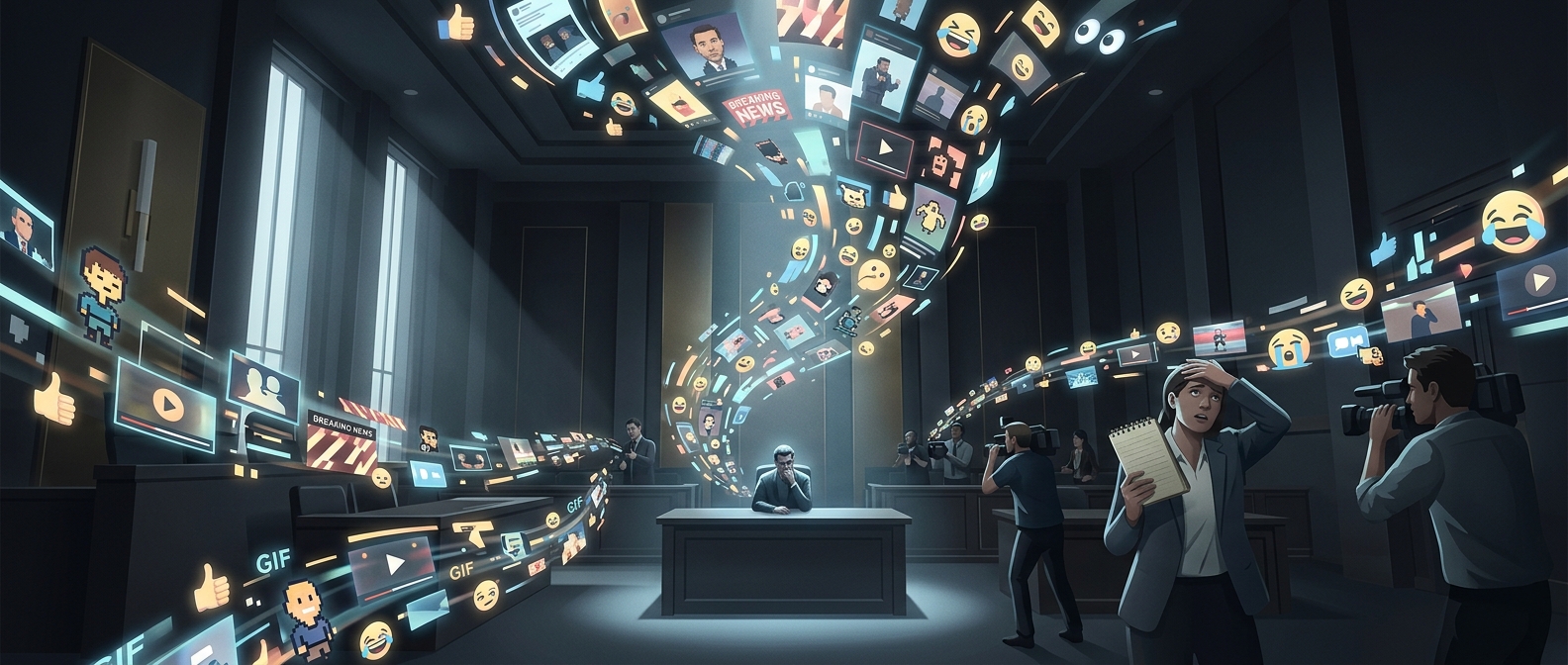
A celebrity trial unfolds on two clocks. In the courtroom, testimony arrives in sequence, shaped by questions, objections, and evidence. Online, reactions can travel almost instantly: a short clip, a still image, or a joke can be reposted thousands of times before anyone has summarized what came before it.
That speed changes what audiences encounter first. A meme may turn a facial expression or a single exchange into a shorthand for a witness’s credibility, a lawyer’s strategy, or the trial as a whole. The joke is easy to share precisely because it strips away context. Once a punchline becomes familiar, later details may be judged against the impression it created.
Why Reporting Takes Longer
Journalists have different obligations from meme-makers. They need to establish what was actually said, distinguish testimony from argument, check the surrounding context, and avoid presenting an unverified interpretation as fact. Courtroom rules can also limit what is recorded or broadcast, leaving reporters to relay events through notes and careful summaries rather than a continuous video feed.
Those steps take time, while social platforms reward immediacy and emotional clarity. A post can circulate widely without explaining whether a moment was disputed, qualified, or followed by a correction. News coverage often arrives later, with the connective tissue that makes the moment intelligible.
The Narrative Gets a Head Start
Memes do not replace reporting, but they can set the first frame through which reporting is read. A later account may be accurate and detailed, yet audiences may already have absorbed a simplified version of the day’s events. In a trial watched as entertainment, the gap between a courtroom exchange and its viral punchline can become part of the story itself.