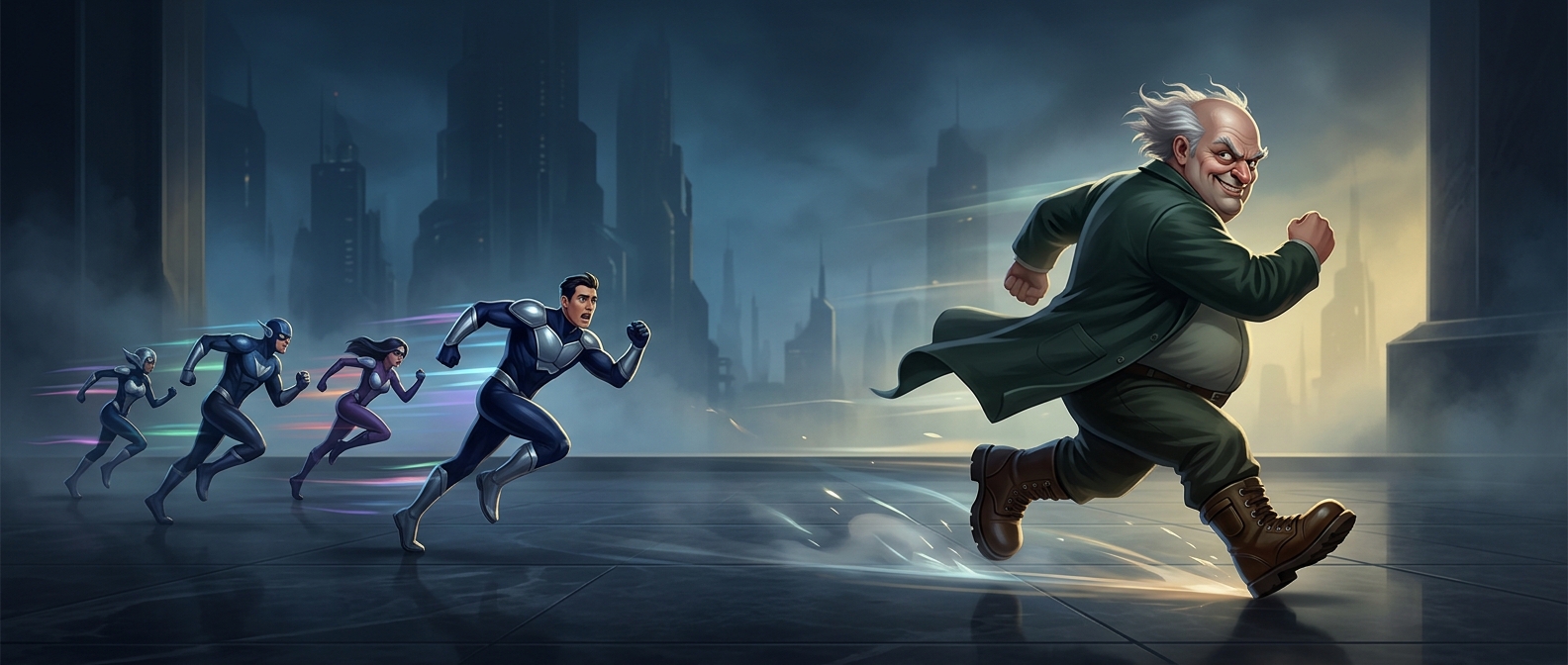
The getaway is a punchline, not a race
Sonic’s speed is the game’s central promise: the player barrels through long stretches of track, often fast enough that reacting becomes part of the challenge. Dr. Eggman, by contrast, is usually defined by what he builds and pilots, not by athletic ability. When he jogs away after a defeat, the contrast turns the victory into a visual gag: the supposedly unstoppable speedster has beaten his nemesis, and the nemesis’s escape plan is an ordinary run.
Why the villain gets a moment to flee
A boss battle gives a level a clear endpoint. Once the player has knocked Eggman out of his machine, the game needs to show that the encounter is over and make room for the next scene or stage. A brief escape animation can do both without interrupting the pace with another chase or a longer explanation.
It also suits Eggman’s role. He can lose the machine and still avoid being caught, leaving him available to cause trouble again. The jog makes that escape feel less like a serious threat than a stubborn bit of slapstick. Sonic may be fast enough to catch him; the game simply lets the defeated villain have his tiny head start—and lets the mismatch land.