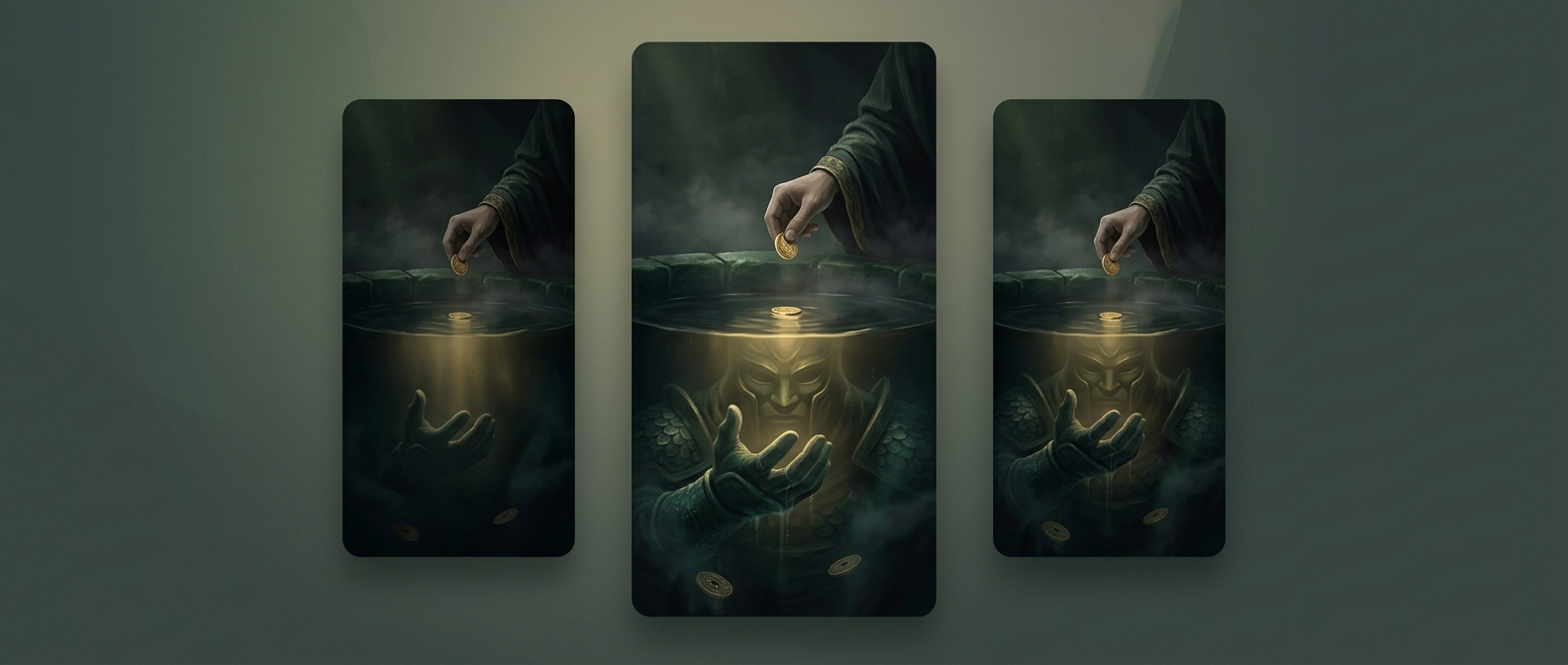
A coin made an invisible bargain tangible
A well was more than a hole in the ground: it was a route to water, but also a dark, hidden place whose depths could not easily be seen or controlled. In the belief described here, a guardian occupied that boundary between the human world and the water below. Leaving a coin gave people a concrete way to acknowledge the guardian and meet the price of safe passage.
The offering worked like a small act of reciprocity: people sought access or protection, and gave something in return. The coin was not valuable because it could operate the well; its purpose was to mark respect and fulfill an obligation within the belief.
Why the custom could outlast the belief
A ritual can remain familiar even as its meaning shifts. Once a coin-throwing custom becomes associated with hopes or wishes, visitors may repeat the action without thinking of a water guardian at all. The gesture still carries the shape of an offering: a person lets something go into the water and waits for a hoped-for outcome.
That transformation turns an old exchange with an unseen keeper into a public, repeatable act. The coin in the well is a small trace of how people once made uncertain access to water feel governed—and how a serious belief can leave behind a custom whose original terms are easy to forget.