A flower built to fool a specific visitor
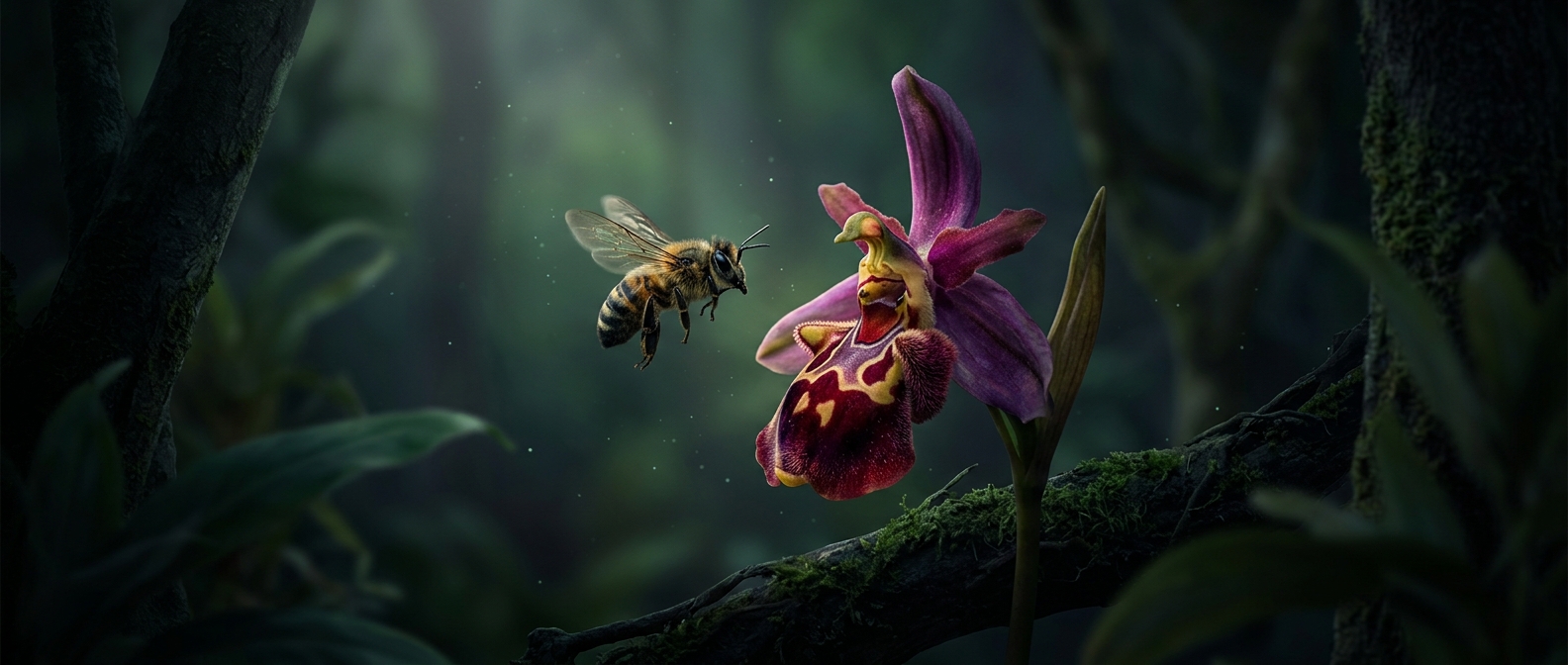
Some orchids use sexual deception: instead of offering nectar, they resemble a female insect closely enough to attract males searching for mates. Depending on the orchid, the resemblance can involve the flower’s shape, color, texture, or scent. That scent may include chemicals similar to signals produced by female insects.
The trick is often highly selective. A flower’s cues can appeal to particular insect species rather than to pollinators in general, linking the orchid’s reproduction to the behavior of a narrow set of visitors.
How the deception moves pollen
When a male approaches or attempts to mate with the flower, its body can brush against the orchid’s reproductive structures. The flower attaches pollen—often bundled into compact masses called pollinia—to the insect. These bundles are positioned so they are more likely to contact the appropriate part of a flower during a later visit.
At the next orchid, the insect may repeat the same mating behavior. If the pollen reaches the flower’s receptive surface, it can fertilize ovules and allow seeds to develop. The insect gets no mate or food reward, but its repeated search carries pollen between flowers.
Why this costly-looking strategy can work
Deception avoids spending resources on nectar, while a close match to an insect’s mating cues can bring a visitor directly into contact with the flower’s pollen-transfer structures. The tradeoff is dependence: if the right insect is scarce, or stops responding to the orchid’s signals, pollination may falter.
A male insect can therefore make the same mistake twice—first at the flower that loads pollen onto him, then at another that receives it. For the orchid, that wasted courtship becomes the delivery route.