Why hard water steals soap’s bubbles
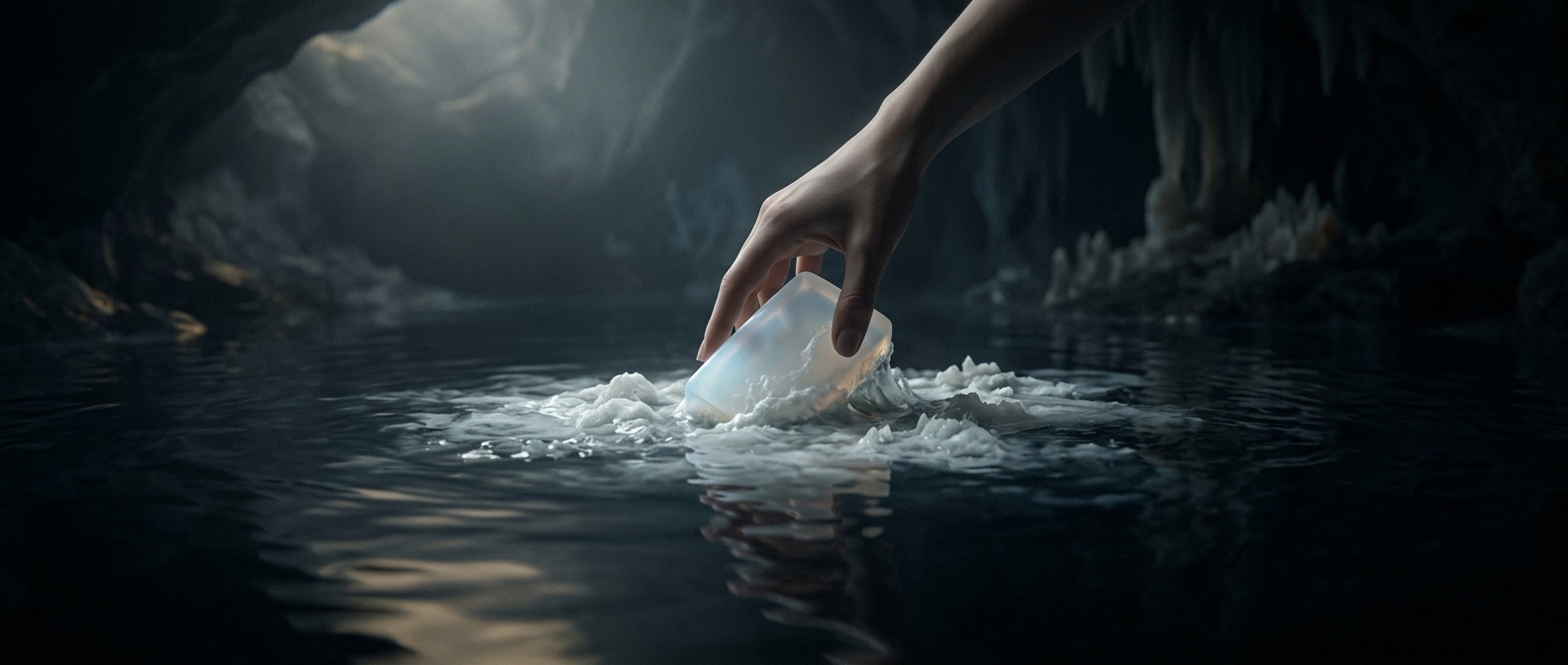
Traditional soap is made from fatty acids. In water, its molecules help water spread and form a thin, stable film around air bubbles. But hard water contains dissolved calcium and magnesium, and those minerals react with soap before it can do that job.
The reaction creates soap scum: poorly soluble compounds that clump together instead of staying dispersed in the water. Each bit of soap tied up this way is no longer available to help form lather, so it can take more soap—and more rubbing—to get the same bubbly feel.
Where the missing soap goes
The scum may look like a cloudy film on a sink or bathtub, but it can also cling to skin, hair, and fabric. That residue can make surfaces feel less clean or leave hair feeling coated. The bubbles are a visible clue to the chemistry: fewer bubbles often mean more of the soap has been diverted into mineral residue.
Many modern body washes and laundry detergents use synthetic cleaning agents rather than traditional soap. These are generally less likely to form insoluble scum with hard-water minerals, which is why a detergent can lather better than a bar of soap in the same tap water. The practical difference is not that hard water contains less water—it is that some traditional soap gets converted into residue before it can do its cleaning work.