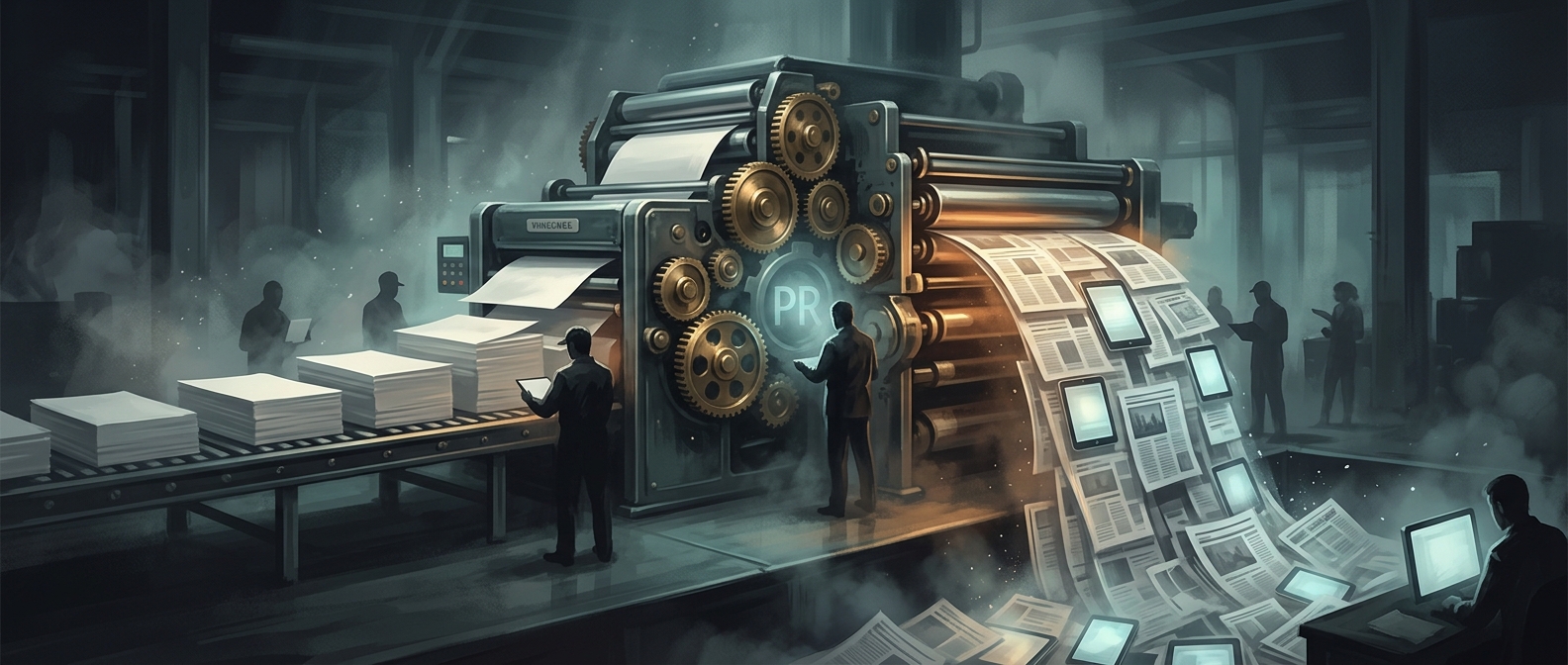
How a press release becomes a news story
A press release is written by an organization to present its own announcement in the most favorable light. It may contain useful facts, but its framing is chosen by the organization—not tested by an independent reporter. When a newsroom publishes the release with only light editing, that framing can travel into a news story almost unchanged.
The transformation can be hard to spot. Editors may replace promotional language, add a headline, and reshape the paragraphs while leaving the release’s central claims and selection of facts intact. The result looks like reporting, even if nobody has checked the claims against other evidence or asked who benefits from them.
The missing step is independent scrutiny
A reporter can use a release as a starting point: verify numbers, seek comment from people affected, consult independent experts, and ask what the announcement leaves out. Those steps take time. In a newsroom with too few staff members, a polished release may offer a quick way to fill a page or keep a website updated. Organizations with communications teams can therefore gain an advantage: their account arrives ready to publish, while competing perspectives still have to be found and checked.
This does not mean every release is false, or that a story based on one is automatically misleading. The risk is that readers may mistake an interested party’s account for a newsroom’s independently established conclusion.
What changes for readers
Once a claim appears in a news format, it can seem more authoritative and be repeated by other outlets, even if the underlying reporting never became more substantial. The key question is not simply whether a story began with a press release, but whether anyone did the work that turns an announcement into journalism: checking what is asserted, adding relevant context, and making clear whose claims are being reported.