Why a Small Phone Becomes a Crowd Hazard
A selfie stick changes the reach of the person holding it. The phone is no longer close to the user’s body; it projects into the space above or beside them, where other people may be walking or looking. In a packed passage, someone turning around or lowering the stick can sweep it across another person’s face, or make contact before the holder realizes how close they are.
The length also gives a small movement a wider effect. A quick turn of the wrist sends the phone through a larger arc, much like the end of a long lever. That can make a crowded walkway harder to navigate, especially when people are moving in opposite directions or cannot easily step aside.
The View—and the Space—Around the User
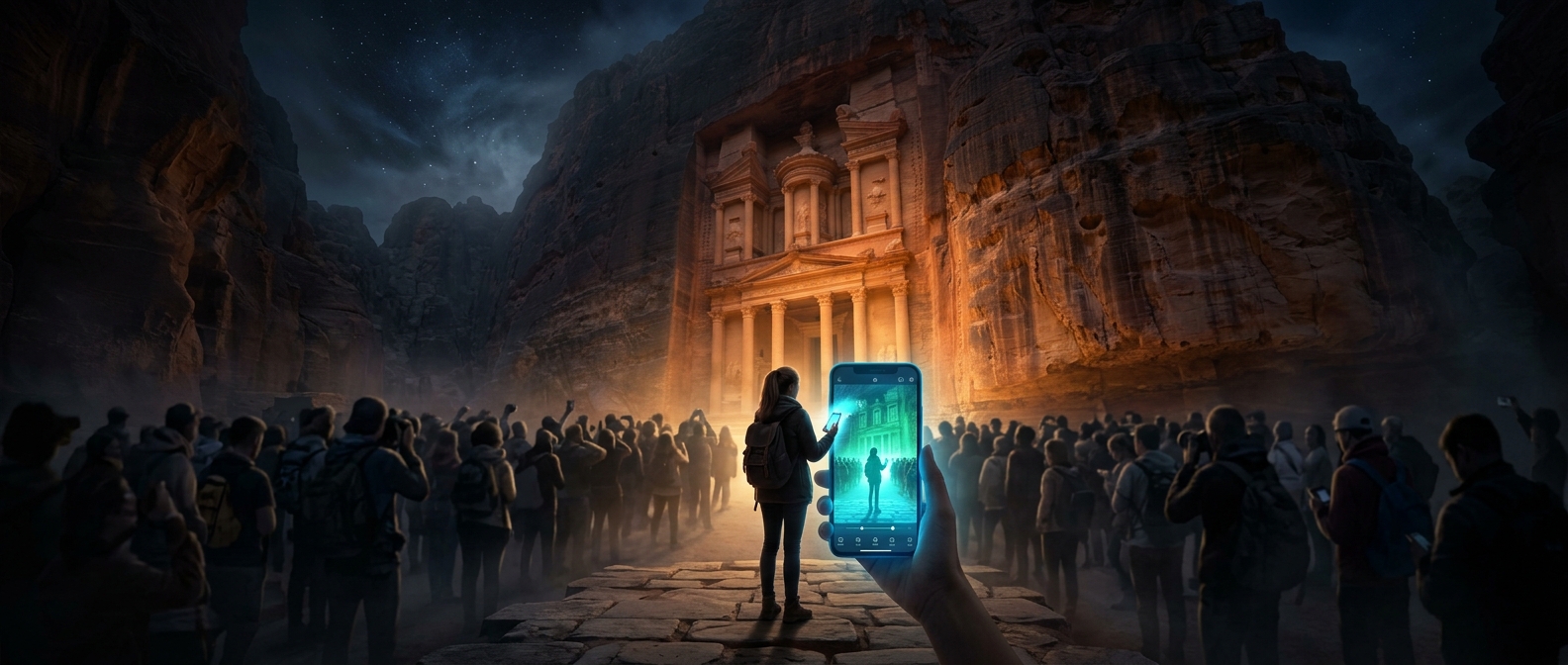
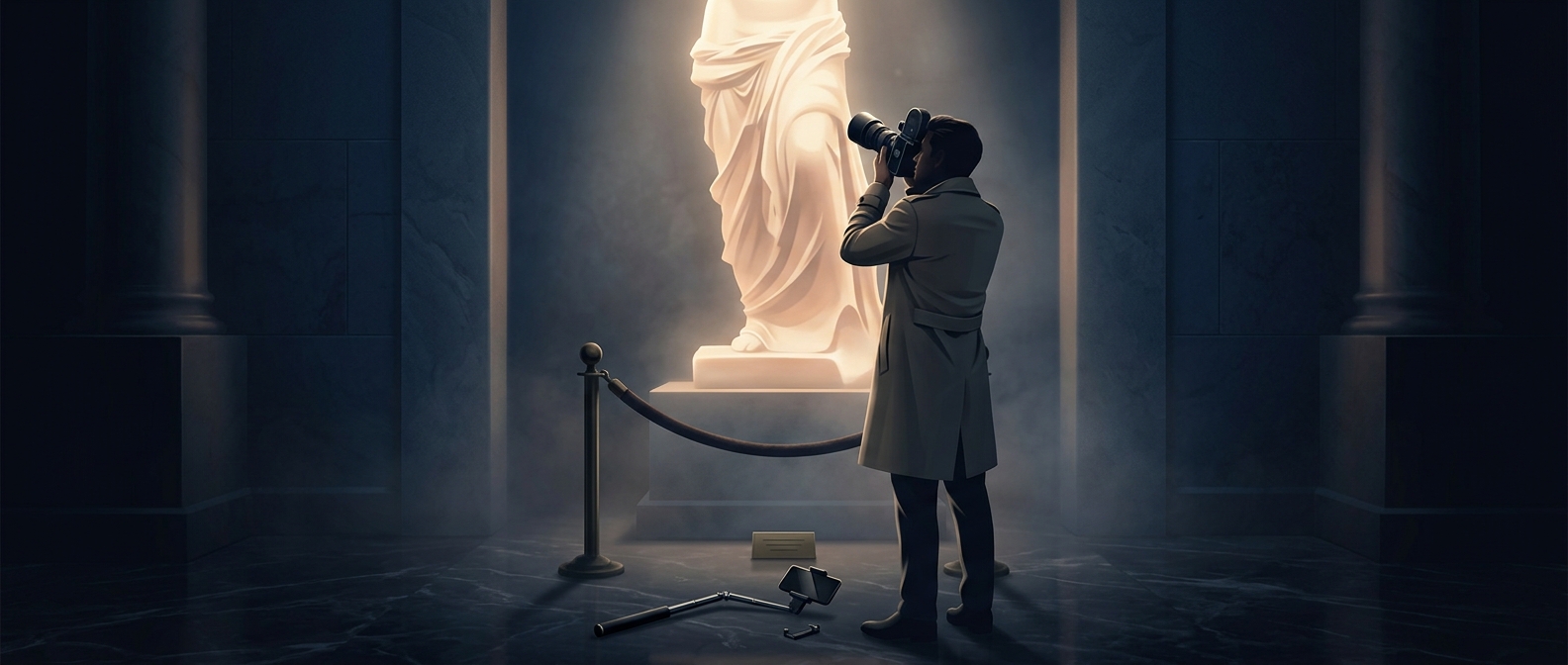
The elevated phone can block other people’s view, too. At a concert, attraction, or other busy venue, one person’s attempt to frame a shot may put a screen and stick directly in someone else’s line of sight. The stick can also extend into a route that staff need to keep clear.
Rules differ by location: some places discourage selfie sticks, while others restrict them more firmly. The practical tradeoff is simple: a longer reach makes it easier to frame a group without asking someone else to take the picture, but it also means the phone occupies space beyond the photographer’s immediate reach. In a narrow crowd, that extra reach is often the first thing a venue asks visitors to leave behind.