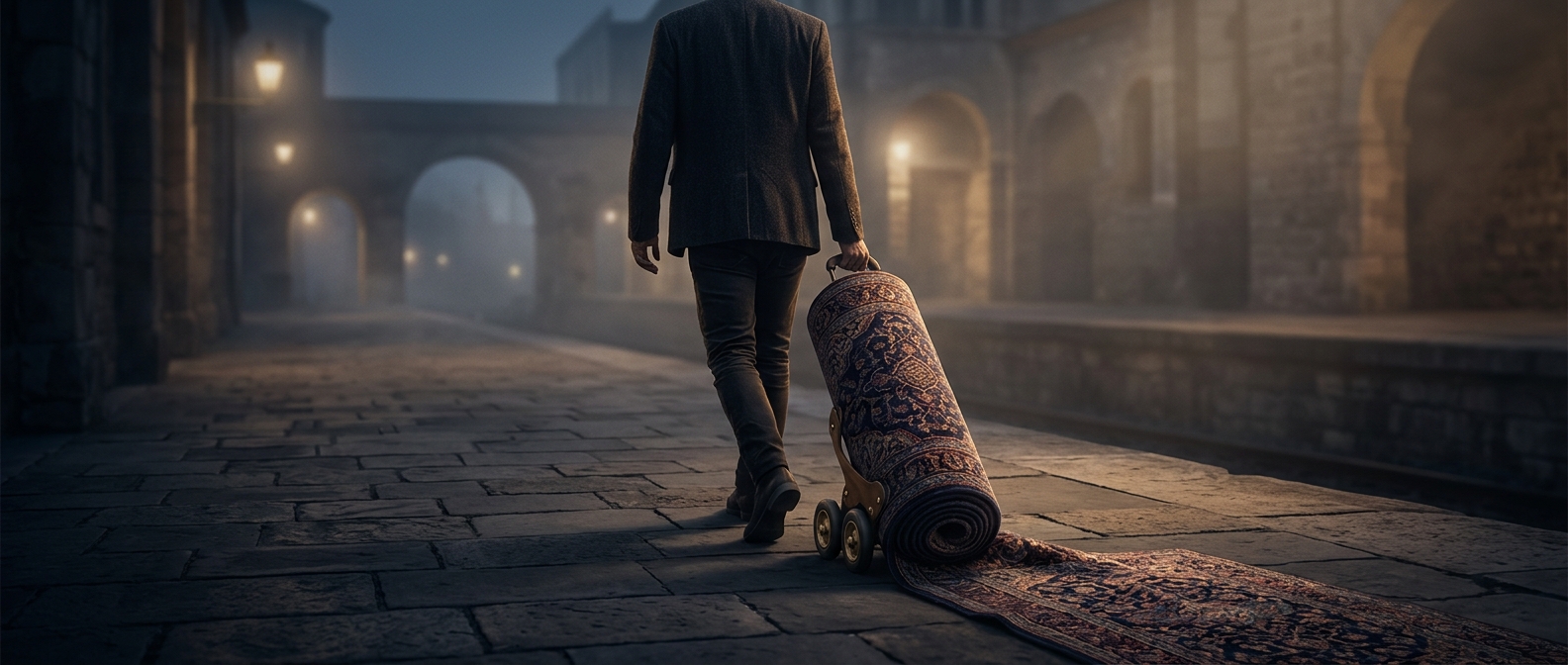
A suitcase made from household material
Before sturdy, standardized suitcases were common, luggage had to be built from materials people could afford and carry. Carpet fabric—often thick, tough, and available as remnants—could be sewn into a roomy bag with a handle. Unlike a rigid trunk, it was light enough to carry and could flex into crowded travel spaces.
That flexibility came with a tradeoff: cloth sides offered little protection from crushing or impacts. A carpetbag worked well for clothing and other resilient possessions, but fragile items needed extra wrapping or a more rigid container.
From practical luggage to a political label
The bag’s plain, inexpensive look later gave the word carpetbagger its force. During Reconstruction, the name was used disparagingly for Northerners who moved to the South; the image suggested a newcomer arriving with belongings stuffed into a simple carpet bag. The label turned ordinary travel gear into a symbol of supposedly temporary or opportunistic outsiders.
The same bag could therefore tell two stories: a traveler’s practical choice when leather luggage was costly, and a political opponent’s caricature of someone who did not belong.