A monster built around a repeatable joke
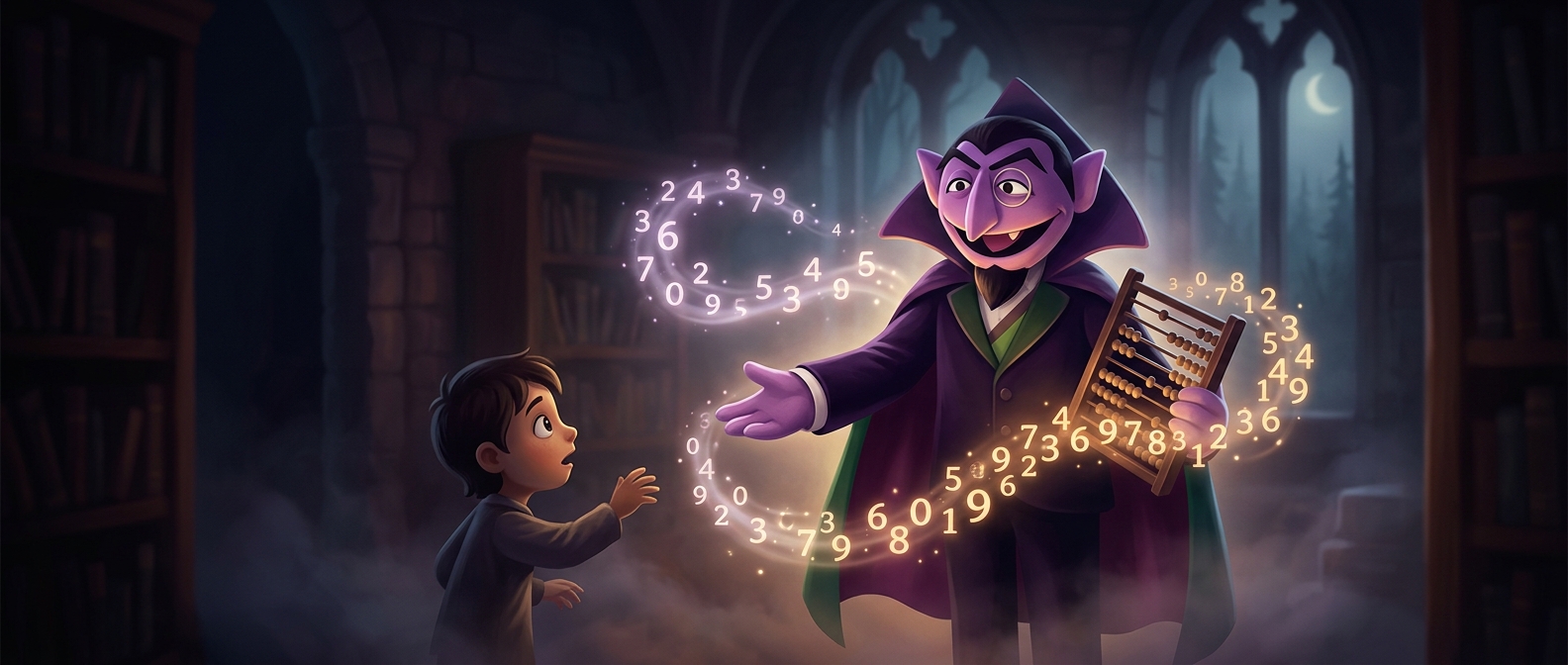
The Count’s spooky appearance borrows familiar vampire signals: a cape, pale face, and theatrical manner. But his defining habit is not lurking or threatening. It is counting. That mismatch makes the character’s humor easy to grasp: he treats ordinary numbers as thrilling discoveries, then celebrates them with a dramatic laugh.
The joke also gives the character a reliable structure. A scene can introduce a group of objects, let the Count count them one by one, and end with the total. The audience can follow along before he announces the answer. His performance turns a basic arithmetic task into a small comic routine rather than a test.
Repetition invites children to join in
For young viewers, counting depends on matching each number word to one object, in order. Seeing the Count point to items as he counts makes that relationship visible. Repeated sequences offer another chance to practice: a child who misses a number can pick up the pattern on the next round.
The character’s exaggerated enthusiasm lowers the stakes, too. Numbers are not presented as a problem to get wrong; they are the payoff to a joke everyone can anticipate. A vampire costume supplies the theatrical surprise, while the orderly counting supplies the reassurance. The result is a monster whose most memorable act is helping viewers count along.