Why a Small Tune Can Take Up So Much Mental Space
A jingle is built to be remembered in a few seconds. Its melody is usually simple enough to follow on a first hearing, and its words are tied closely to the product name. That pairing gives the brain a compact package: a tune supplies a rhythm and sequence, while the lyrics attach them to something concrete. Repeated broadcasts give that package more chances to stick.
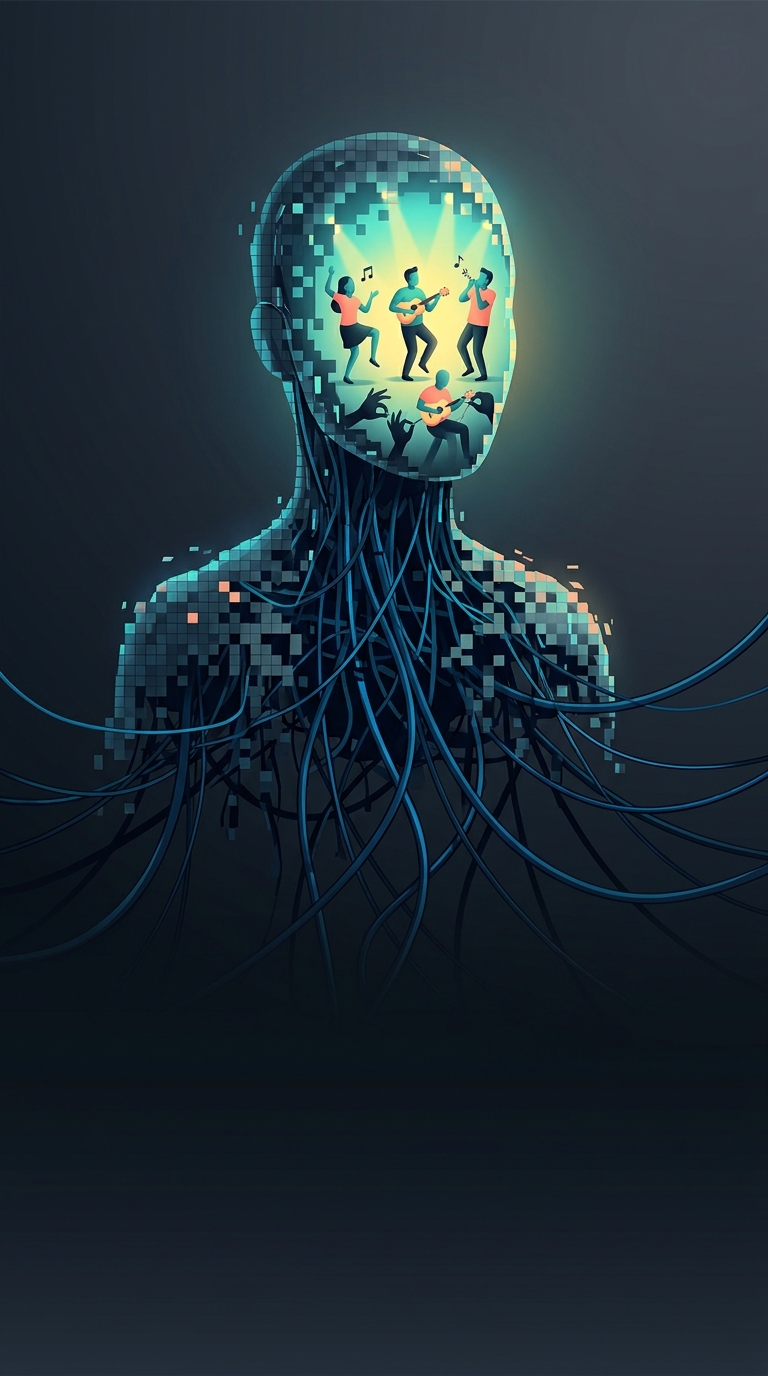
Once learned, a tune can be recalled without a deliberate decision. Psychologists often call this an involuntary musical image: a familiar piece of music that starts playing in the mind on its own. It may be prompted by a reminder, such as seeing the product, but it can also surface when attention is loose or a task leaves part of the mind unoccupied. Trying hard to force the tune away can make a person notice it more, much as checking whether a thought has disappeared keeps that thought in focus.
Familiarity Makes the Loop Easy to Restart
A short jingle has few musical turns to keep track of, so the mind can replay it with little effort. A distinctive ending, rhyme, or repeated phrase can also make the tune feel unfinished when it stops abruptly, inviting a mental replay. The result is not that the brain has judged an old ad important; it is that a well-rehearsed, easy-to-reconstruct sequence is readily available.
That is the advertising advantage—and the annoyance. A product may vanish from view, but a tune learned through repetition can remain an efficient route back to its name. Decades later, one small cue may be enough to start the whole miniature song again.