Why a Coffeehouse Fit the Show’s Rhythm
Friends needed a place where six young adults could keep running into one another without every meeting requiring a special excuse. A coffeehouse offered a believable “third place”—somewhere between home and work—where people could linger, talk, and join or leave a group. That made it a natural setting for a sitcom built around conversations that could stretch across an episode.
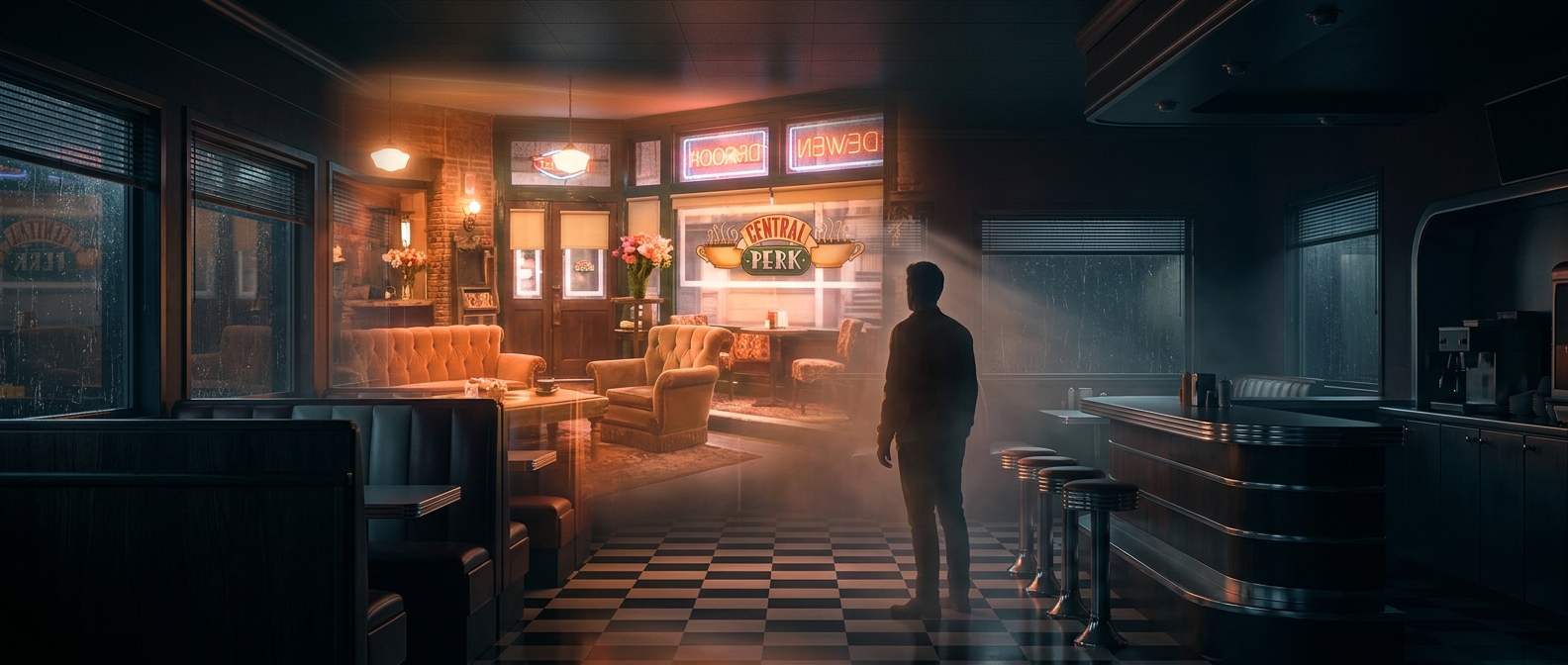
A diner could also bring characters together, but it carries a different social rhythm: people arrive to eat, order, and eventually give up their table. The coffeehouse made casual hanging out feel like the point, not a pause in some other activity.
A Familiar Room, Many Different Scenes
The recurring setting also gave the series a dependable stage. Characters could gather there to celebrate, argue, share news, or encounter someone unexpectedly, while viewers immediately understood where they were. The room’s familiarity let each episode spend less time establishing a new location and more time on the changing relationships within the group.
That choice helped make Central Perk more than a backdrop. It became part of the show’s social world: a public place that felt comfortable enough for private conversations, yet open enough for the whole ensemble to pass through. The coffeehouse worked because it made lingering together seem ordinary.