A fluid ring seemed like a possible atom
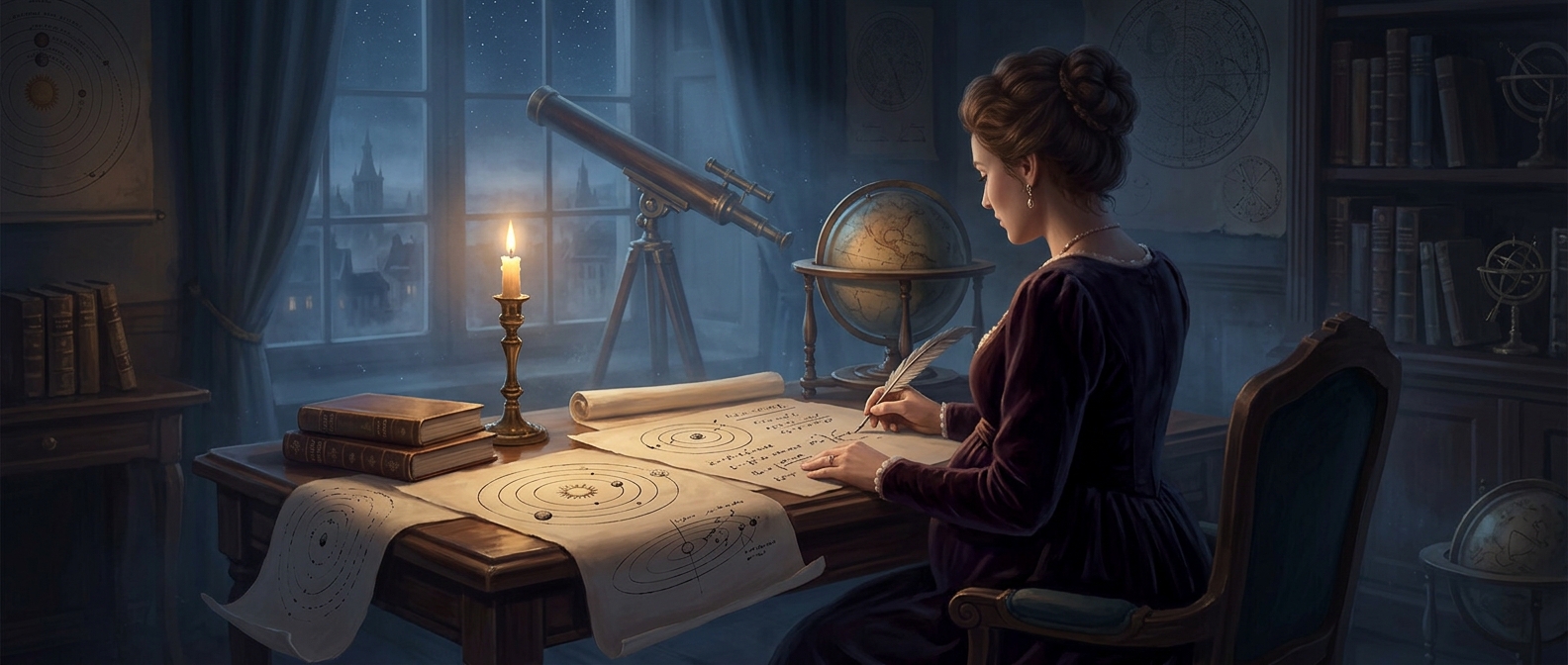
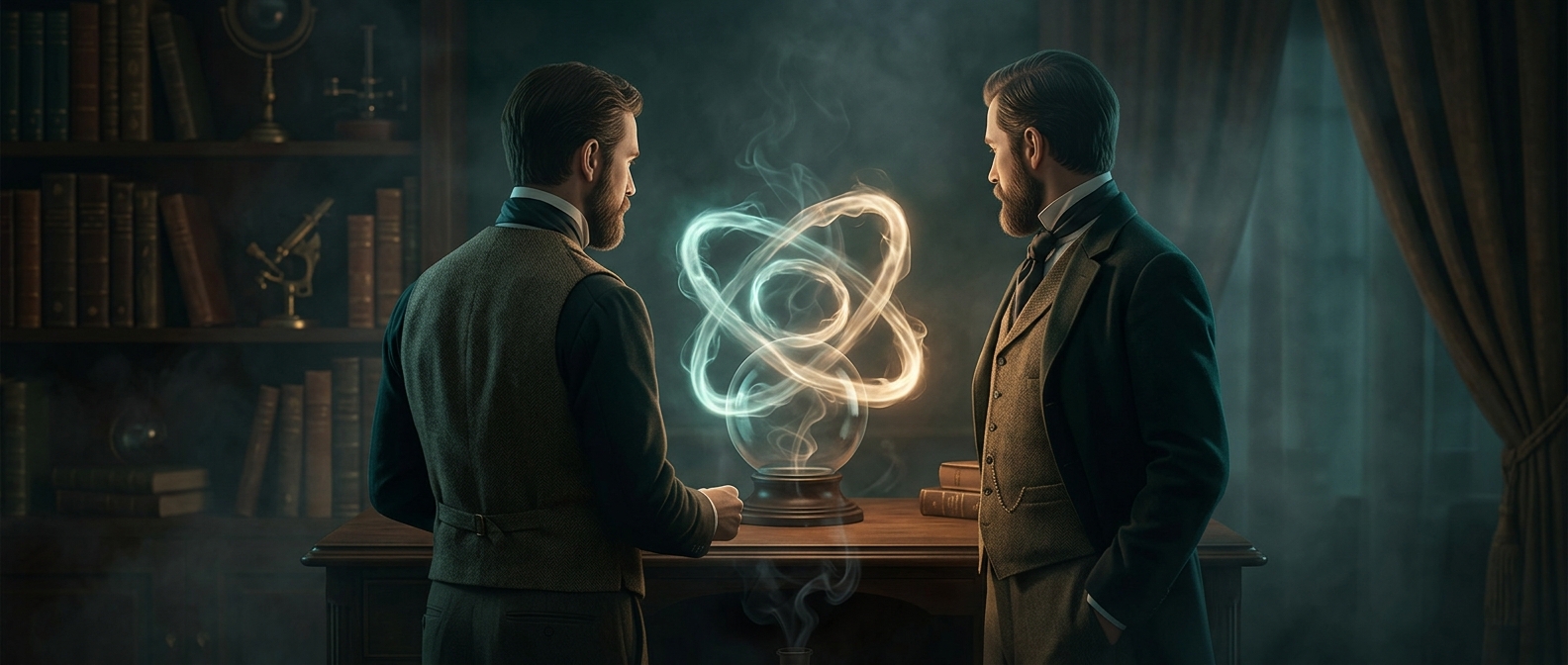
In the 1860s, physicist William Thomson—later known as Lord Kelvin—imagined that atoms might be persistent swirls in an invisible fluid called the ether, then thought to fill space. A vortex ring, like a smoke ring, can travel through fluid while keeping its shape for a long time. Kelvin wondered whether more complicated, knotted vortices could be stable too.
His proposal offered an appealing picture of matter: different knots in the ether might correspond to different kinds of atoms. The knots would not be tiny solid objects tied inside the fluid; they would be patterns in the fluid’s motion itself. If the pattern could not untangle without being cut, it might resist simply disappearing.
The model failed; the knot problem remained
The theory depended on the ether and on the idea that real atoms were fluid vortices. Neither held up as a physical explanation. But the proposal raised a precise mathematical question: when are two knots genuinely different?
In knot theory, a knot is treated as a closed loop, and one knot can be reshaped into another by stretching or bending it—but not by cutting it or letting it pass through itself. A loop that can be smoothed into a plain circle is the unknot; more tangled loops may belong to distinct types. A drawing can mislead, because the same knot can look different from another angle or after it is rearranged.
Mathematician Peter Guthrie Tait took up the challenge of cataloguing knots, using diagrams and systematic comparisons to distinguish them. The search became part of the early development of knot theory, a branch of topology—the study of properties that survive continuous deformation.
Kelvin’s imagined atoms did not become the building blocks of matter. Yet a failed physical model helped turn an abstract tangle into a lasting classification problem: how many different ways can a loop be knotted?