Why a stream sometimes has to stop
A video player does not usually display each piece of a stream the instant it reaches your device. It keeps a short reserve of upcoming video in temporary storage called a buffer. That reserve gives playback room to continue through brief fluctuations in the connection: the player can show data it already has while waiting for more.
The reserve is finite. If the player uses video faster than the network can deliver it, the stored supply shrinks. Once it runs out, the player has nothing ready to show and must wait for additional data.
The balance between quality and continuity
Video takes different amounts of data to deliver at different picture qualities. Many streaming systems can switch to a lower-quality version when a connection slows, reducing how quickly new video must arrive. That can help playback continue, though the picture may look less sharp. If available delivery still cannot keep pace—or the player has too little video stored to bridge the gap—it pauses to refill.
Players have to balance two competing aims: starting quickly and keeping a larger reserve. Waiting longer before playback can provide more protection against a slowdown, but makes viewers wait at the beginning. Keeping less video ahead starts sooner, yet leaves less cushion when network conditions change.
Why the pause can outlast the slowdown
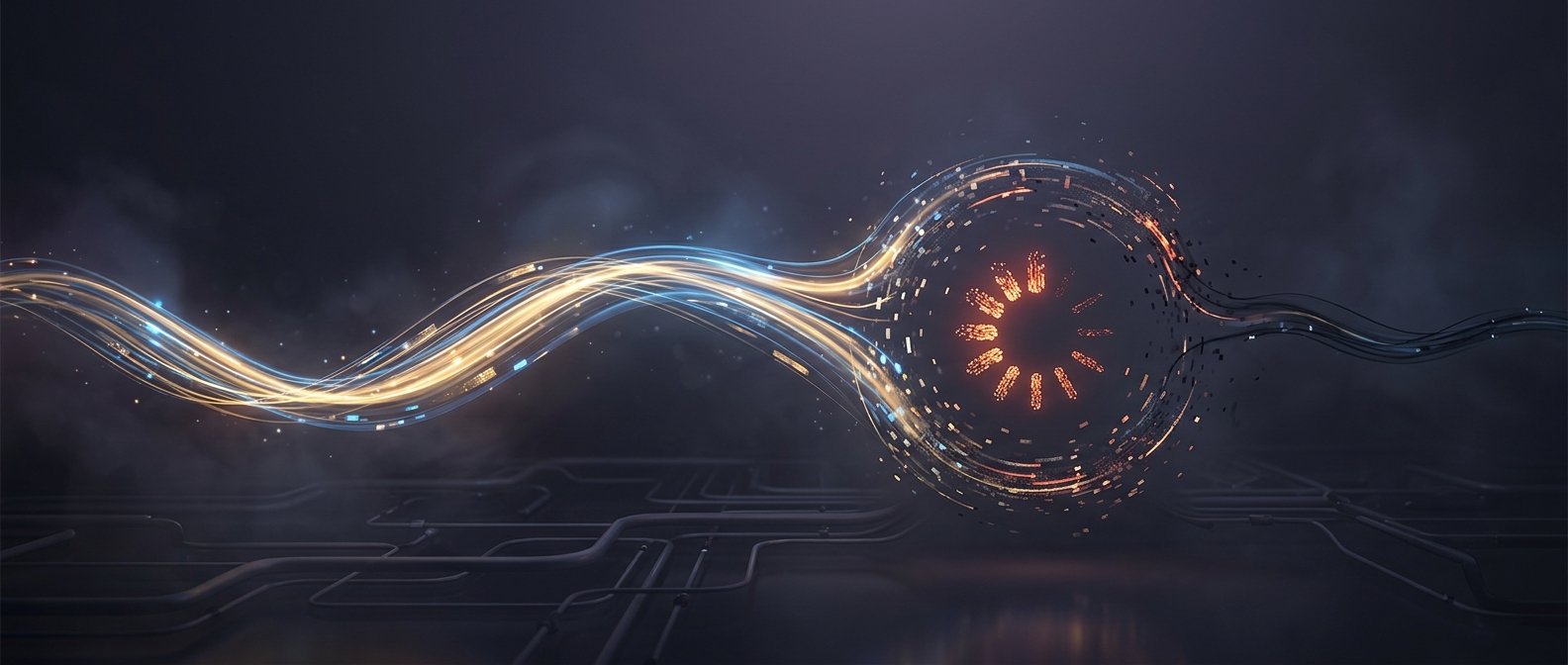
A connection may recover before playback resumes because the player first needs to rebuild enough of its reserve to continue reliably. The pause is therefore not simply a measure of how long the connection was slow; it also reflects how much video had been stored and how quickly it can be replenished. The spinning indicator marks a small but consequential gap between what the screen is showing and what the network has delivered.