Why a hotel TV may ignore its HDMI port
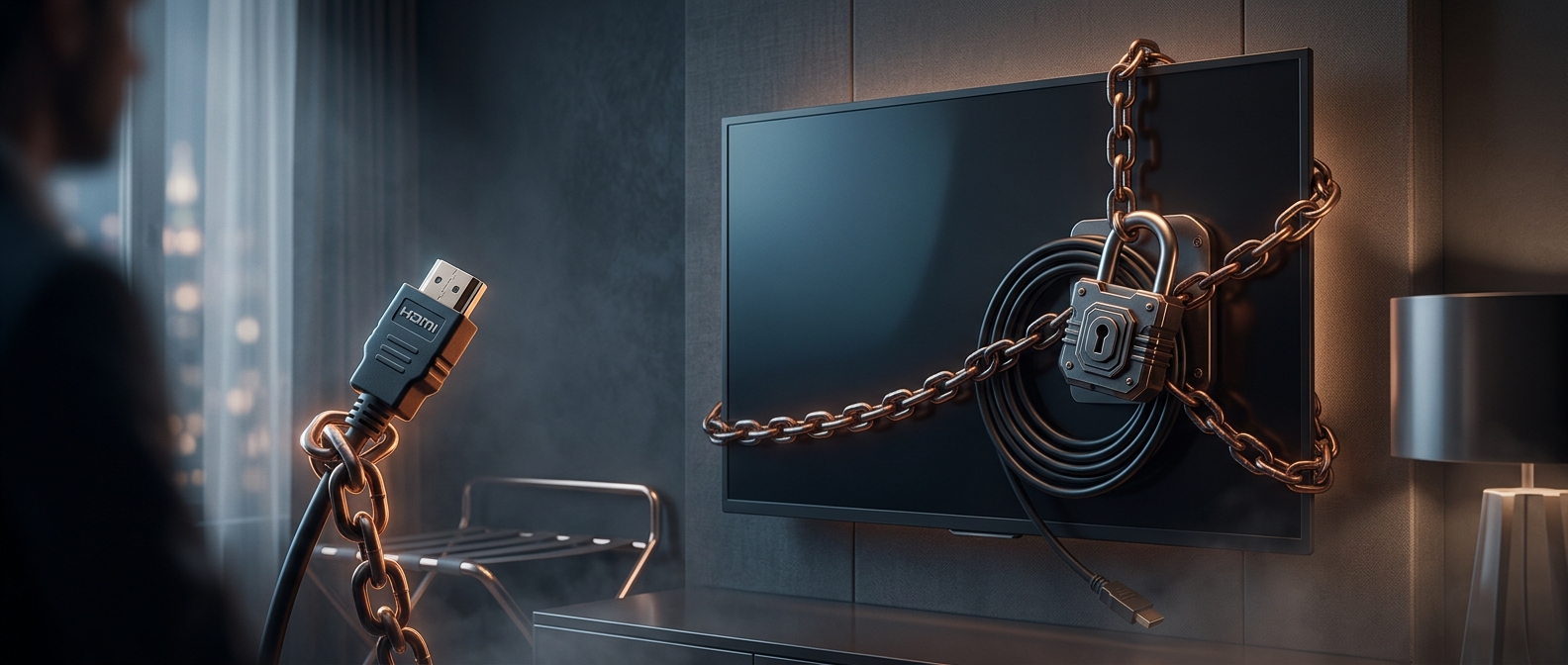
A television in a hotel room can look like an ordinary home set while running in a more controlled mode. Many hotels use hospitality TVs—models or configurations designed for shared, frequently reset rooms. Their settings may be locked so guests cannot change essential setup, such as the startup screen, channel list, or volume limits.
That lock can apply to external inputs, too. The HDMI socket may be physically present, but the TV’s software or hotel-controlled settings can prevent it from appearing as a selectable source. On some setups, a room-control system also governs what the television displays. The cable is connected; the hotel’s configuration decides whether the signal is allowed through.
The tradeoff behind the restriction
A fixed setup makes rooms easier to manage. Staff can return the television to a predictable state between guests, and guests are less likely to leave it stuck on an unfamiliar menu or source. It also reduces troubleshooting when a device or cable does not work as expected. The same control, however, can block a guest who simply wants to watch a laptop or streaming device.
Hotels handle this differently: some leave HDMI available, while others lock it or provide a designated connection. If a port does not work, the limitation may be in the TV’s settings rather than in the cable. That small difference explains why the same laptop can connect easily in one room and produce no picture in another.