A civic faith meant to replace neither God nor the state
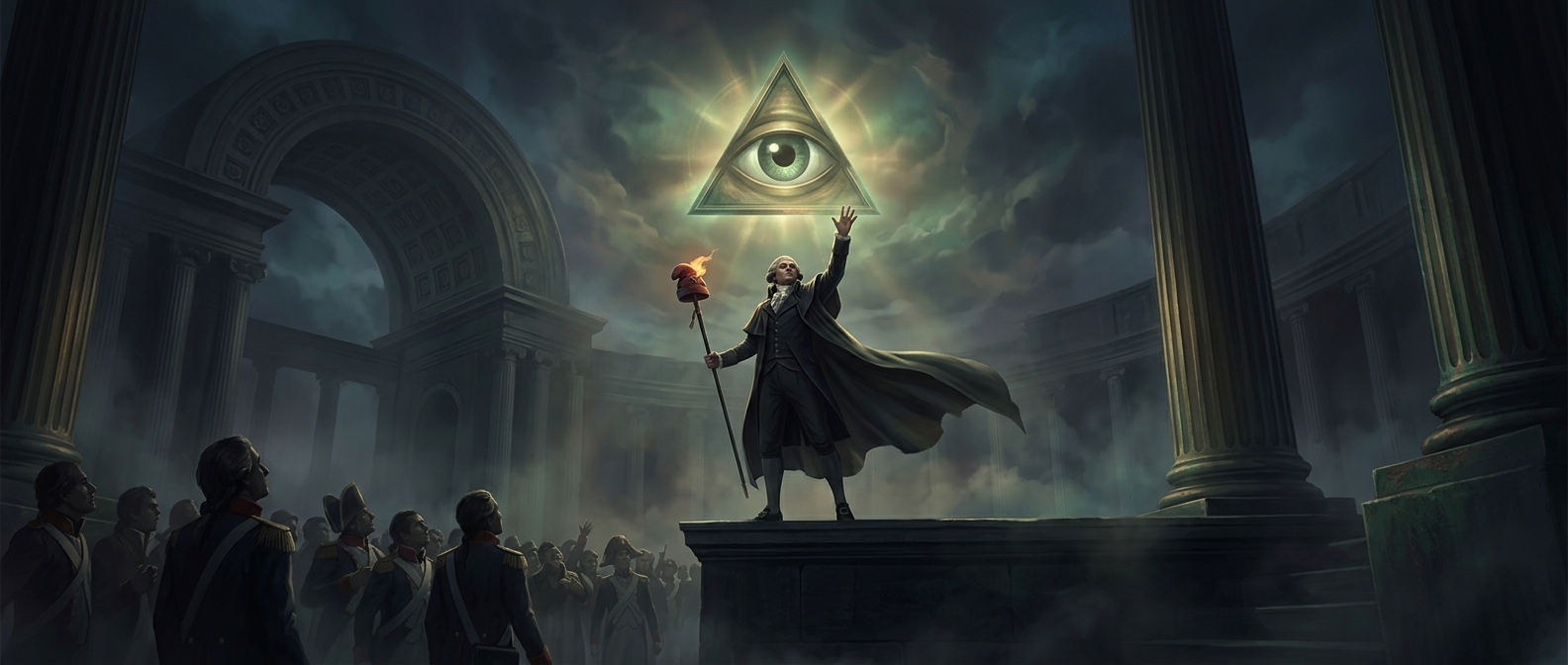
In 1794, during the French Revolution, Maximilien Robespierre championed the Cult of the Supreme Being, a new civic religion endorsed by the revolutionary government. Its central idea was deist: a creator existed, but people should understand that being through reason and nature rather than through the authority of the Catholic Church. The cult also taught that virtue and justice mattered beyond an individual’s lifetime.
This put Robespierre at odds with revolutionary atheists, who wanted to strip religion from public life altogether. It also offered a way to oppose the Catholic Church without making atheism the official creed. The cult was not a fully developed church with a settled theology; it was a state-backed project built around shared beliefs, public ceremonies, and civic morality.
Why stage a festival?
Revolutionary leaders understood public ritual as a way to make political ideas visible. A festival could gather citizens, turn abstract ideals into a shared experience, and give the new order ceremonies of its own. On June 8, 1794, Paris hosted a lavish Festival of the Supreme Being, with processions, music, symbolic scenery, and Robespierre taking a prominent role.
The spectacle made the political stakes hard to miss. Robespierre appeared as the leading public advocate of the cult, prompting critics to accuse him of treating himself like its high priest. But the festival’s purpose was broader than personal display: it presented belief in a moral creator and devotion to civic virtue as foundations for the republic.
The experiment was short-lived. Robespierre fell from power later that summer, and the government’s support for the cult faded. Its brief rise shows how revolutionary France tried to replace the Church’s public authority not simply with unbelief, but with ceremonies and beliefs designed to bind citizens to a new political order.