Why the Doorway Matters in the Folklore
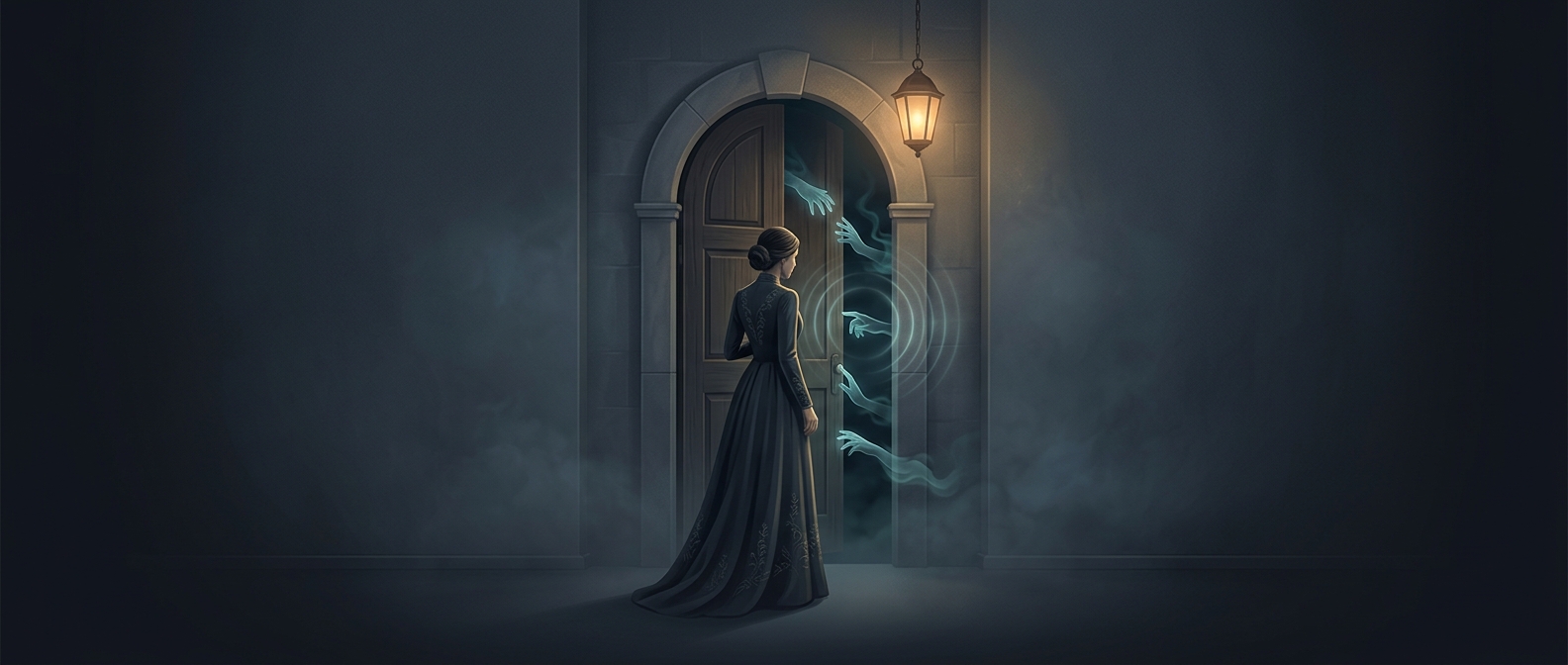
In some Slavic village traditions, three knocks after midnight are treated not as an ordinary visitor’s call but as a warning: a restless spirit may be waiting outside. The danger lies in the threshold—the boundary between the household’s protected interior and the unknown beyond it. Opening the door is said to erase that boundary and let the presence enter.
Salt, Fire, and Silence
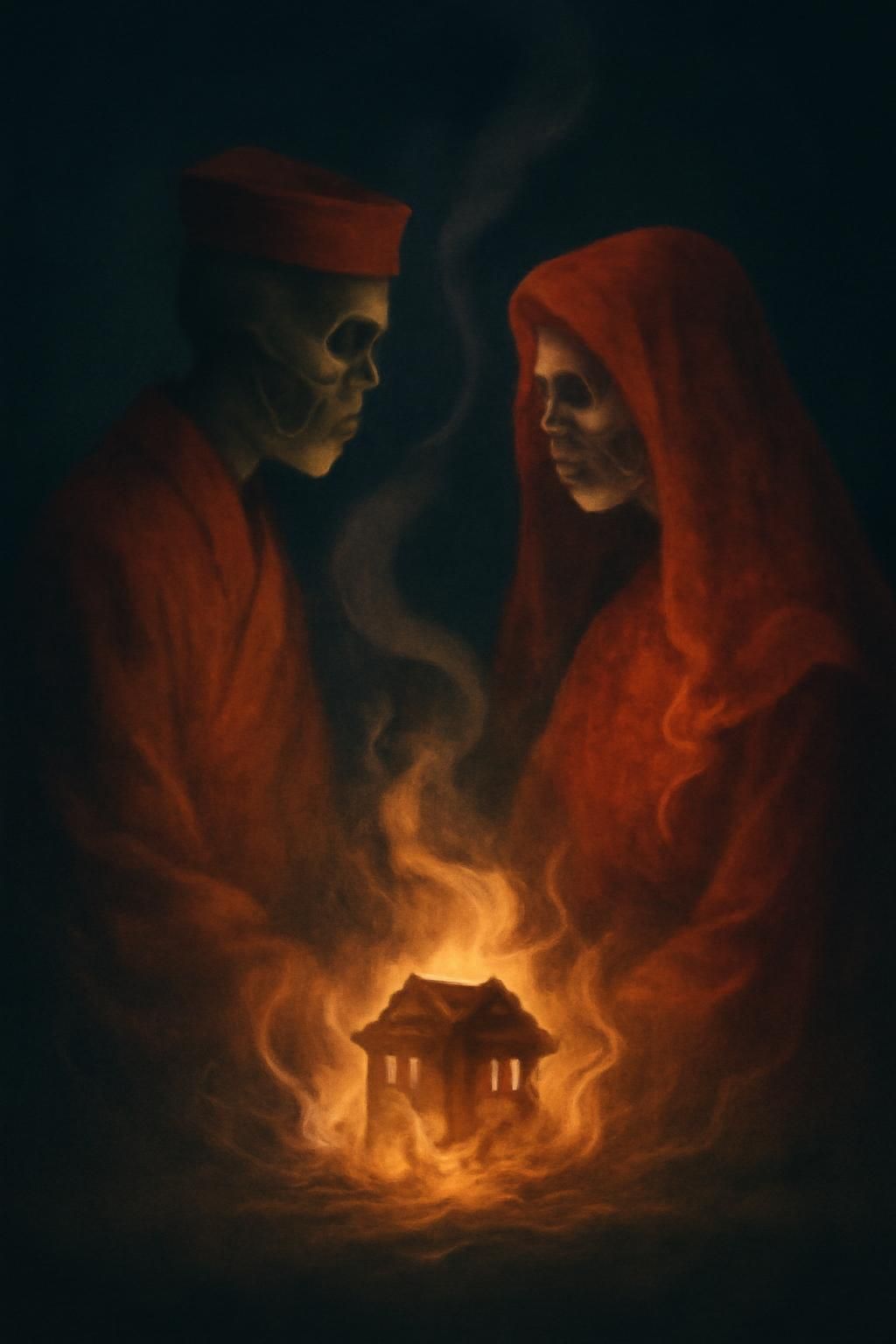
The prescribed response brings together three forms of restraint. Tossing salt onto the hearth places a familiar protective substance into the home’s central fire; remaining silent avoids answering or acknowledging the knock; and keeping the door shut preserves the boundary. The ritual is less a confrontation than a refusal to engage.
These details fit a practical world where nighttime knocks could be frightening and difficult to investigate safely. Folklore gave the household a simple script for uncertainty: do not open, do not answer, and perform a familiar act of protection. Its force comes from making a frightening moment feel governed by rules.
A Rule for an Uncertain Night
The story turns an everyday sound into a test of caution. Its memorable lesson is not to prove who is outside, but to resist the urge to cross the threshold before morning.