A fireplace became a holiday program
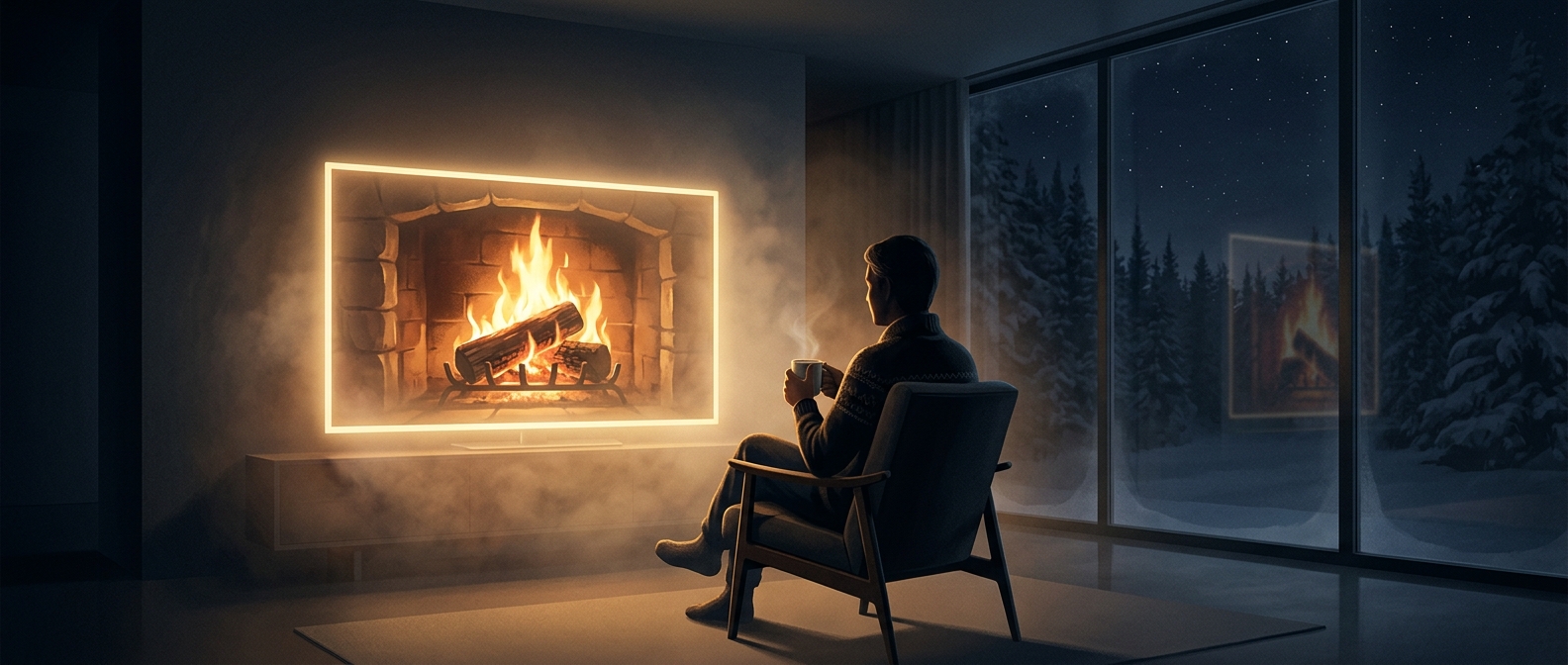
A televised fire offered something ordinary schedules rarely did: an image that could stay on without demanding close attention. Viewers could leave it on while wrapping presents, eating, or sitting with family, letting the crackle and flicker supply the feeling of a hearth even in a home without one.
The format was simple by design. A camera recorded a real fire, and the footage was broadcast for hours, sometimes repeated to fill a long stretch of airtime. There was no plot to follow and no host to keep things moving. The fire itself provided the changing picture; its steady rhythm made repetition feel less like a flaw than part of the point.
Why give up the schedule?
For a broadcaster, replacing regular shows with a fireplace meant trading a conventional lineup for a seasonal image people could use as background. That choice turned a practical programming slot into a shared ritual: families in different rooms—and different homes—could have the same quiet scene on their screens.
The appeal depended on television doing less, not more. A crackling fire gave the room a focal point without interrupting conversation, and the long broadcast made it available whenever people wanted it. The surprising result was that footage with almost no action could still feel like an event: viewers tuned in not to find out what happened next, but to make the room feel warmer.