When a Highway Pursuit Took Over the Broadcast
The chase offered television something a championship game could not: a story unfolding minute by minute with no known ending. On June 17, 1994, a white Ford Bronco carrying former football star O. J. Simpson traveled slowly along Los Angeles freeways while police followed. Viewers could watch the route change, hear updates from reporters and wonder how the pursuit would end. The drama came from waiting, not from speed.
Why Networks Left the Court
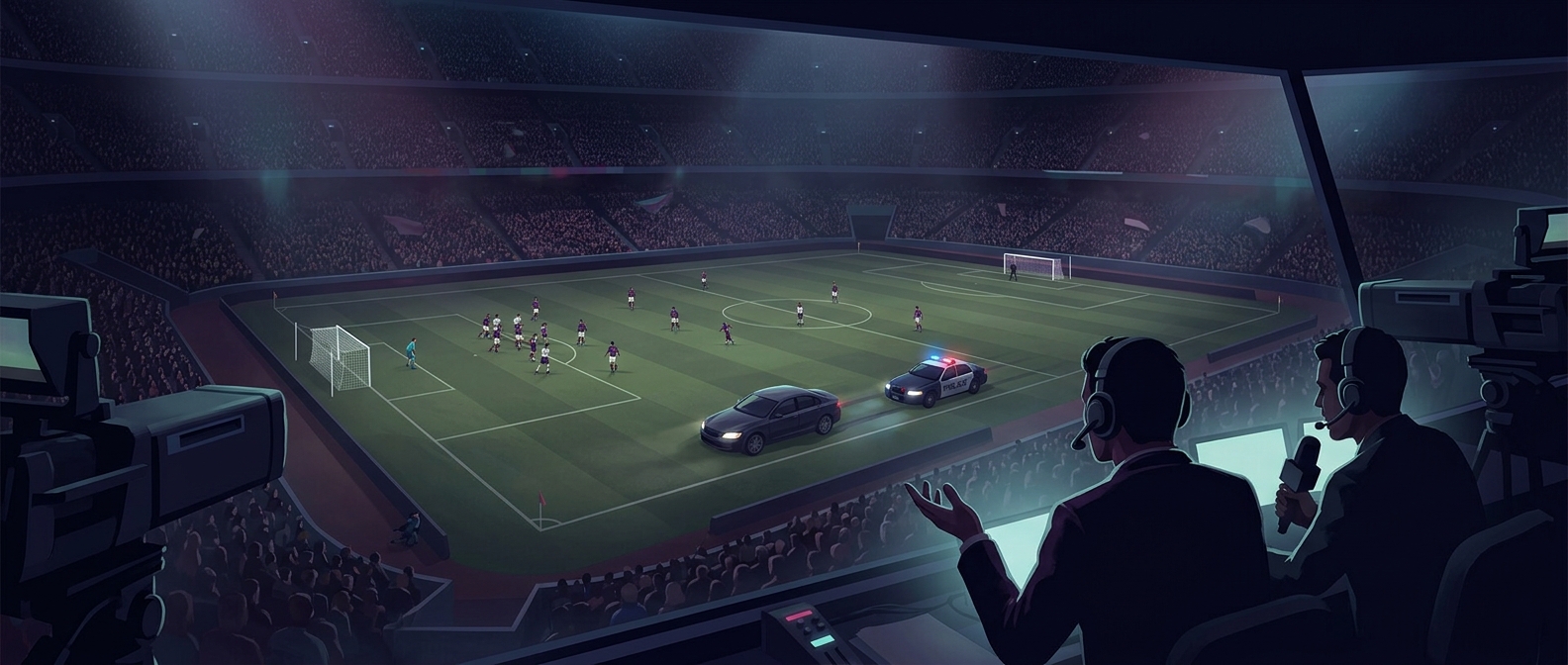
NBC was airing Game 5 of the NBA Finals between the New York Knicks and Houston Rockets. The game had a schedule, a scoreboard and a clear sporting payoff; the pursuit had immediate uncertainty and national attention. Simpson was already a major public figure, and the police chase had become a live event that news organizations felt viewers would expect them to cover.
That created a difficult choice: keep the planned sports broadcast intact or shift attention to a developing story. NBC devoted airtime to the pursuit, interrupting the Finals coverage. For viewers, the contrast was striking: a championship contest paused in the public imagination while a vehicle crawled along at ordinary highway speed.
The Power of an Unresolved Live Story
A slow chase may seem visually uneventful, but live television can turn duration into suspense. Each passing minute raises the same question—what happens next?—without requiring a dramatic image or a fresh development. The audience watches because the outcome is still open, and because the broadcast makes a distant event feel immediate.
The interruption also shows how television schedules can yield to events that are both unpredictable and widely watched. A Finals game could resume after a break; a live pursuit could not be replayed in the same way. That night, the unusual spectacle was not a fast chase, but a national audience watching a slow one instead of the game.