Why the News Keeps Moving Beneath the Anchor
A television news ticker is a strip of text that scrolls along the bottom of the screen while the main broadcast continues. It lets a newsroom add updates without interrupting the anchor or switching away from a report already in progress. A viewer can keep watching one story while catching a headline about another.
That convenience changes how news arrives. A spoken report has a beginning and an end; a ticker keeps presenting new fragments, often in compressed language. The viewer may see only a few words before they slide off the screen, so the format favors immediacy over explanation. It can make separate events feel like one continuous stream of urgency.
A Second Story Competes for Attention
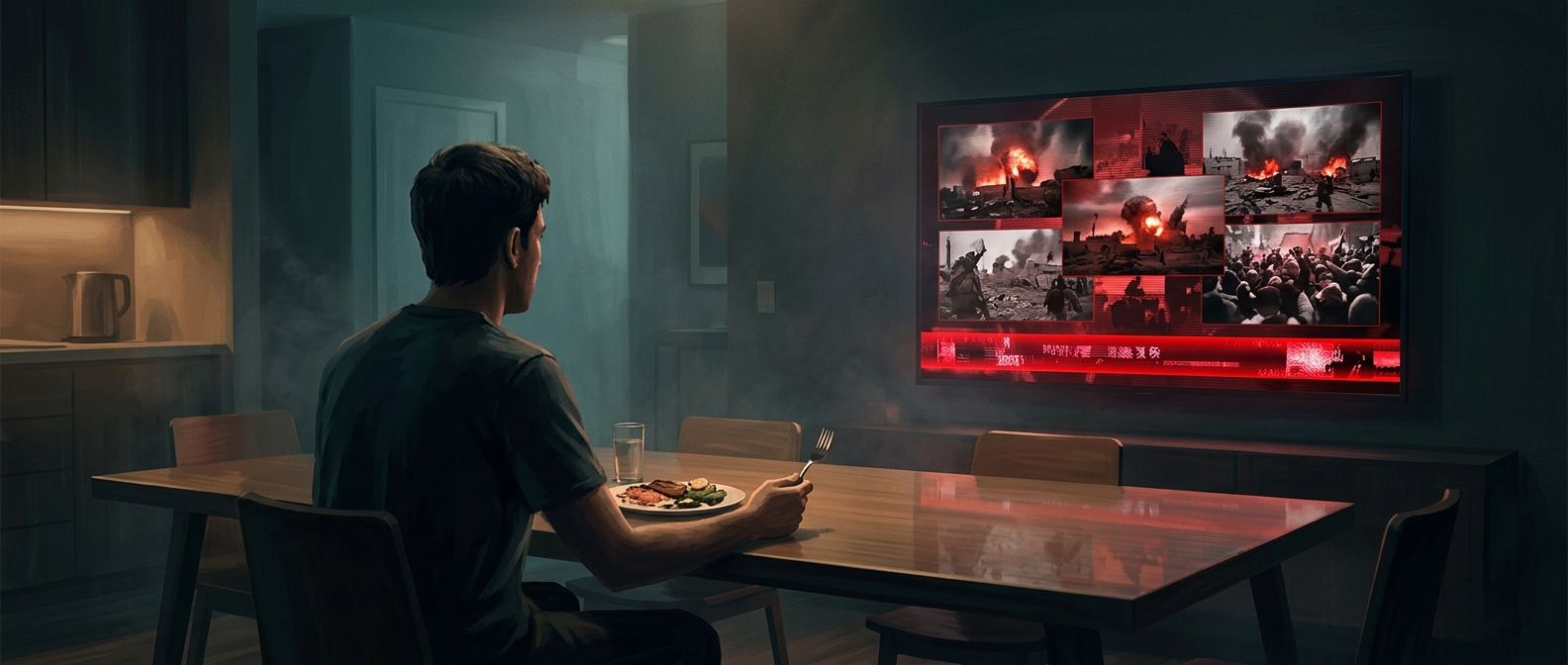
The ticker also divides the screen into two channels: the anchor’s report above and a sequence of headlines below. Even when the main segment is calm, an alarming line at the bottom can pull the eye away. At dinner, that split is especially noticeable: conversation and a meal share attention with a steady succession of distant events.
Because the text is brief, it usually cannot show what is known, what remains uncertain, or why an update matters. Those details belong in the full report, but the crawl may reach the viewer first. Its power is less about telling a complete story than about keeping a story—and the possibility of another breaking one—in view.