The contest makes a private limit visible
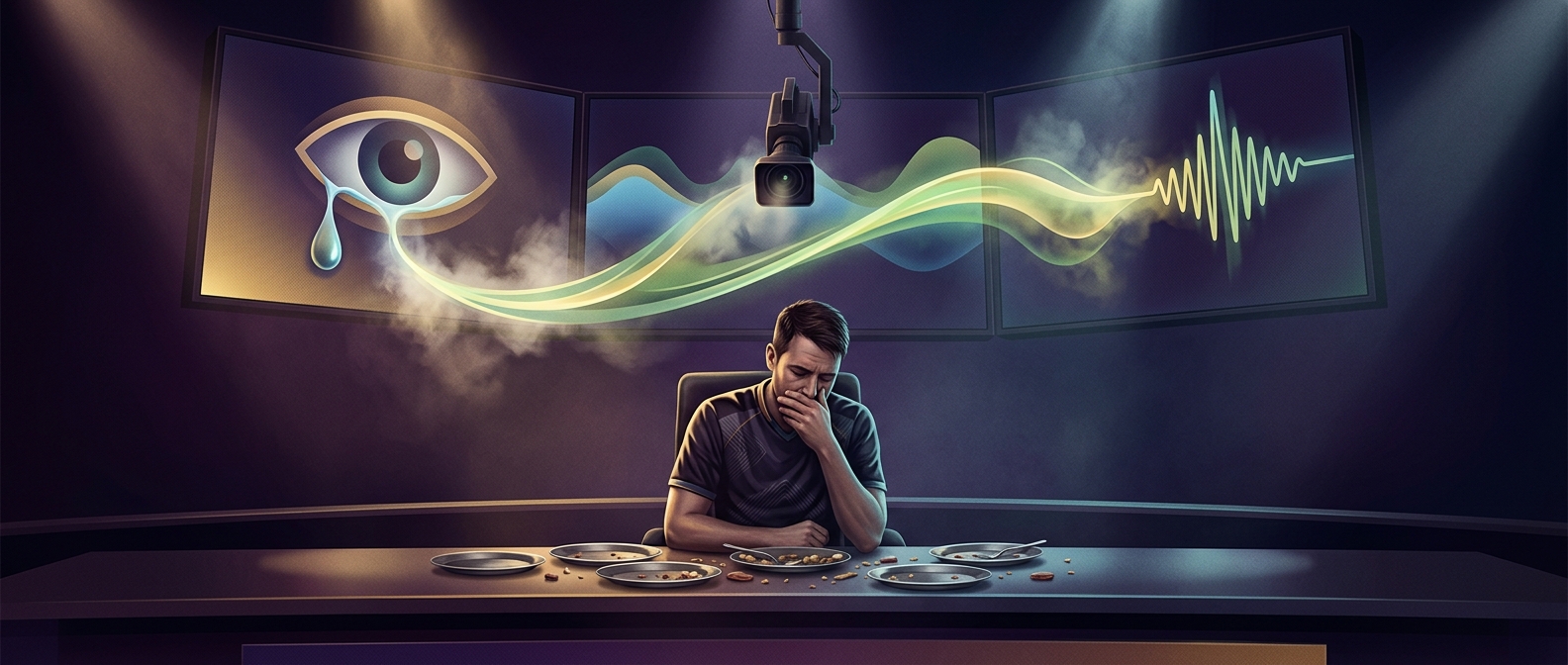
Eating contests are built around a simple scoreboard: consume as much as possible, or finish a set amount, within a time limit. But quantity is hard to read on screen. Viewers cannot see stomach capacity or effort directly, so broadcasts rely on visible signs—pauses, flushed faces, sweat, strained swallowing—to make the contest’s invisible cost legible.
That creates a peculiar kind of suspense. A contestant’s body becomes both the instrument of the performance and its warning signal. Each swallowed bite advances the score, while discomfort suggests that the body is approaching a limit. The audience watches to find out which will prevail: the competitor’s practiced control or the urge to stop.
Why nausea becomes part of the drama
As food fills the stomach, its walls stretch and send signals that contribute to fullness and nausea. Swallowing also involves coordinated muscles and protective reflexes; when those systems are under strain, gagging or retching can signal that eating has become difficult. These reactions are not just expressions on a face. They are part of the body’s effort to regulate intake and protect itself.
The broadcast turns those signals into a running visual narrative. A pause can look like a possible defeat; a resumed bite can look like a comeback. Near-regurgitation is especially potent television because it makes the boundary between continuing and stopping unmistakable. The discomfort is not incidental to the spectacle—it supplies much of its tension.
Entertainment built on a visible tradeoff
The format asks viewers to admire endurance while also inviting them to recoil. That tension helps explain why distress can hold attention: the audience is tracking a measurable result, but also watching a person contend with a basic bodily limit. The scoreboard counts food; the camera shows the cost of counting it.