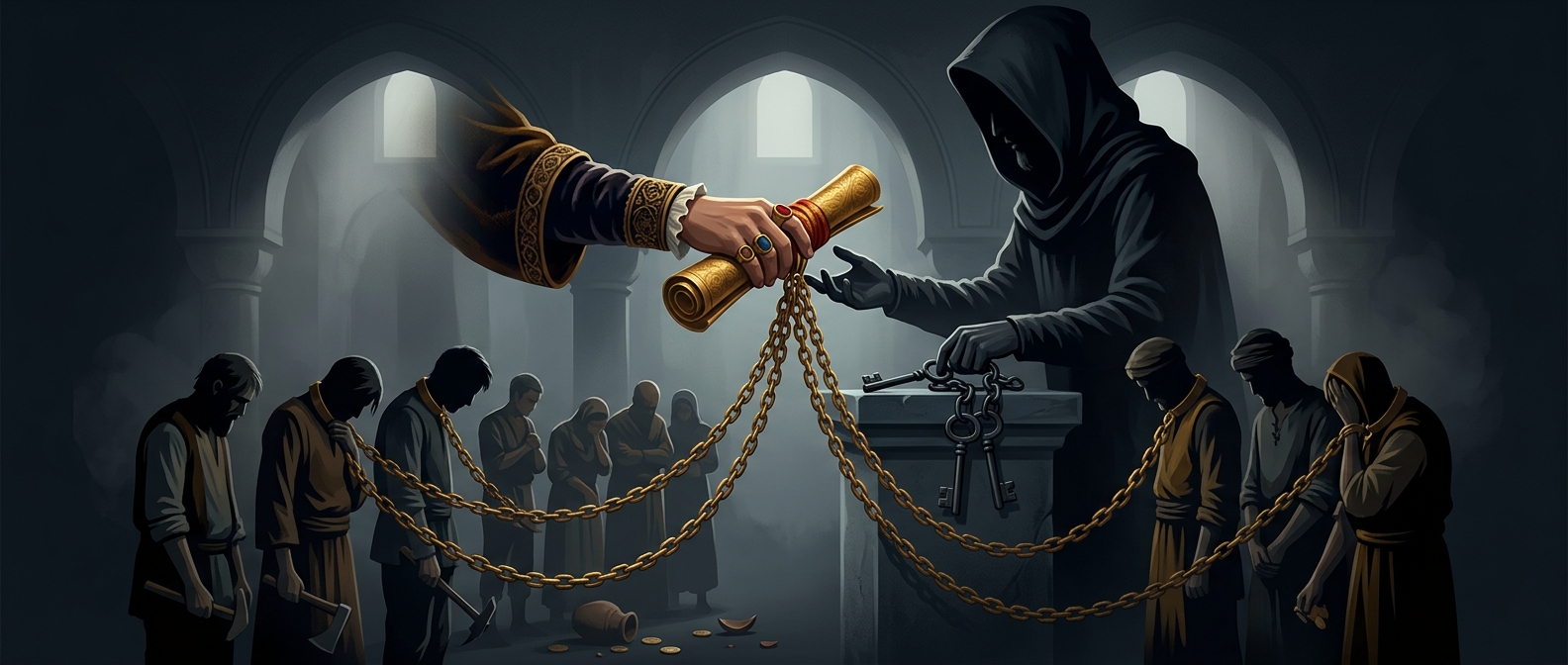
Turning future taxes into cash now
Under iltizam, the Ottoman state converted a stream of future tax payments into money it could use immediately. A bidder paid an agreed sum in advance for the right to collect taxes in a particular district. The state gained cash without waiting for each household or business to pay; the bidder took on the uncertainty of collecting the revenue.
The collector carried the risk—and kept the upside
The arrangement worked like a wager on what a district would yield. If collections fell short of the advance, the bidder could lose money. If they exceeded it, the surplus was profit. That gave the collector a direct reason to gather taxes efficiently, but also an incentive to press for as much revenue as possible.
The state, meanwhile, traded some potential income for certainty and speed. It received the advance even if collection later proved difficult, while the bidder had to manage the gap between the promised payment and what could actually be collected.
A fiscal shortcut with local consequences
Iltizam shifted part of the work and risk of taxation away from the government and onto private contractors. That could help a large empire raise revenue across districts without relying on its own officials to handle every collection. But taxpayers encountered the system through the people doing the collecting, whose earnings depended on the amount they brought in.
The key tradeoff was immediate revenue for the state in exchange for uncertain future proceeds—and a private collector’s incentive to make up the difference.