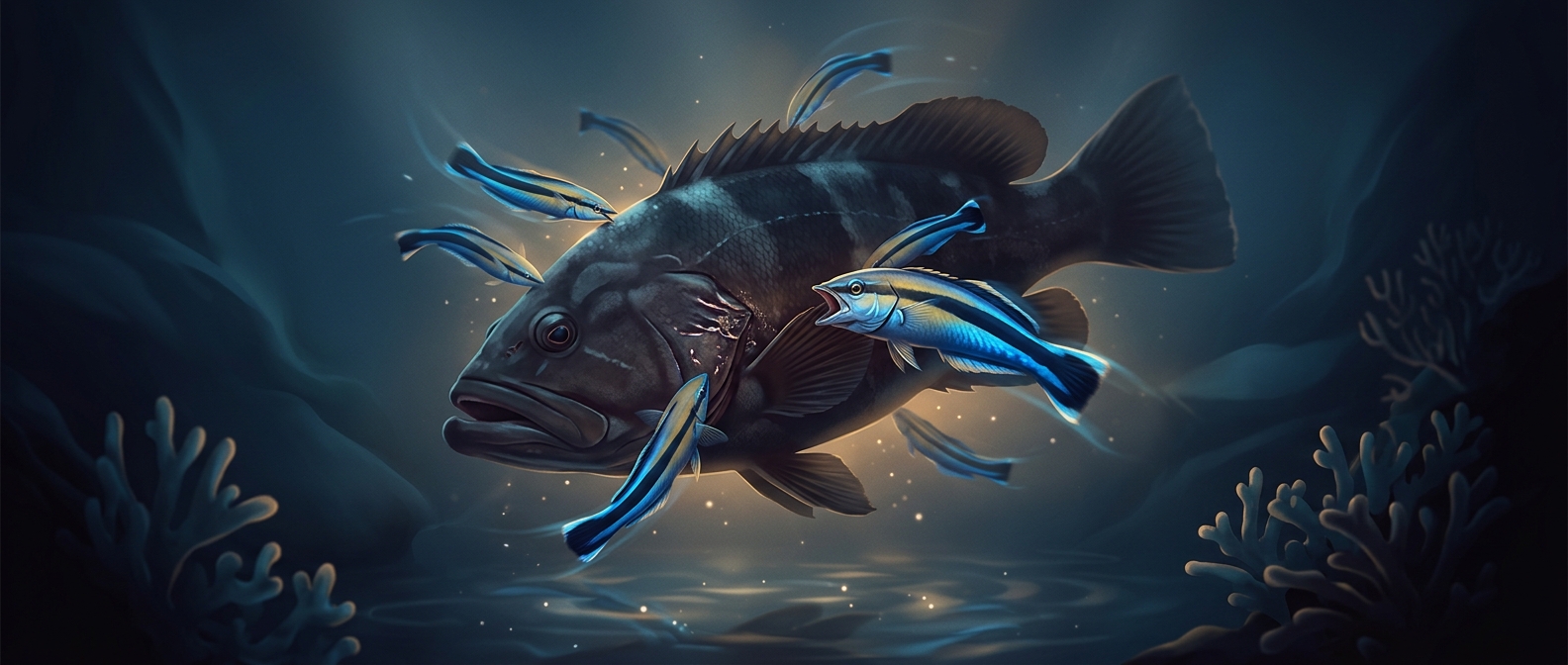
A bite can end the cleaning session
Cleaner fish feed on parasites they pick from the bodies of larger fish. But a client’s surface can offer a tempting alternative: healthy scales or the protective mucus coating on its skin. Taking a bite from that living tissue may be easier or more rewarding than searching for tiny parasites, but it makes the service worse for the client.
The client can answer with a sudden chase or other threat. For a small cleaner, the risk is immediate: the larger fish can drive it away, ending both the meal and the opportunity to feed on parasites. That consequence makes harmful bites costly.
The client has leverage
This exchange works because the client is not simply passive. It can leave or punish a cleaner that takes too much, while the cleaner depends on clients as a source of food. The threat changes the cleaner’s calculation: a quick bite of healthy tissue may bring a short-term reward, but it can cost the rest of the meal.
In effect, the client helps enforce the terms of the interaction. The cleaner gets food by removing parasites; the client gets relief from them. A chase is a blunt form of discipline, but it can steer the cleaner back toward feeding on the organisms the client came to have removed.
That makes a cleaning encounter more than a simple act of cooperation. It is an exchange in which the larger fish’s ability to withdraw or retaliate helps keep the smaller fish from turning a useful service into a harmful one.