Why a pastry can function like money
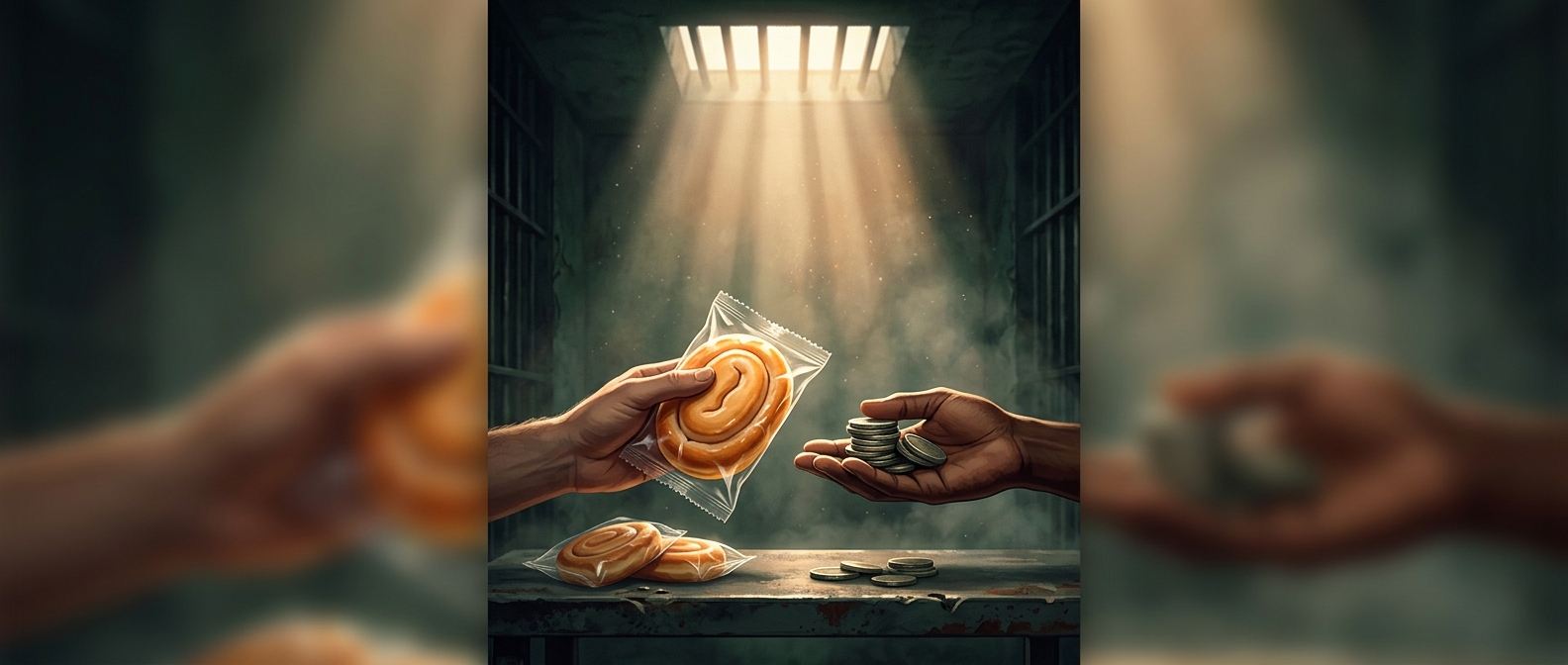
Cash is useful in an exchange because people expect others to accept it. In a prison, where ordinary money may be unavailable for everyday trades, a packaged snack can fill part of that role if it is wanted, easy to recognize, and simple to pass from one person to another.
Iced honey buns have practical advantages: they come in familiar, standardized packages and can be kept for a while without refrigeration. Their value is also tangible. Someone can eat one, so it is not merely a token whose worth depends on belief. If many people want the same snack, they can use it to compare the cost of different favors or goods.
Scarcity gives the trade its price
The pastry’s value depends on local conditions, not a universal prison price. Access to vending machines, delivery schedules, storage, and demand can all affect how scarce honey buns are. When supply is limited but people still want them, a bun may be worth more in a trade than it would be at the vending machine.
That makes it useful for settling small debts or making exchanges without cash. But it is imperfect money: a bun can be damaged, taken, or become less desirable, and its value can shift when supplies change. Its purchasing power rests on shared expectations that the next person will want it too.
The result is a small economy built from whatever people can reliably obtain and exchange. A vending-machine snack can leave its original setting as food and circulate as payment—until scarcity or demand changes what someone is willing to accept.