Motion turns a headline into a visual interruption
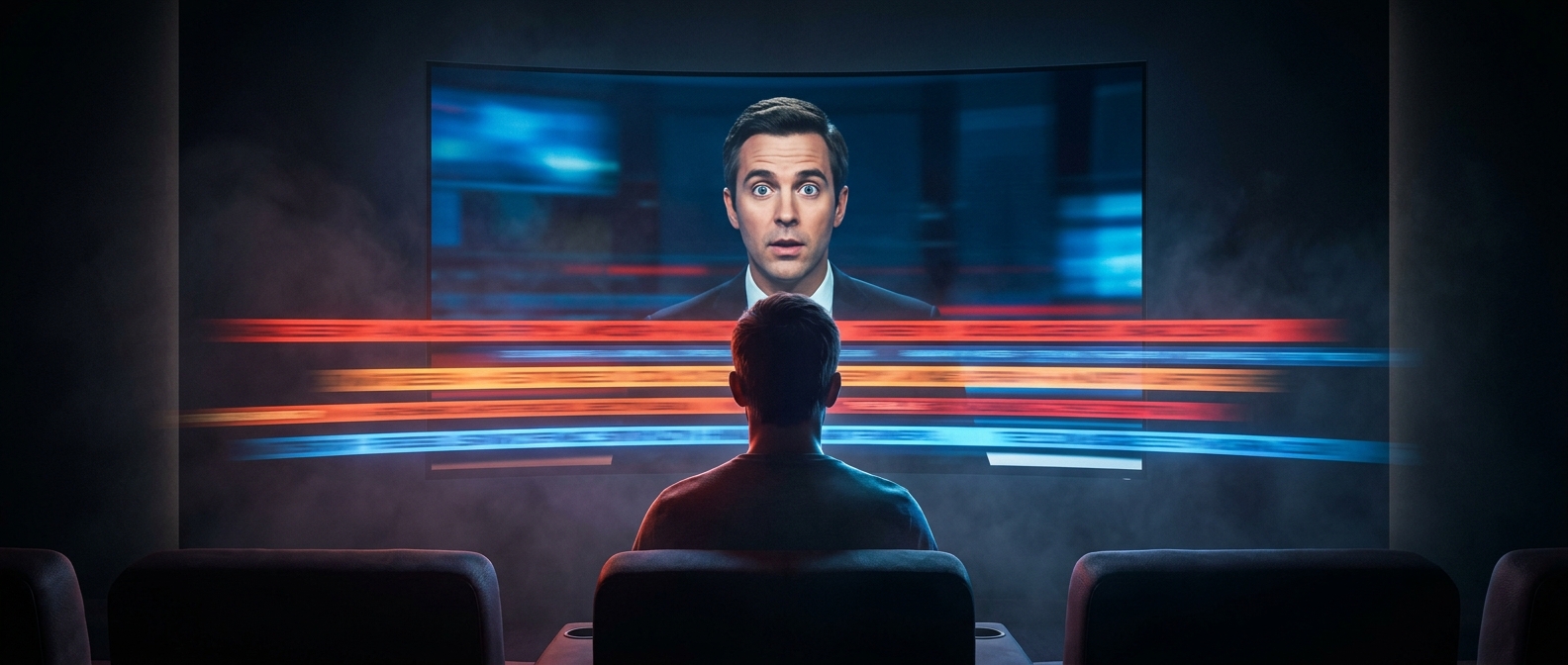
A news ticker does not wait for the viewer to look at it. Its text keeps moving, and motion is especially good at catching attention: even when someone is focused on the anchor, movement near the edge of the screen can prompt a quick glance. The eye then has to shift from listening to reading, splitting attention between two streams of information.
That shift can make a small update feel bigger than it is. The ticker gives the item a place on the screen alongside the anchor and the main story, while its steady movement makes it seem immediately active. A routine traffic notice and a major breaking development may pass through the same narrow band in the same format. The design offers little room for the distinctions that a reporter’s tone, explanation, or context might provide.
A stream of updates, not a measure of importance
The ticker’s format is useful because it can carry several short items without replacing the main broadcast. But it also asks viewers to interpret those items quickly, often while the anchor is speaking. Under that divided attention, a brief headline may register before its details do. What sticks is not always the scale of the event; it may simply be that something is happening now.
The result is a subtle mismatch: the screen’s constant motion signals urgency even when the words describe ordinary news. A local update can feel like an emergency not because its facts have changed, but because the format keeps calling the eye back to it.