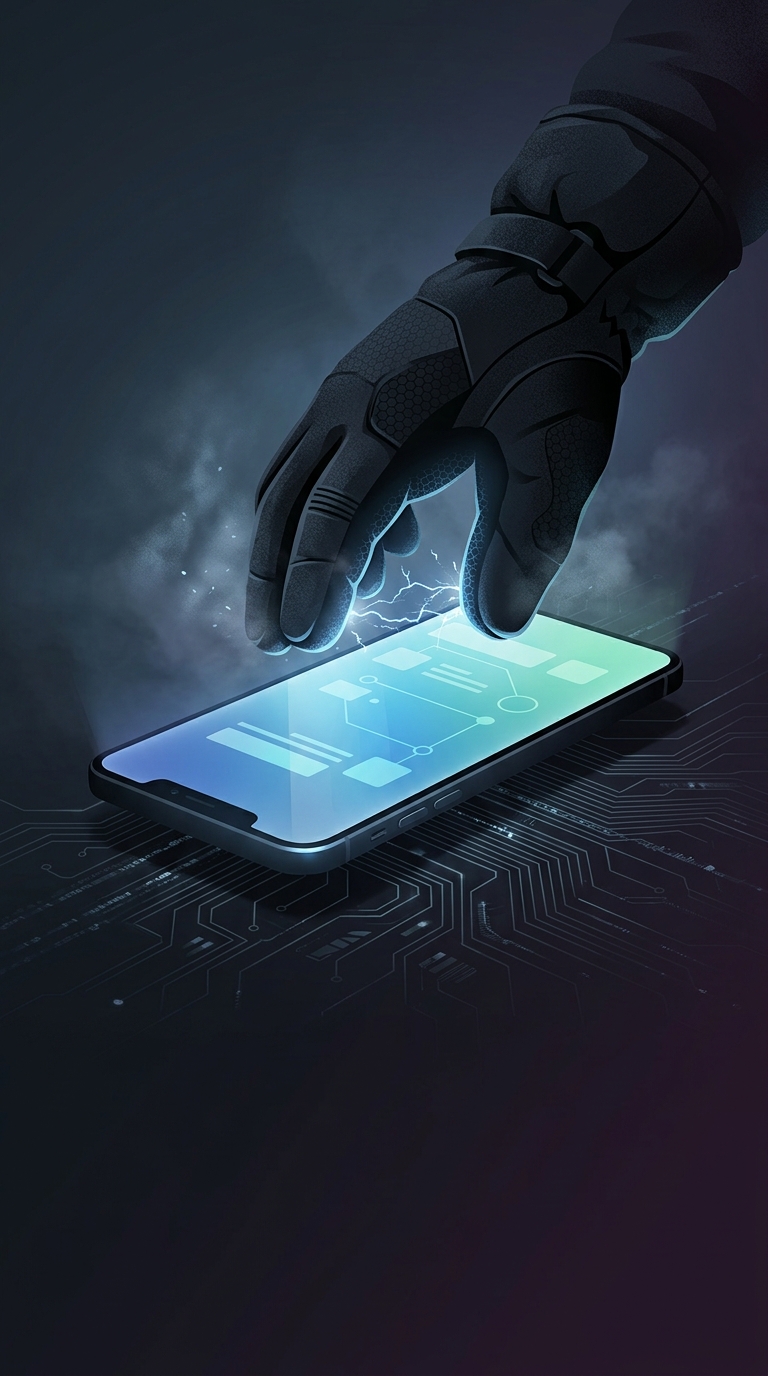
Why a Glove Breaks the Touchscreen’s Circuit
Most modern phone screens use capacitive sensing. Beneath the glass, a fine grid of electrodes maintains an electrical field. Your body conducts electricity, so when a bare finger comes close, it changes the field at that spot. The phone detects that change and translates it into a tap or swipe.
A typical winter glove gets in the way. Its fabric and trapped air separate your finger from the screen, weakening the electrical effect until it falls below the phone’s detection threshold. The display still works; it simply cannot reliably tell that your gloved finger is there.
Why Some Gloves Work
Touchscreen-compatible gloves use conductive material—often woven into the fingertips—to create a better electrical path between your skin and the screen. They do not send a signal or imitate a finger. They let enough of your body’s electrical influence reach the sensor for it to register a touch.
That fix has limits: the conductive patch must meet the screen, and thicker or poorly fitted gloves can still reduce accuracy. A stylus designed for capacitive screens works on the same principle, using a conductive tip to produce a detectable change.
The tradeoff is practical: ordinary insulation keeps hands warm by separating them from the cold, while a capacitive screen needs a detectable connection to the user. Without a conductive fingertip, that barrier can turn a simple swipe into a missed touch.