What the Whirling Dance Is Meant to Do
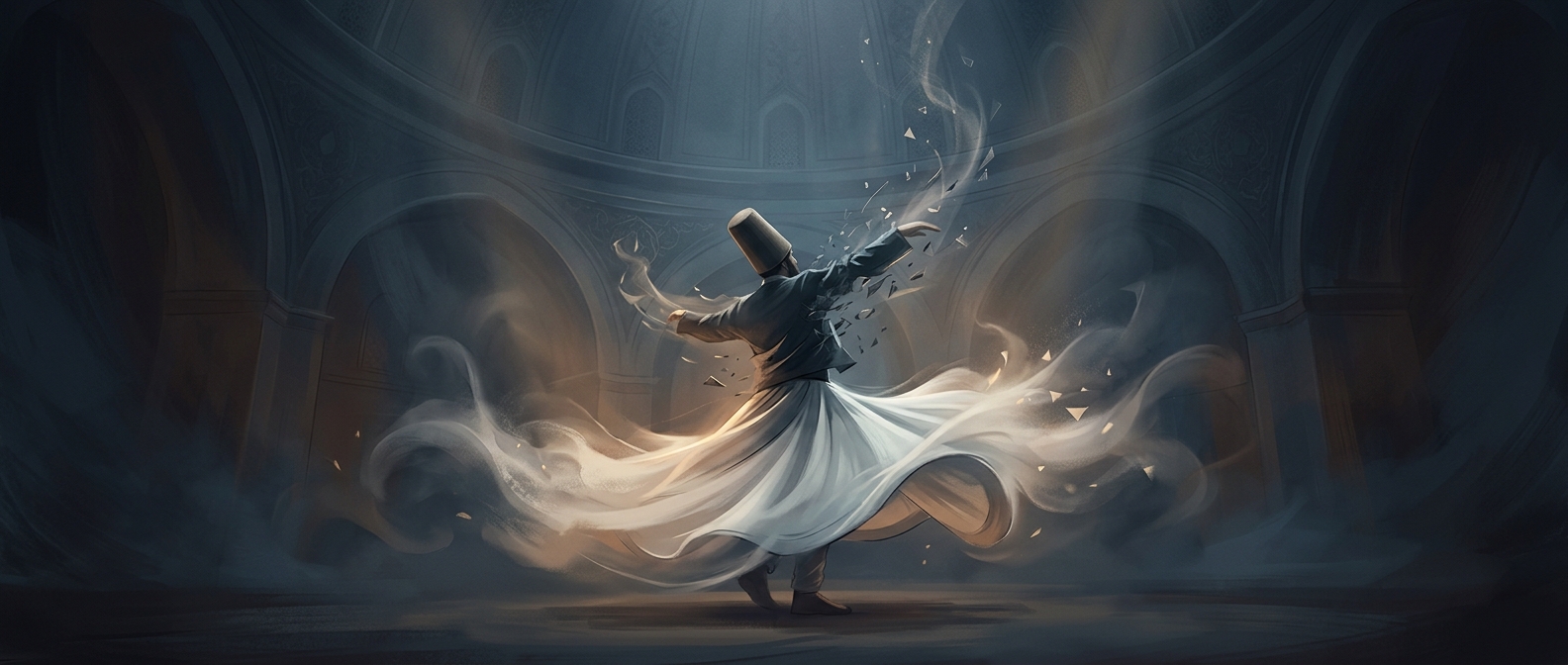
The whirling of the Mevlevi dervishes is not simply a display of endurance or a trance-inducing spectacle. It is a form of worship: a disciplined movement through which practitioners seek to turn their attention away from the self and toward God. In this tradition, “losing the ego” means loosening the grip of pride, personal desire, and the feeling of being separate from the sacred—not literally erasing one’s identity.
A Turning Body, a Focused Mind
The ceremony, called the sema, gives the spinning a structure. Dervishes turn in a controlled rhythm, often with one palm raised and the other lowered. The gesture is understood as receiving divine grace and passing it on to the world. Music and recitation help shape the rite, while the repeated motion calls for concentration rather than free-form movement.
That discipline matters. The aim is not to become overwhelmed by dizziness or to escape awareness, but to cultivate humility and spiritual attention. The body keeps turning; the practitioner tries not to make the movement a performance of personal achievement.
Why Repetition Matters
A single turn can be a gesture. Repeated turns make the body itself part of the prayer, returning the practitioner again and again to the same orientation. Within the ceremony’s symbolism, the turning also evokes the motion of the cosmos. The dancer is not claiming to control that vast order, but seeking to place the self within it.
So the striking image of a person spinning in place carries a quiet reversal: the body is conspicuously active, while the spiritual intention is to become less centered on oneself.