The Silent Teacher in Ibn Arabi’s Mecca
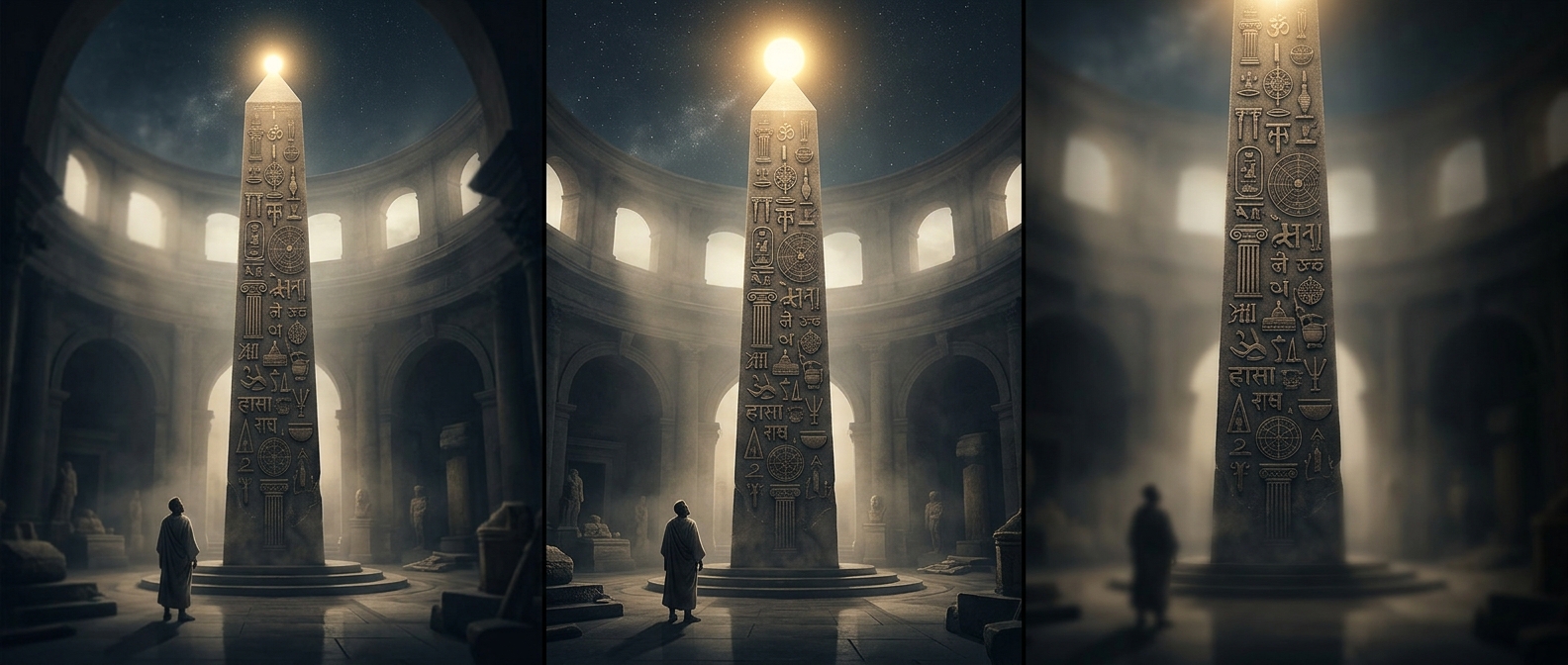
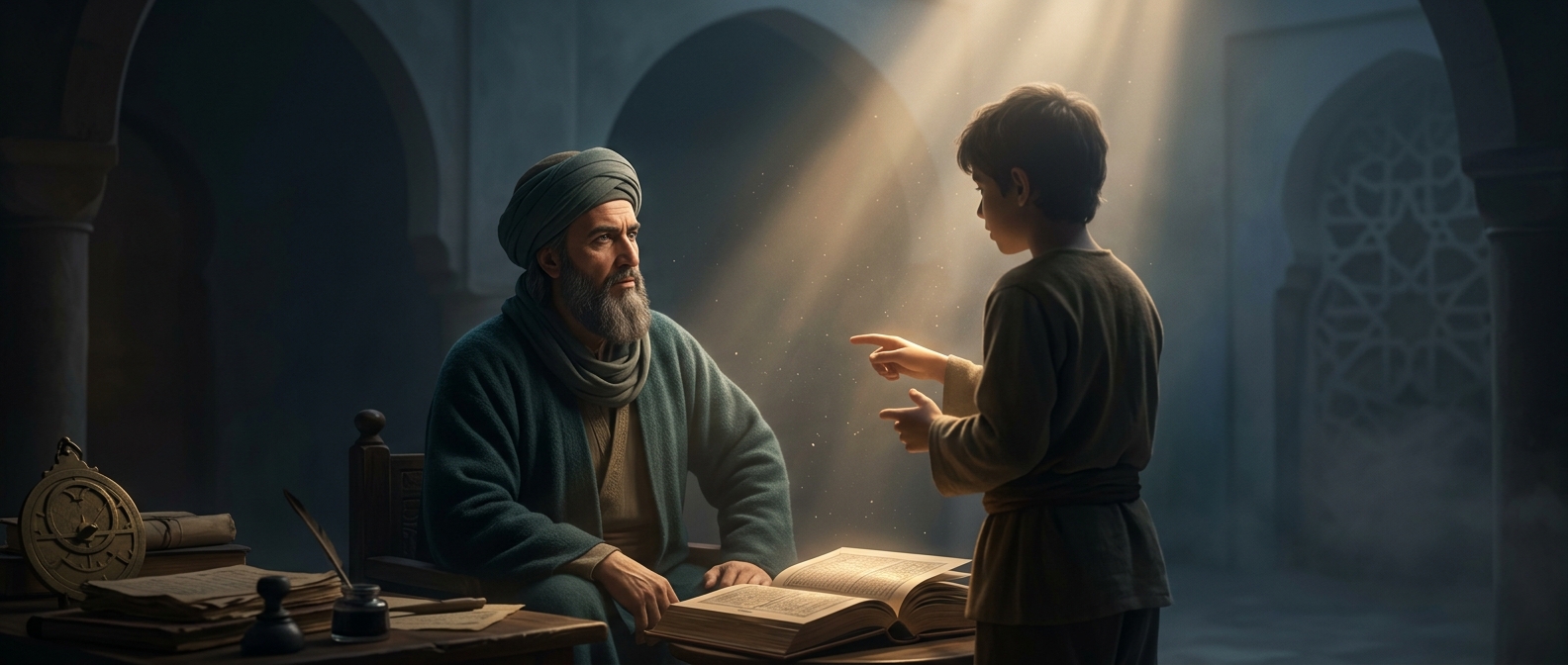
Ibn Arabi’s account of a mysterious youth near the Kaaba is striking because the encounter was not described as a normal lesson. The young man conveyed knowledge without speaking, presenting insight as something directly perceived rather than passed along in a conversation.
That fits a broader feature of Ibn Arabi’s writing: he treated visions and spiritual unveilings—experiences in which hidden realities become perceptible—as ways of knowing. They did not replace scripture or thought; they helped him explore what he believed those sources revealed about God and existence.
Why the Kaaba mattered
The setting gives the episode its force. The Kaaba, the sanctuary at the center of Muslim prayer and pilgrimage, was also a powerful focus for Ibn Arabi’s reflections on divine reality. A silent encounter there could dramatize a central mystical idea: knowledge of God is not merely information to receive, but a reality to be encountered.
The youth’s silence also makes the scene different from an argument or a teacher’s lecture. In Ibn Arabi’s telling, the encounter points toward truths that ordinary language cannot fully contain. The account is therefore better understood as a spiritual vision than as a claim that a chance teenager supplied a complete philosophical system.
An encounter, not a whole philosophy
Ibn Arabi developed an extensive body of writing about God, creation, and the relationship between them. The youth episode offers a glimpse of the kind of experience he regarded as a source of insight, but it should not be mistaken for the sole origin of his thought. Its memorable implication is more specific: for Ibn Arabi, a profound teaching could arrive not as spoken words, but as a presence that changed how reality appeared.