A private record of Pascal’s night of faith
The note later known as the Memorial was not a theological treatise. It was a compressed record of an intense religious experience Blaise Pascal dated to the night of November 23, 1654. Its brief phrases include “Fire,” “the God of Abraham, the God of Isaac, the God of Jacob,” and “not the God of the philosophers and scholars.” The contrast suggests what mattered to Pascal: not merely an abstract argument about God, but a sense of encounter with the God of scripture.
Why keep a note close?
Pascal was a mathematician and natural philosopher as well as a Christian thinker. The Memorial captures a different kind of certainty from the kind he pursued through mathematics: personal, emotional, and bound to a particular moment. Its fragments read less like an explanation for others than a reminder meant to bring him back to what he had experienced.
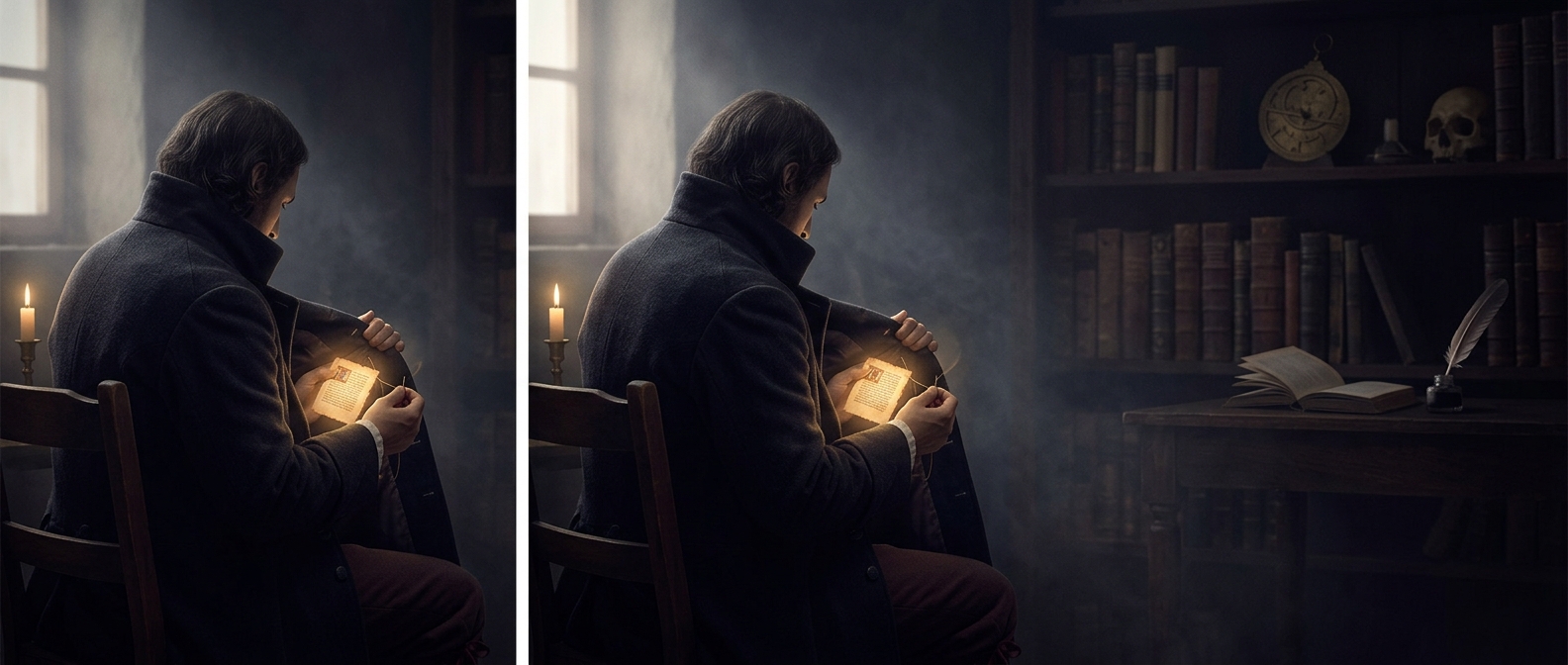
Keeping the parchment on his person made that reminder available in ordinary life. Its concealment also meant the account was not presented publicly during his lifetime. After his death, its discovery revealed a private document that helped later readers understand the religious intensity behind his work.
The note’s lasting force comes partly from its form. Rather than setting out a proof, it preserves a few stark words—enough to show that Pascal wanted to remember an experience, not simply describe it.