A Horseshoe Could Stand In for an Iron Ring
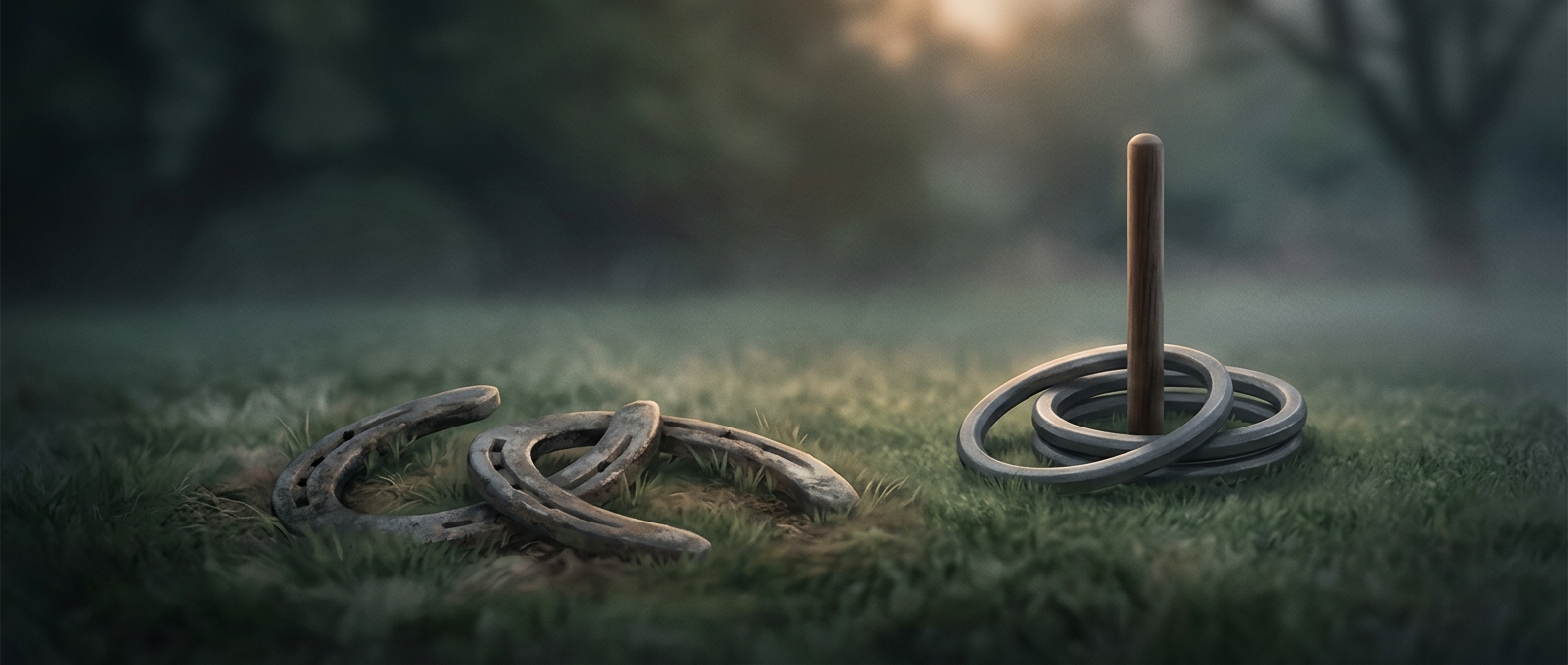
The origin story of horseshoes says that Roman soldiers who could not afford solid iron rings used discarded horseshoes instead. The swap made practical sense: a horseshoe was already made of iron, and its open curve could be thrown toward a stake without needing to be reshaped into a complete ring. The game could use an object that was otherwise worn out rather than equipment made specifically for play.
The Shape Became Part of the Challenge
A horseshoe does not fly or land like a closed ring. Its curved arms can strike the stake, fall around it, or land nearby, making both aim and the object’s orientation matter. In familiar versions of the game, players take turns pitching horseshoes at stakes and score for close throws or for a shoe that encircles the stake; exact rules can vary.
That simple setup links the game’s equipment to its appeal: a stake provides a visible target, while the horseshoe’s open shape makes each landing less predictable. The discarded tool was not merely a cheaper substitute for a ring—it supplied the distinctive challenge players had to master.