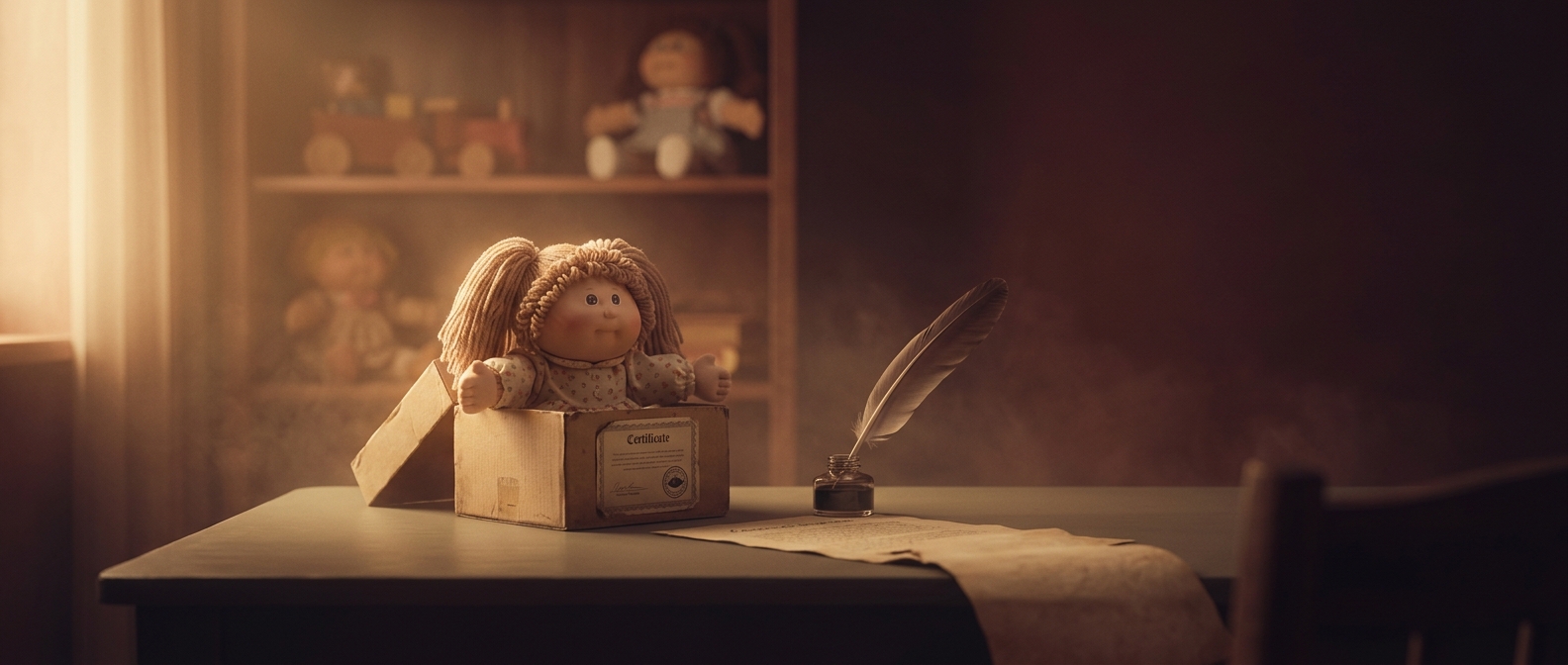
A toy purchase turned into an adoption ritual
Cabbage Patch Kids arrived with more than a price tag: each came with a name and adoption papers, and buyers signed an oath. The paperwork gave the purchase a small ceremony. Instead of simply choosing a doll, a child could imagine taking responsibility for a particular new arrival and welcoming it into the family.
That distinction mattered because dolls invite pretend caregiving. A name makes a toy easier to treat as an individual, while a certificate gives that identity a tangible record. The oath adds a role for the buyer: not just owner, but adopter. None of this changed how the doll was made; it changed the story the buyer could tell about bringing it home.
How paperwork made a mass-produced doll feel personal
The idea bridged two very different things: a factory-made product and the feeling that a family member is one of a kind. A birth name and adoption certificate supplied a personal identity before the doll even reached its new home. The signing ritual let children—and often the adults buying the doll—participate in that identity rather than merely receive a toy.
That was the clever design choice: the papers were simple, but they turned an ordinary handoff into a beginning. A child could point to the certificate and say not just which doll was theirs, but who they had adopted.