Why the pitch feels gigantic
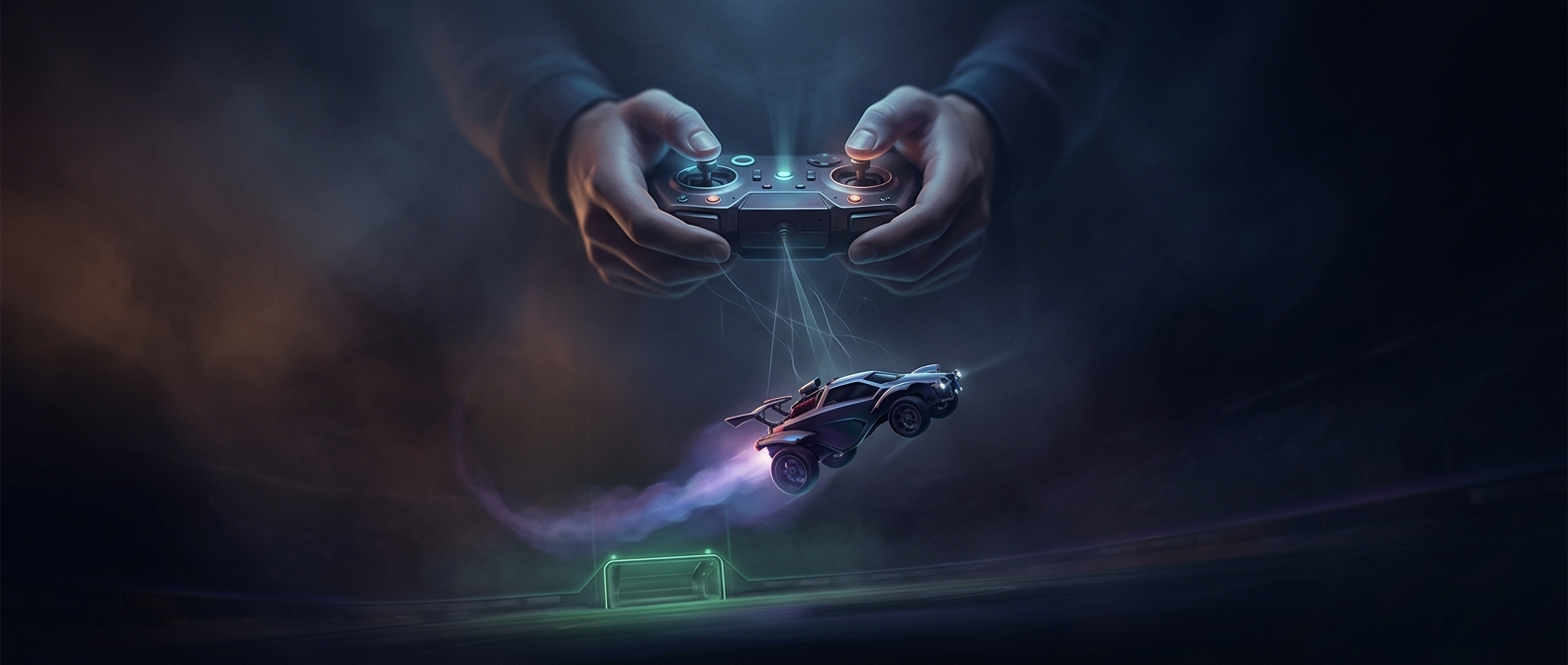
The illusion comes from comparing two different scales. A Rocket League car reads as a compact, radio-controlled vehicle, while the arena borrows the visual language of a full sports venue: broad field markings, towering walls, goals, and stands beyond the playing surface. Those familiar stadium cues encourage the eye to judge the pitch against human-scale sport—even though the cars are the more useful reference for understanding the scene.
The camera strengthens that mismatch. It follows a car at close range, so the vehicle stays prominent while much of the arena stretches away around it. When the ball arcs across the field, its travel gives the space another measure: the distance is not just visible, but something players must cross in seconds.
Scale is part of the spectacle
That apparent vastness helps make the game’s central actions legible and dramatic. A car can race from one end to the other, leap into the air, or arrive at the ball from a long approach. The same movements would feel less spectacular in a cramped setting; here, open space gives players room to build speed and makes a distant save feel like a real journey.
The arena therefore has two jobs. It must read as a believable sports venue, but it also has to leave room for fast, vehicle-sized play. The result is a useful visual contradiction: the cars look like toys, yet the field feels enormous because the game invites players to experience its distances from behind the wheel.