A city built for more than the main plot
In the Yakuza games, street violence is only one way to spend time in the city. The same streets that funnel the player toward gang confrontations also lead to karaoke rooms, arcades, restaurants, and other diversions. That layout makes the detours feel like part of the world rather than a separate menu of bonuses: danger and ordinary entertainment occupy the same neighborhood.
The contrast also changes the rhythm of play. A fight asks for quick reactions and force; karaoke asks the player to follow musical cues and keep time. Switching between them gives the action room to breathe without leaving the game’s setting.
Comedy depends on commitment
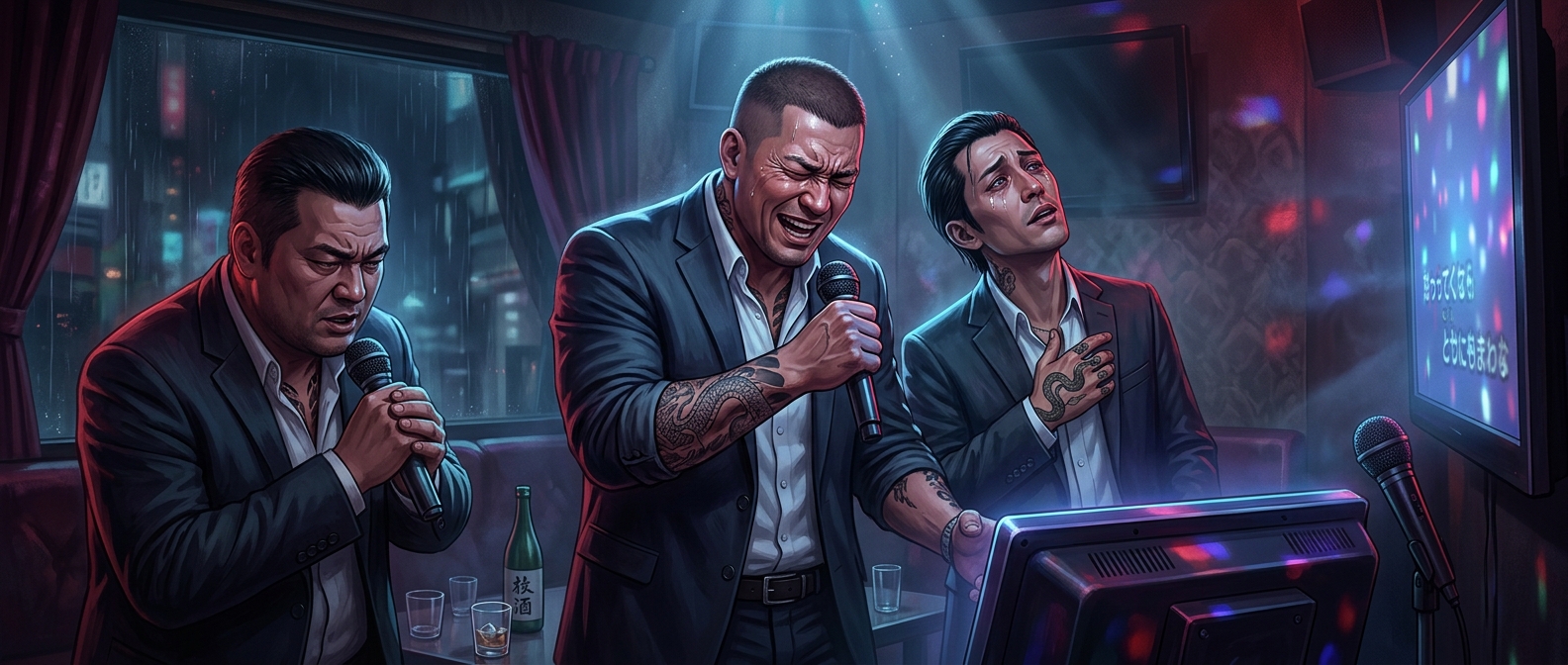
The humor works because the games do not treat their quieter activities as throwaway jokes. Karaoke is presented as a full rhythm game, with its own songs, performance animations, and timing challenge. The protagonist can be caught in an absurd situation, but the game plays the performance straight enough for the silliness to land.
That seriousness makes the contrast sharper. A character capable of taking on a crowd can also sing an earnest, over-the-top song; neither side has to cancel the other. The player gets to see a version of the character that a succession of fights alone would not reveal.
The tonal whiplash is part of the design
The shift from brawling to singing is not just a gag between dramatic scenes. It gives the player control over when to pursue the main conflict and when to linger in the city’s smaller pleasures. The result is a crime story whose world can feel simultaneously dangerous, mundane, and ridiculous—and whose hero can be formidable without being too tough to enjoy karaoke.