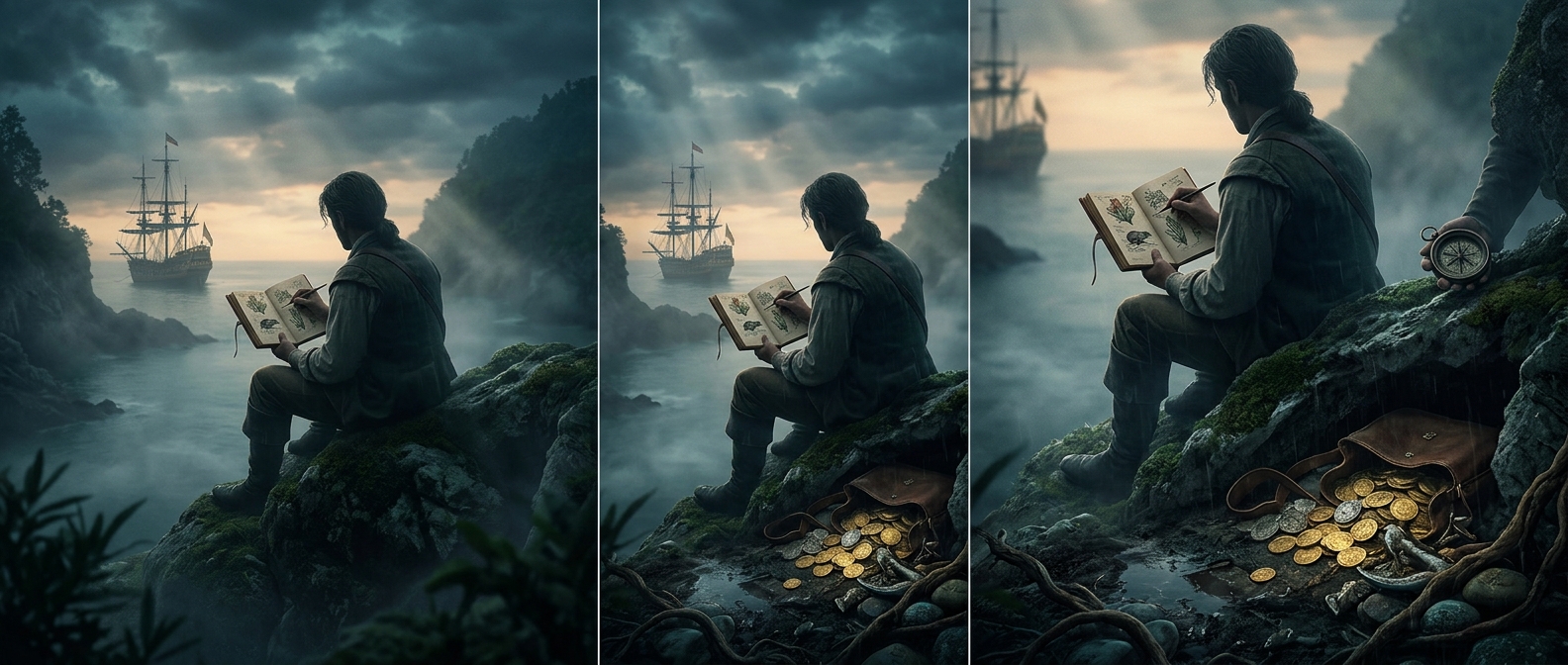
How a Buccaneer’s Log Became a Naturalist’s Resource
William Dampier was a seventeenth-century English seafarer who sailed on buccaneering voyages—raids by privately organized ships—as well as expeditions of exploration. His published account, A New Voyage Round the World (1697), carried readers through places many had never seen, but its value lay in more than its route. Dampier recorded practical details of travel alongside observations of winds, coastlines, plants, and animals.
That mix mattered. A note about wind or currents could help explain how a ship reached a place; an account of local wildlife or vegetation could help later readers compare one region with another. Dampier’s reports were not a modern scientific survey, but they made observations gathered at sea available to people who would never make the voyage themselves.
From Voyages to Darwin’s Questions
Charles Darwin sailed on the Beagle more than a century later, when travel narratives and natural-history accounts were important sources of information about the world’s varied life. Dampier’s work was among the earlier travel writing Darwin encountered. Its influence belongs to that longer chain: voyagers recorded what they saw, published accounts circulated those observations, and later naturalists could use them as context for their own investigations.
The difference was that Darwin could connect observations across many places and ask how variation arose. Dampier supplied no theory of evolution; his importance was in the descriptive groundwork. A sailor’s careful record—made partly to understand the conditions of a voyage—could outlast the voyage and become material for questions its author had never set out to answer.