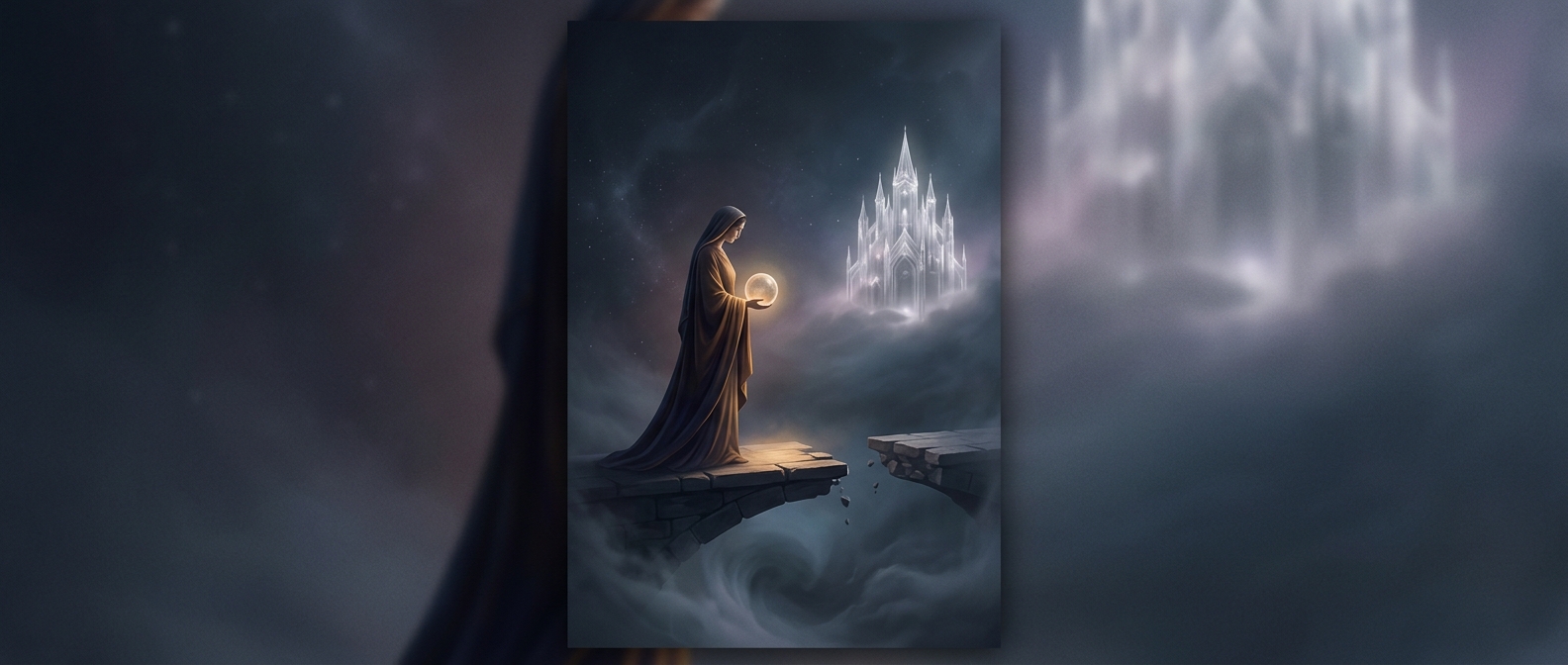
Sophia’s longing marks a break in the divine order
Sophia means “wisdom” in Greek. In some Gnostic cosmologies—religious accounts of how the universe came to be—she is a divine figure whose place is close to the highest, unknowable source. The source is beyond ordinary thought; Sophia’s attempt to grasp it turns wisdom into a movement away from simple acceptance of what cannot be known.
These stories vary, but a recurring pattern makes her striving consequential: Sophia acts apart from the order or partner through which divine beings normally emerge. The result is a rupture, and in some versions a lesser creator comes into being and makes the material world. The myth uses a cosmic event to give shape to a problem: how a flawed, divided world could exist if its ultimate source is perfect.
Wisdom becomes both insight and separation
Sophia is not simply cast as foolish or evil. Her name preserves the value of wisdom, while her attempt to reach beyond her limits helps explain how distance from the divine begins. In this sense, she represents wisdom separated from pure grace: knowledge pursued as an independent achievement rather than received in harmony with the divine source.
“Grace” here means a gift or favor that is not earned by effort. The contrast is not between thinking and ignorance, but between knowing through relationship and trying to possess what cannot be mastered. Sophia’s story makes that distinction visible: the cosmic fracture begins not with an ordinary mistake, but with a desire to cross the boundary between the knowable and the unknowable.