Why a Sandbag Line Moves More Than a Crowd
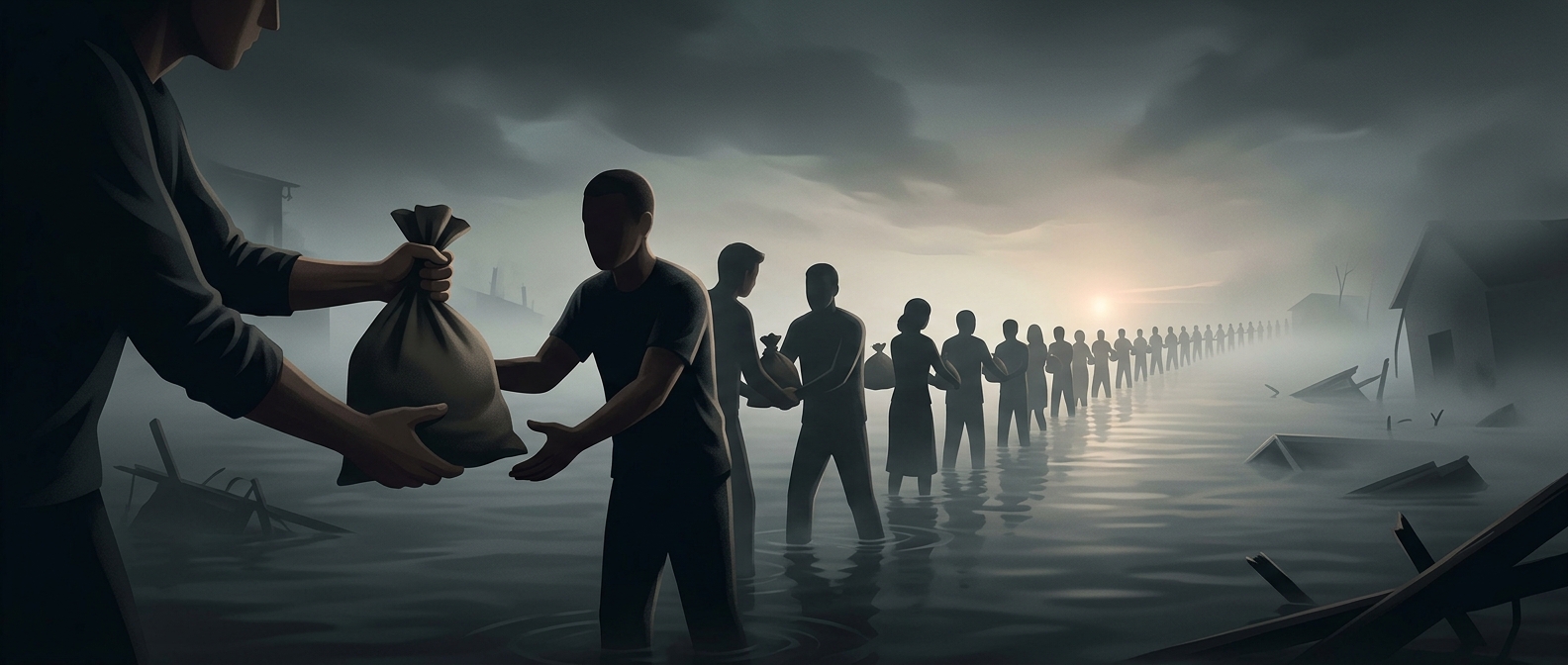
A flood barrier needs many bags in a short stretch of time, but carrying each one from a pile to the water’s edge wastes effort on repeated trips. A handoff line separates the job into short moves: one person feeds bags into the chain, people pass them along, and the person at the end places them. Most volunteers stay in position rather than walking the same route over and over.
That division of labor also makes the flow easier to manage. If the placement crew needs bags faster, the line can speed up; if the work area becomes crowded or slippery, the handoffs can slow. The chain is only as fast as its tightest point, so a clear route and steady passing matter as much as the number of people.
The Wall Still Has to Be Built Carefully
A stream of bags is useful only if they reach the right spot and are stacked to form a continuous barrier. Volunteers need to keep the work area clear enough to place and press the bags into position, rather than simply piling them wherever they arrive. Gaps can let water through, and a barrier that is too low for rising water can be overtopped.
Sandbags are a temporary defense, not a watertight dam: water can seep through or around them, and the structure may need attention as conditions change. The chain’s practical value is that it gets material to the people building the barrier with fewer wasted steps—turning many individual efforts into a more continuous supply.