How a Sedan Chair Crossed a City
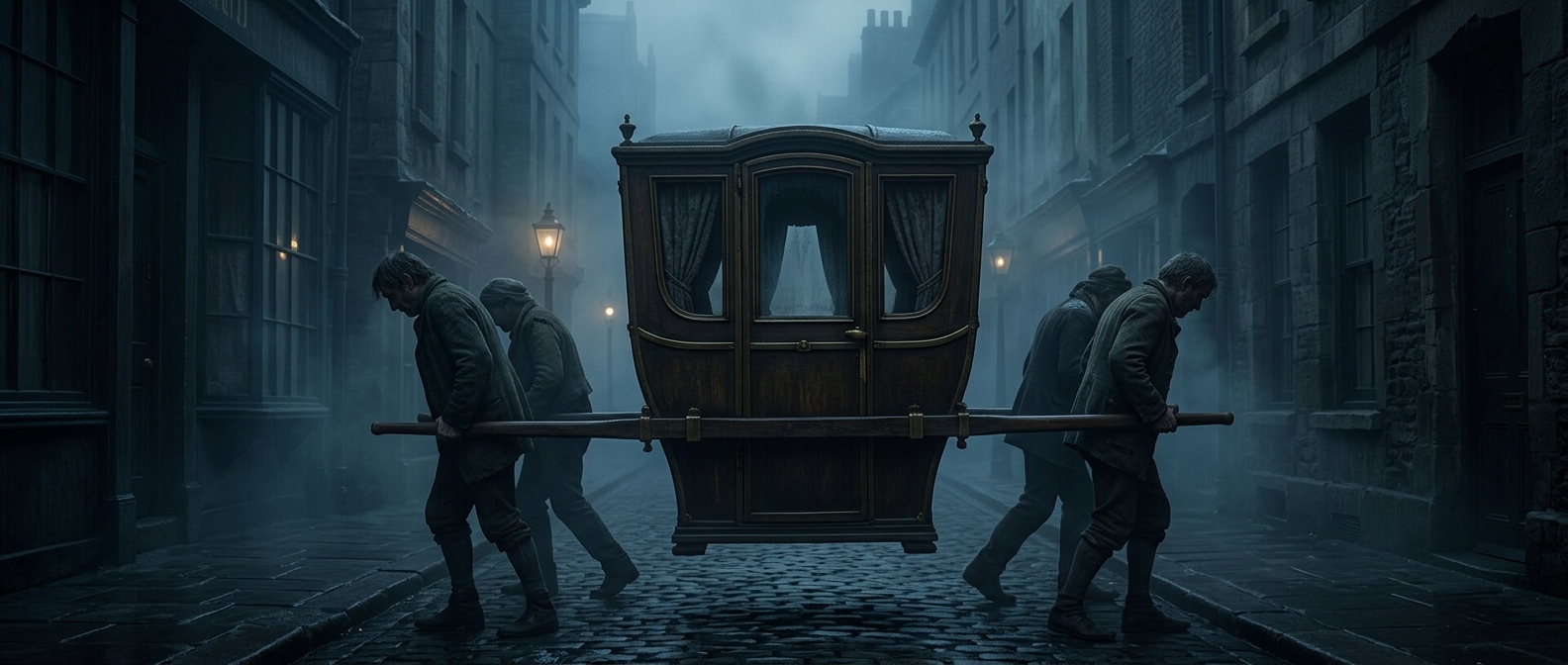
A sedan chair turned a crowded street into a route that could be carried. The passenger sat in a small enclosed seat suspended from long poles, while porters walked with the poles on their shoulders. Instead of wheels meeting cobbles, or a carriage needing room to turn, the chair could be lifted over rough ground, up steps, and through narrow passages.
The Porters Were the Suspension
The poles did more than hold the chair aloft: they softened its movement. As porters shifted their weight and adjusted their pace, some of the jolting from uneven ground was absorbed by their bodies and by the flex of the poles. The ride was not smooth in the modern mechanical sense, but it avoided the sharp bumps a wheeled vehicle would take over stones or stair edges.
That arrangement also made the chair dependent on coordination. Porters had to keep the load balanced and move in step; an uneven lift could make the passenger sway. The human power supply was built into the transport itself, but it limited how far and how fast a chair could go before its carriers needed rest.
A Vehicle That Could Leave the Road
Sedan chairs were useful where streets were too cramped, steep, or broken for wheeled transport. Their portability mattered as much as their speed: a carriage had to follow a passable road, while a chair could go wherever its carriers could safely walk. Its most distinctive engineering feature was the ability to change the route by lifting the vehicle itself.