How a palanquin turned a journey into a procession
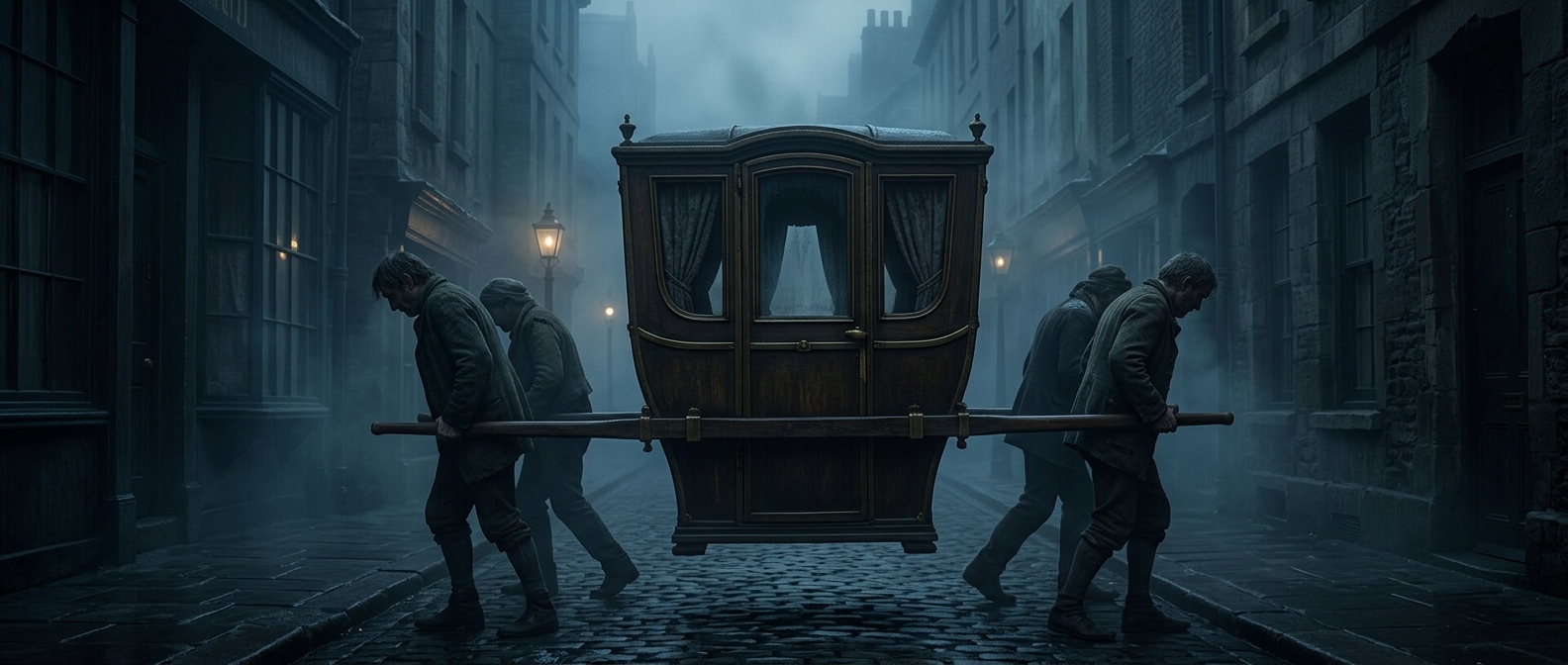
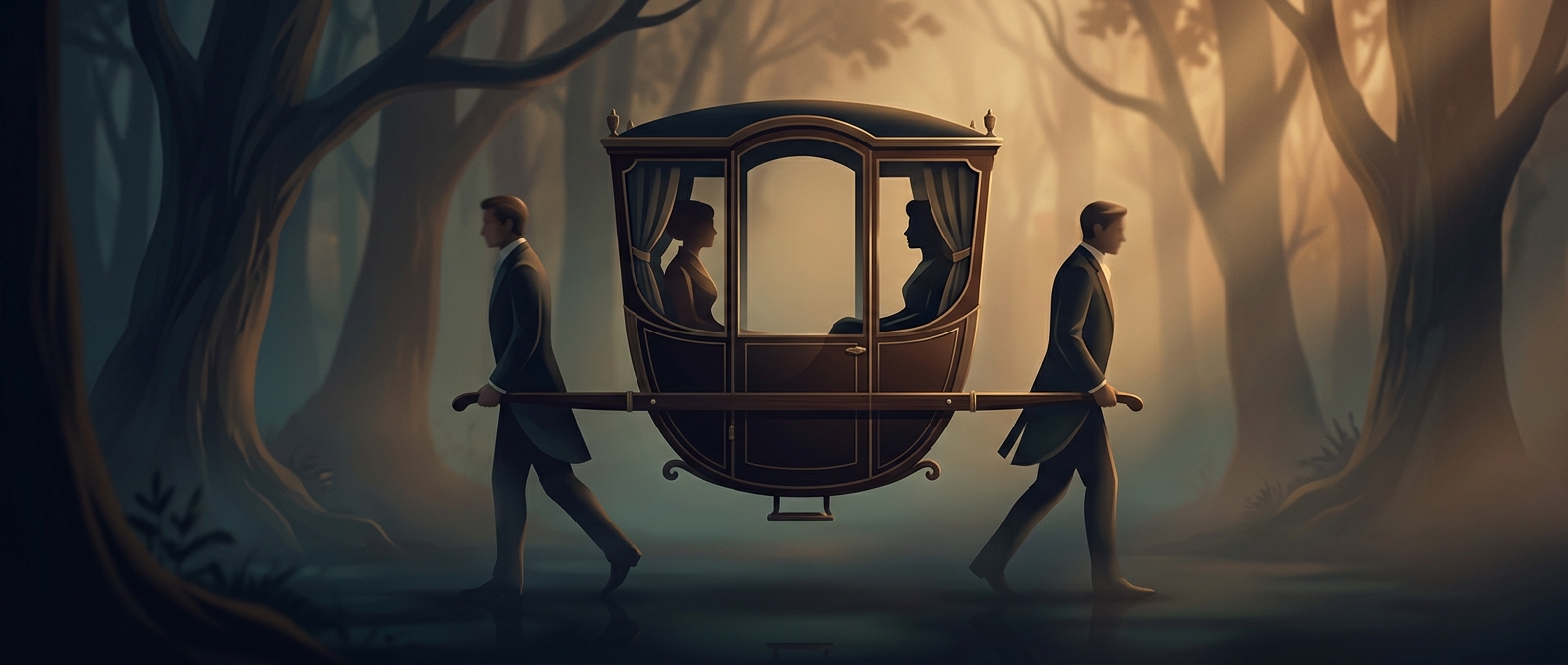
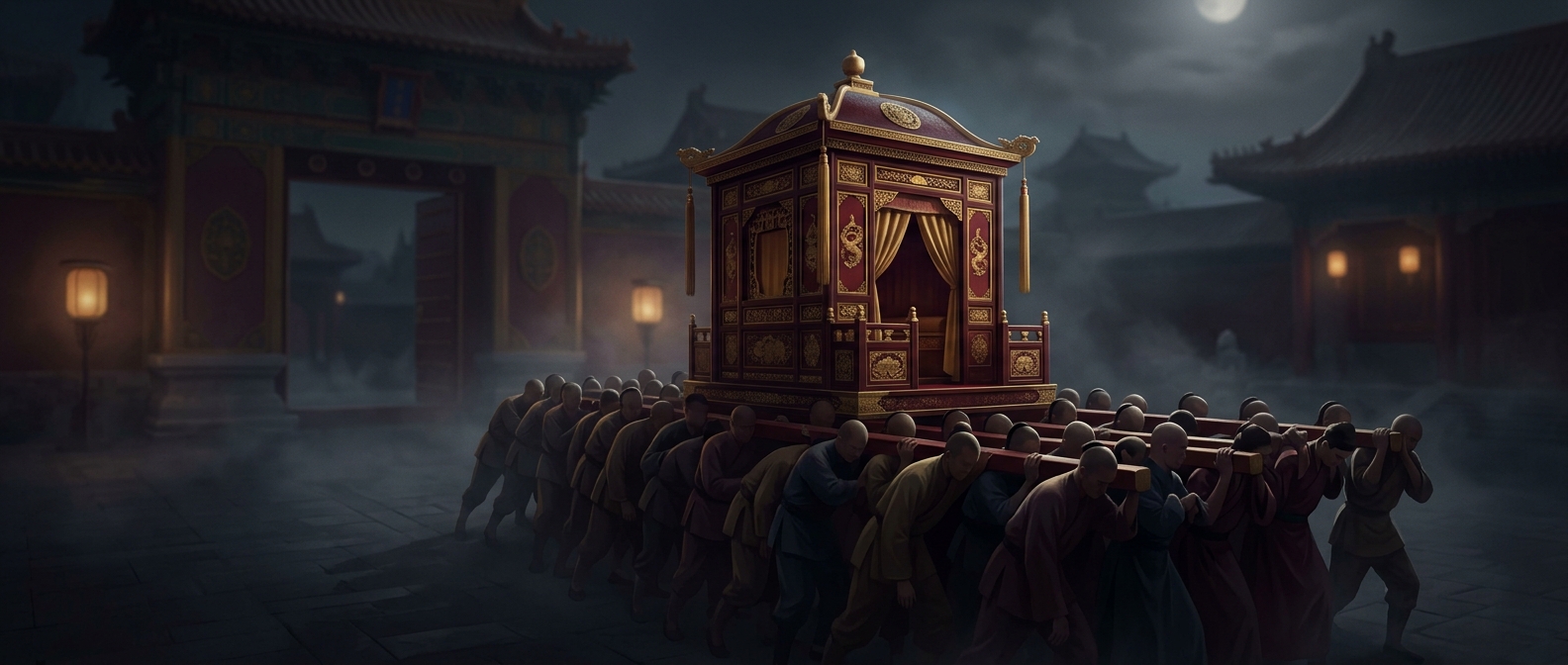
A palanquin was a covered or open seat suspended from long carrying poles. Instead of asking one person to support the passenger’s full weight, the poles spread the load among bearers positioned along their length. That made it possible to move a seated traveler without wheels, even where a wheeled vehicle would have been awkward or impractical.
Sharing the load did not make the ride effortless. The bearers had to lift and move in coordination: if some stepped out of rhythm, the seat could sway or jolt. A larger team could distribute the strain, but it also required more people to organize and keep together. The passenger’s comfort depended on their coordinated work.
The labor was part of the message
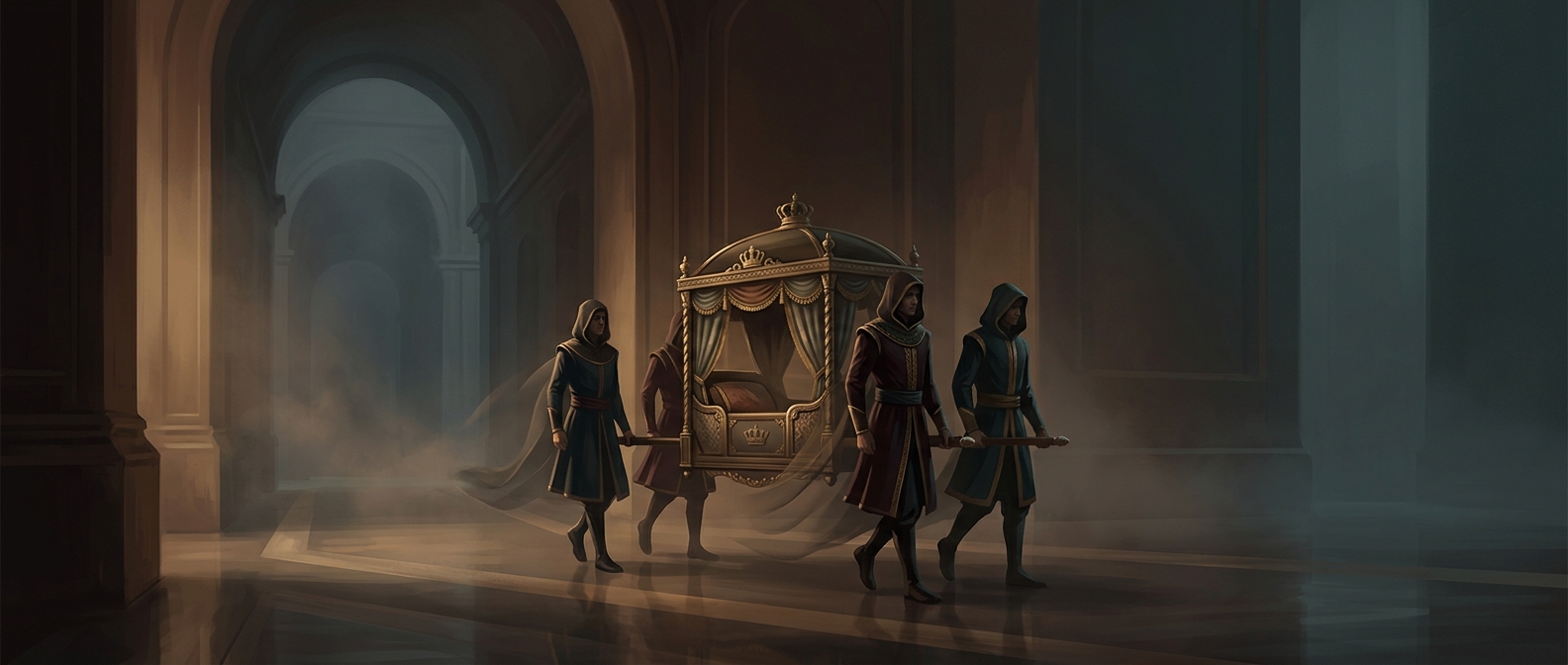
For an emperor, the scale of that effort mattered beyond transportation. Thirty-two bearers made the trip visibly dependent on a large group of attendants, turning an ordinary movement from place to place into a public display of rank. The procession announced that the passenger’s time and comfort took precedence over the labor of those carrying him.
That display had a practical consequence: the ruler could travel while remaining seated and elevated, while the people around him made the journey possible. The palanquin was therefore both a way to move a person and a way to make social hierarchy visible along the route.